
|
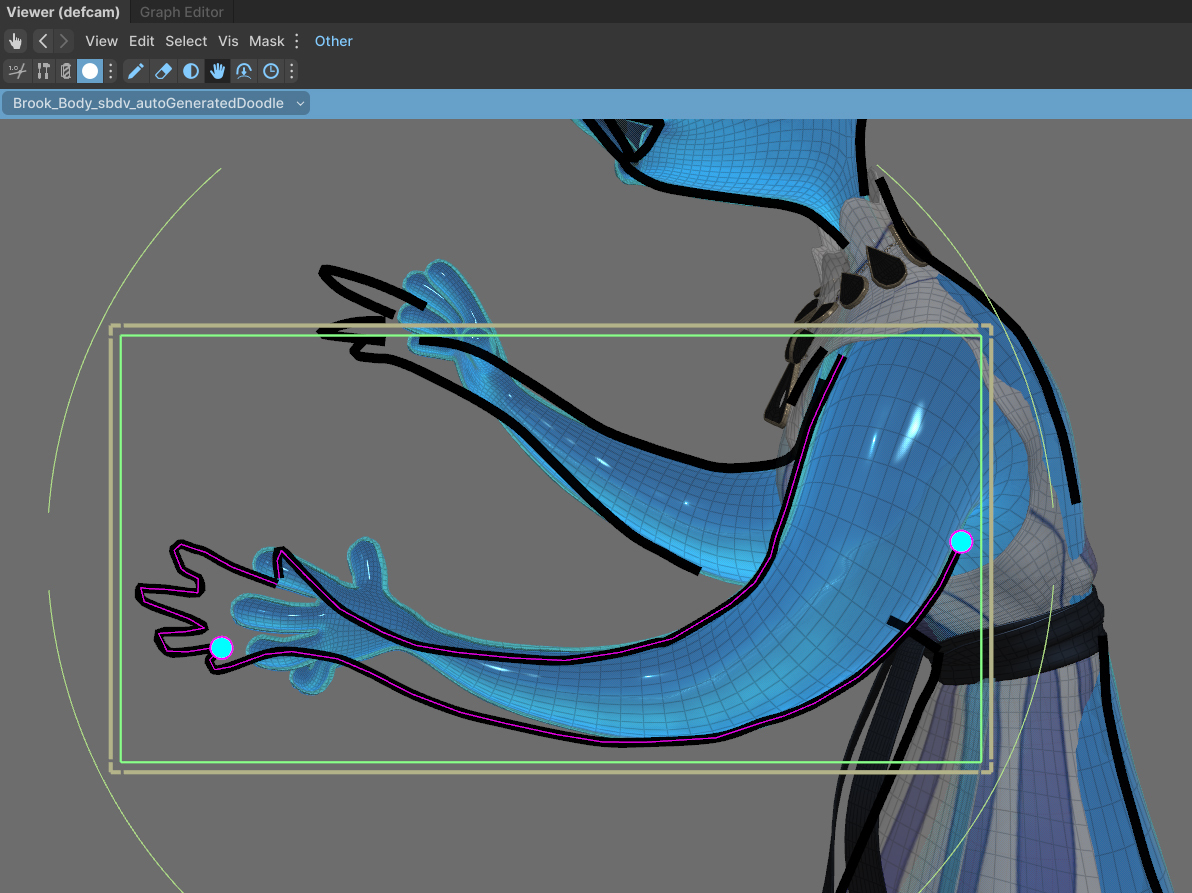 |
CurveCrafter: A System for Animated Curve Manipulation Nora S Willett, Kurt Fleischer, Haldean Brown, Ilene L E, Mark Meyer September 2023 Linework on 3D animated characters is an important aspect of stylized looks for films. We present CurveCrafter, a system allowing animators to create new lines on 3D models and to edit the shape and opacity of silhouette curves. Our tools allow users to draw, re-draw, erase, edit and retime user ... more Paper (PDF) UIST |
 |
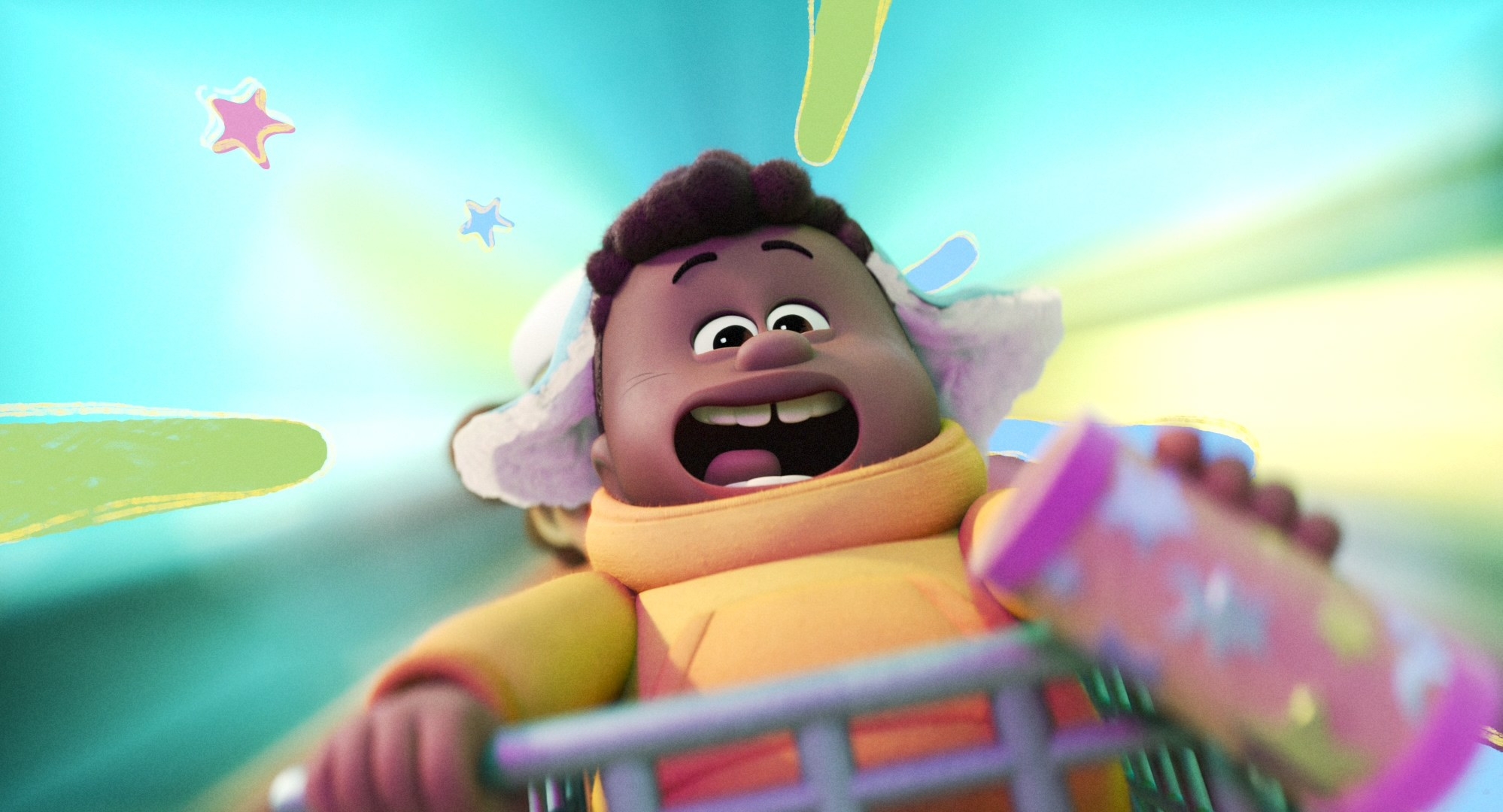
Stylizing Ribbons: Computing Surface Contours with Temporally Coherent Orientations Nora S Willett, Fernando de Goes, Kurt Fleischer, Mark Meyer, Chris Burrows September 2023 Line work is a core element for the stylization of computer animations used by recent shows. However, existing stylization tech- niques are limited to edge treatments based on brush strokes or textures applied solely on top of curves. In this work, we propose new stylization effects by offering artists direct ... more Paper (PDF) IEEE Transactions on Visualization and Computer Graphics |
 |
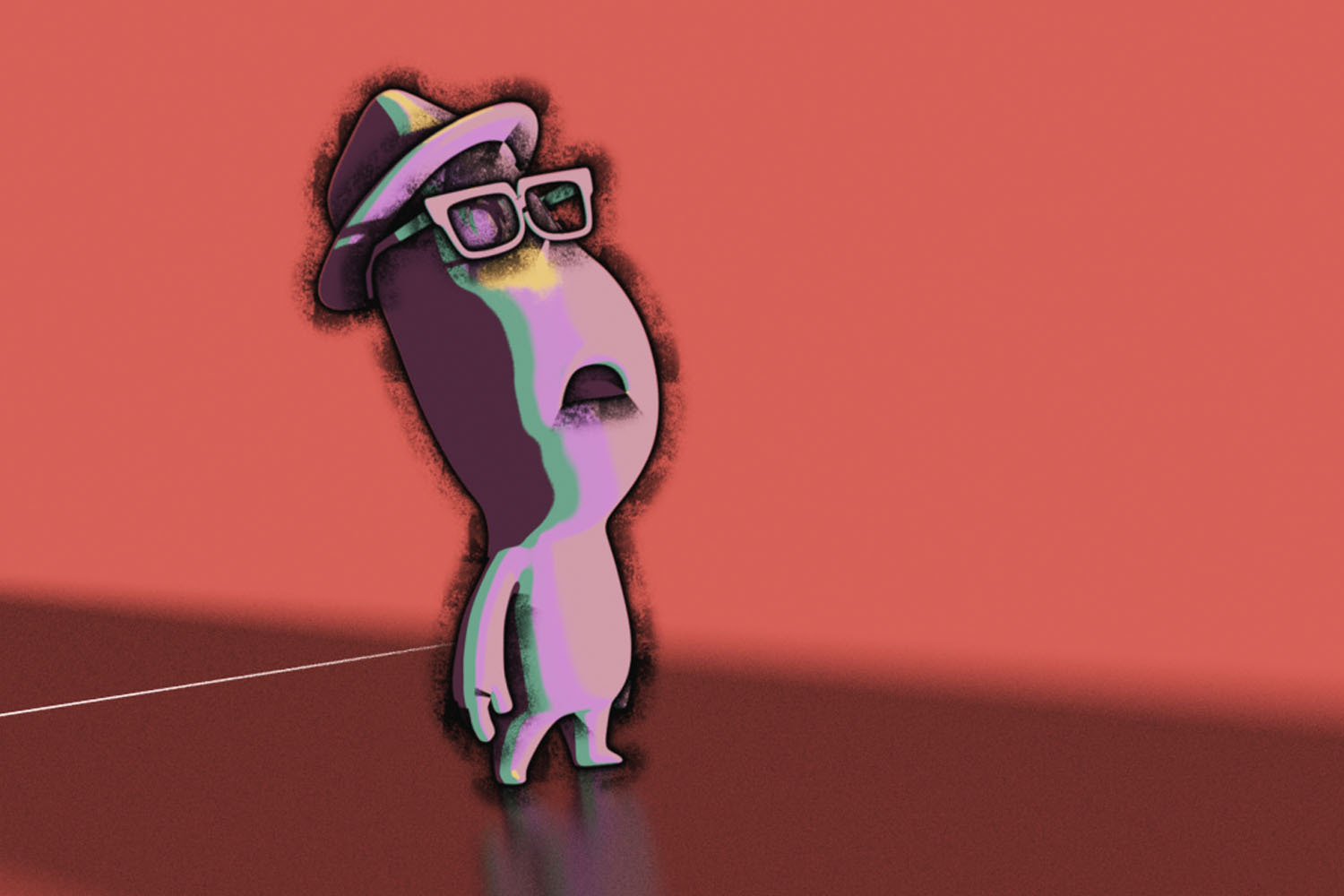
Eyes Without a Face: Integrating detached facial features into Pixar's character pipeline Anna-Christine Lykkegaard, Ana Lacaze, Jonathan Page May 2023 From an asset creation perspective, Pixar's first long formseries, Win or Lose, had a daunting number of featured characters. In addition to the large scope of the project, the design pushed further into the stylistic trend of somerecent Pixar films - favoring graphic shape language infacial expressions. The methodology that ... more Paper (PDF) SIGGRAPH Talks 2023 |
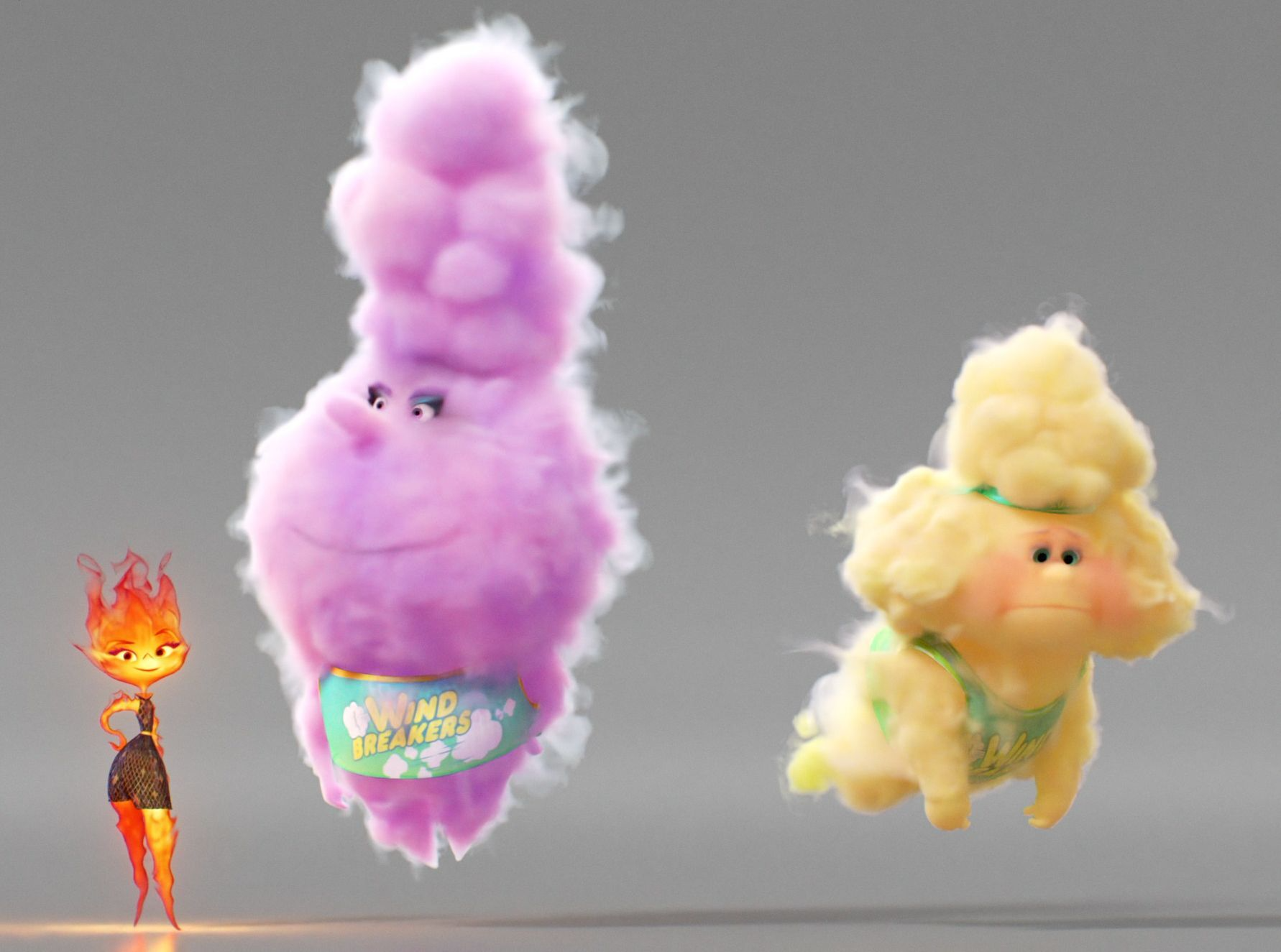 |
Elemental Characters: Making Characters Out of Thin Air Markus Kranzler, Krzysztof Rost, Ravindra Dwivedi, Athena Xenakis, Andrew Pettit May 2023 Pixar's upcoming feature film Elemental required many new technical solutions due to its ambitious visual language and storytelling. The film's characters, made of different elements - fire, water, air, and earth, required a unique approach in finding answers. For our main Air characters we had to come up with a ... more Paper (PDF) SIGGRAPH Talks 2023 |
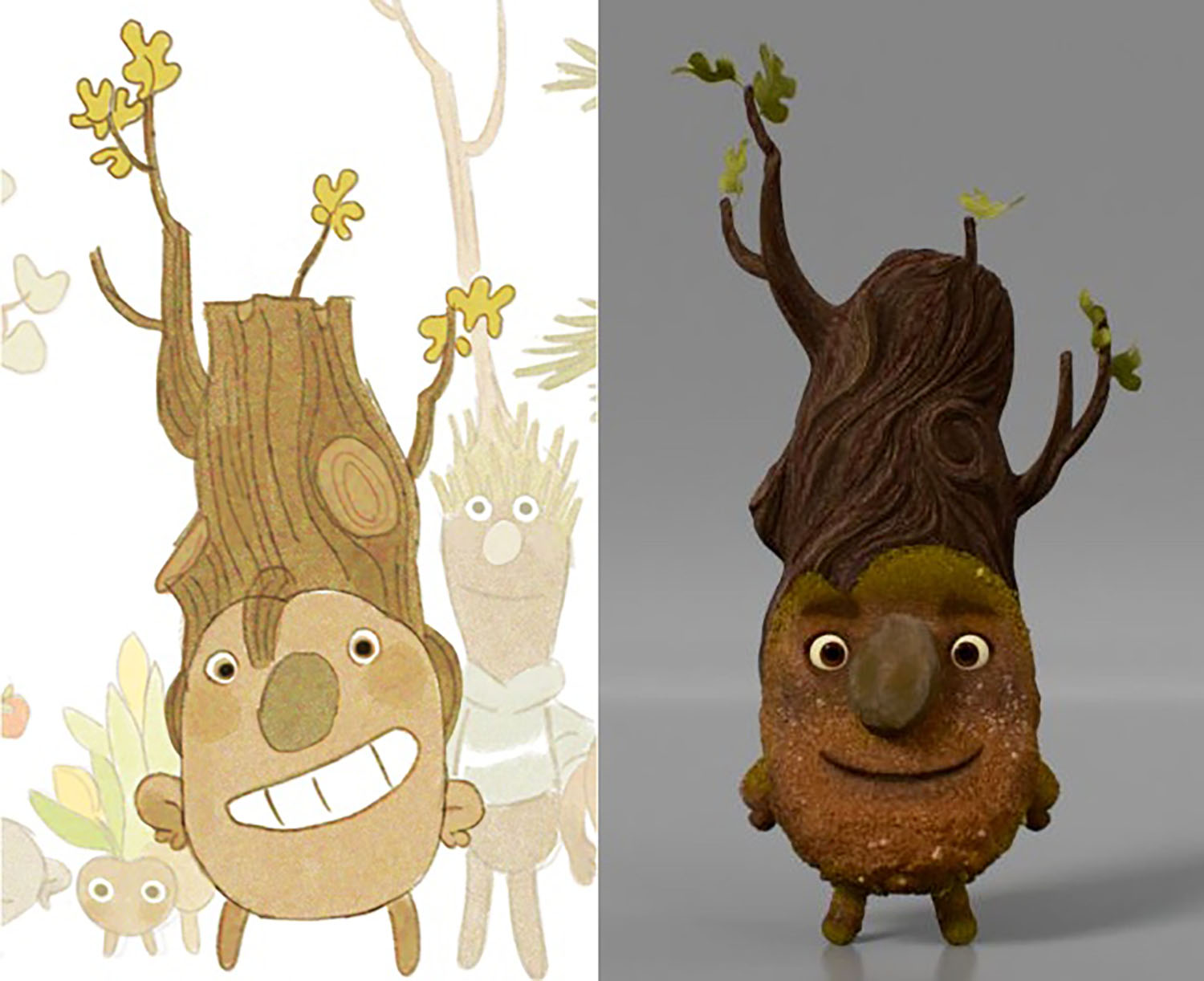 |
A Procedural Approach for Stylized Bark Shading Alec Bartsch, Colin Thompson, Fernando de Goes May 2023 The Earth characters in Pixar's feature film Elemental (2023) called for a stylized look with bark patterns resembling organic locks of hair. To scale this custom shading to an entire class of background characters, we implemented an artistic-driven procedural workflow that offered rapid iterations on pattern generation without requiring extensive ... more Paper (PDF) SIGGRAPH Talks 2023 |
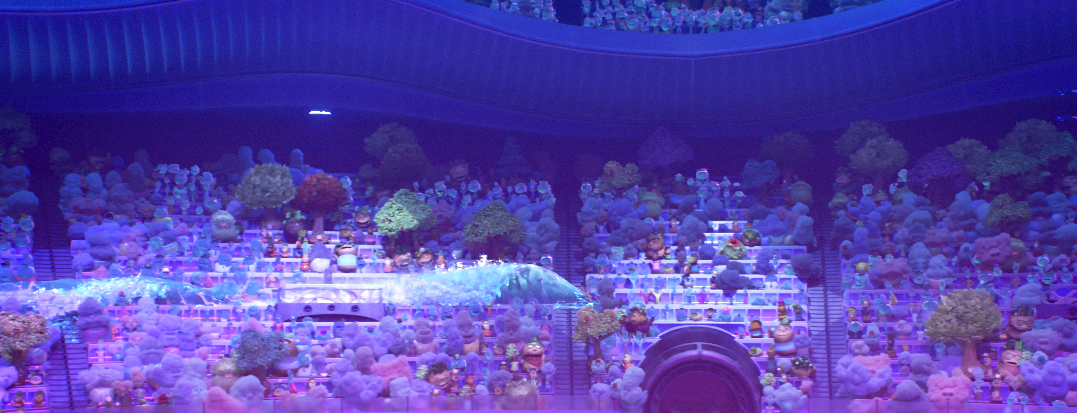 |
Everybody's an Effect: Scalable Volumetric Crowds on Elemental Sasha Ouellet, Aksel Taylan, Arnold Moon, Paul Kanyuk, William Reeves May 2023 Crowd animation and rendering is challenging enough with hard surface models, but the world of Elemental takes this to a new level by immersing the viewer in a teeming metropolis populated by sentient air, fire, and water, in the form of volumetric characters. By building a new Houdini-Engine character pipeline ... more Paper (PDF) SIGGRAPH Talks 2023 |
 |
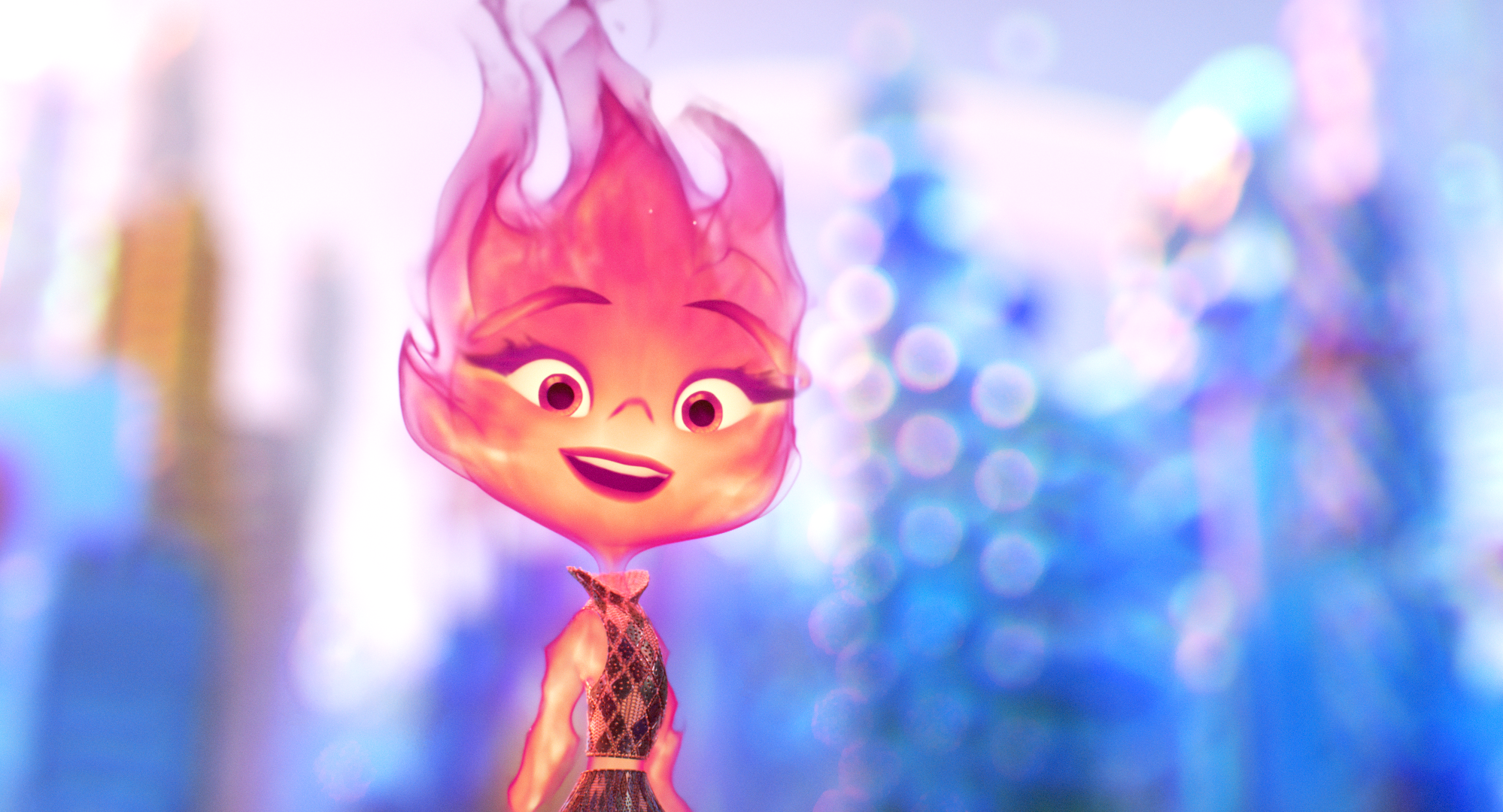
Elemental Characters: The Living Vegetation of Element City Greg Mourino, Kris Campbell, Brennan Mitchell, Grace Gilbert May 2023 The Earth characters of Pixar's Elemental feature a wide range of foliage adornments, ranging from bushes and small plants to trees that tower over their bodies. Creating appealing motion for each of the variations of these characters presented a unique challenge to the Simulation Team, and led to a significant ... more Paper (PDF) SIGGRAPH Talks 2023 |
 |
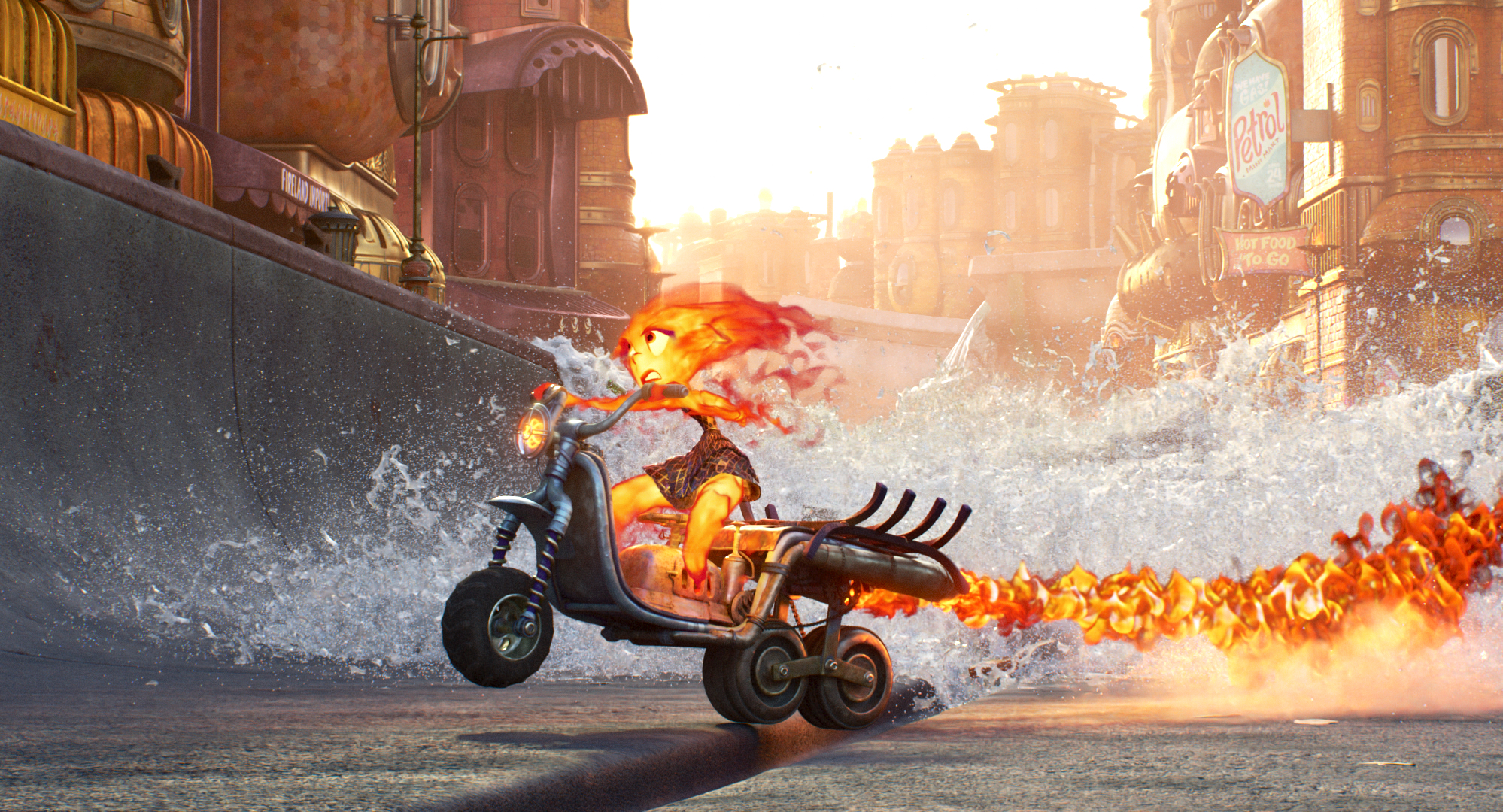
Creating Elemental Characters: From Sparks to Fire Jonathan Hoffman, Te Hu, Paul Kanyuk, Stephen Marshall, George Nguyen, Hope Schroers, Patrick Witting May 2023 Pixar has a long history of creating high-quality effects and characters that aid in the telling of wonderful stories. With Disney and Pixar's Elemental, we have taken the next groundbreaking step in creating fully simulated, animated, and stylized characters. In this talk, we will present the framework and process that ... more Paper (PDF) SIGGRAPH Talks 2023 |
 |
Singed Silhouettes and Feed Forward Flames: Volumetric Neural Style Transfer for Expressive Fire Simulation Paul Kanyuk, Vinicius C. Azevedo, Raphael Ortiz, Jingwei Tang May 2023 While controlling simulated gaseous volumes remains an ongoing battle when seeking realism in computer graphics, creating appealing characters entirely out of these simulations brought this challenge to an entirely new level in Pixar's film Elemental. For fire characters, like the protagonist Ember, their faces and bodies needed to look and ... more Paper (PDF) SIGGRAPH Talks 2023 |
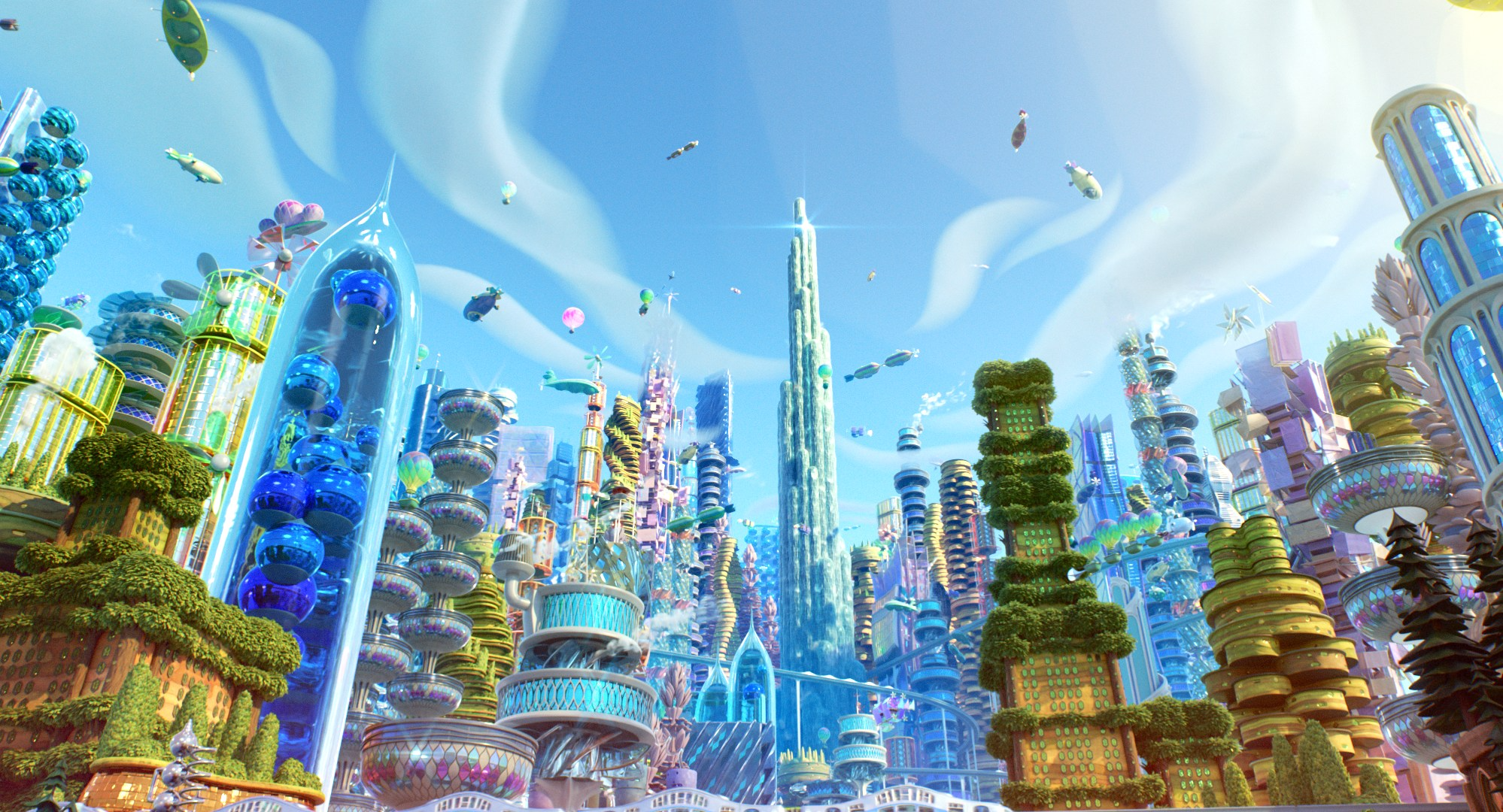 |
Procedural Techniques for Large, Dynamic Sets in Elemental Aylwin Villanueva, Mike Ravella, Brandon Montell, Ting Zhang, Hosuk Chang May 2023 The world of Pixar's film Elemental is inhabited by characters made of fire, water, air and earth, and we needed to give these characters a home that was just as dynamic as they were. Specifically, we needed to build a city with new and distinct forms of architecture for each ... more Paper (PDF) SIGGRAPH Talks 2023 |
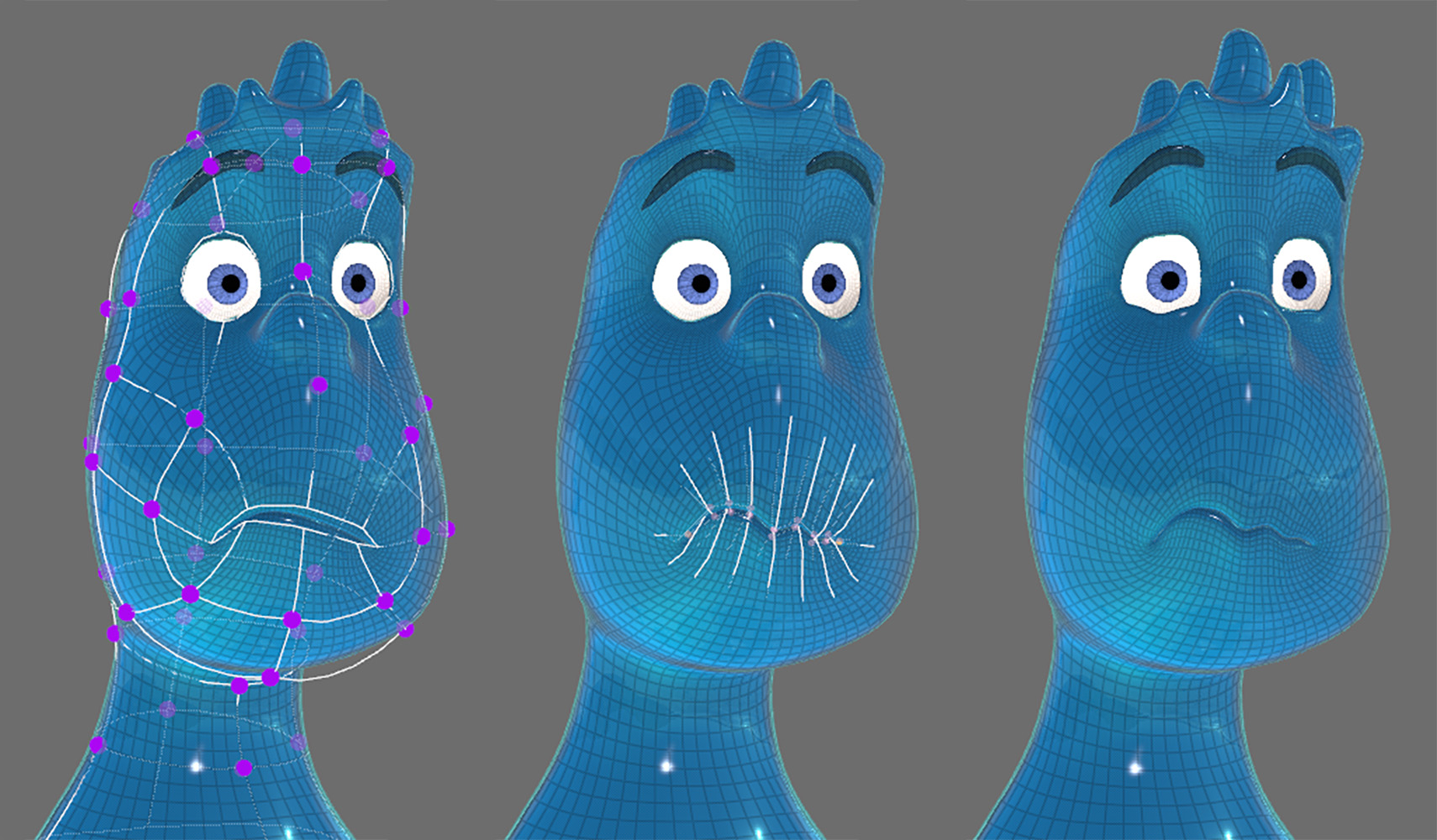 |
Shaping the Elements: Curvenet Animation Controls in Pixar's Elemental Duc Nguyen, Jeremie Talbot, William Sheffler, Mark Hessler, Kurt Fleischer, Fernando de Goes May 2023 We present a new shaping rig for authoring layers of animation control that facilitate surface editing in shot work. Our approach expands the curvenet rigging technology [de Goes et al. 2022] by introducing new tools that auto-generate a surface-aligned direct manipulator per curvenet knot. As a result, we obtain a ... more Paper (PDF) SIGGRAPH Talks 2023 |
 |
Volume Rendering for Pixar's Elemental Julian Fong May 2023 This work presents recent updates to volume rendering in RenderMan, the production renderer used at Pixar. With the advent of increasingly complicated volumetric assets such as those seen in Pixar's films Soul and Elemental, our aggregate volume renderer required changes to handle complex water based characters; optimizations for complicated scenes; ... more Paper (PDF) SIGGRAPH Talks 2023 |
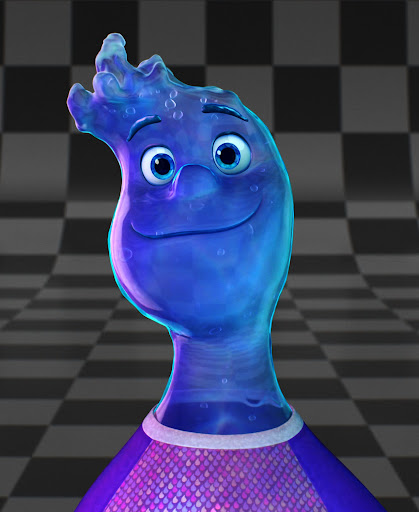 |
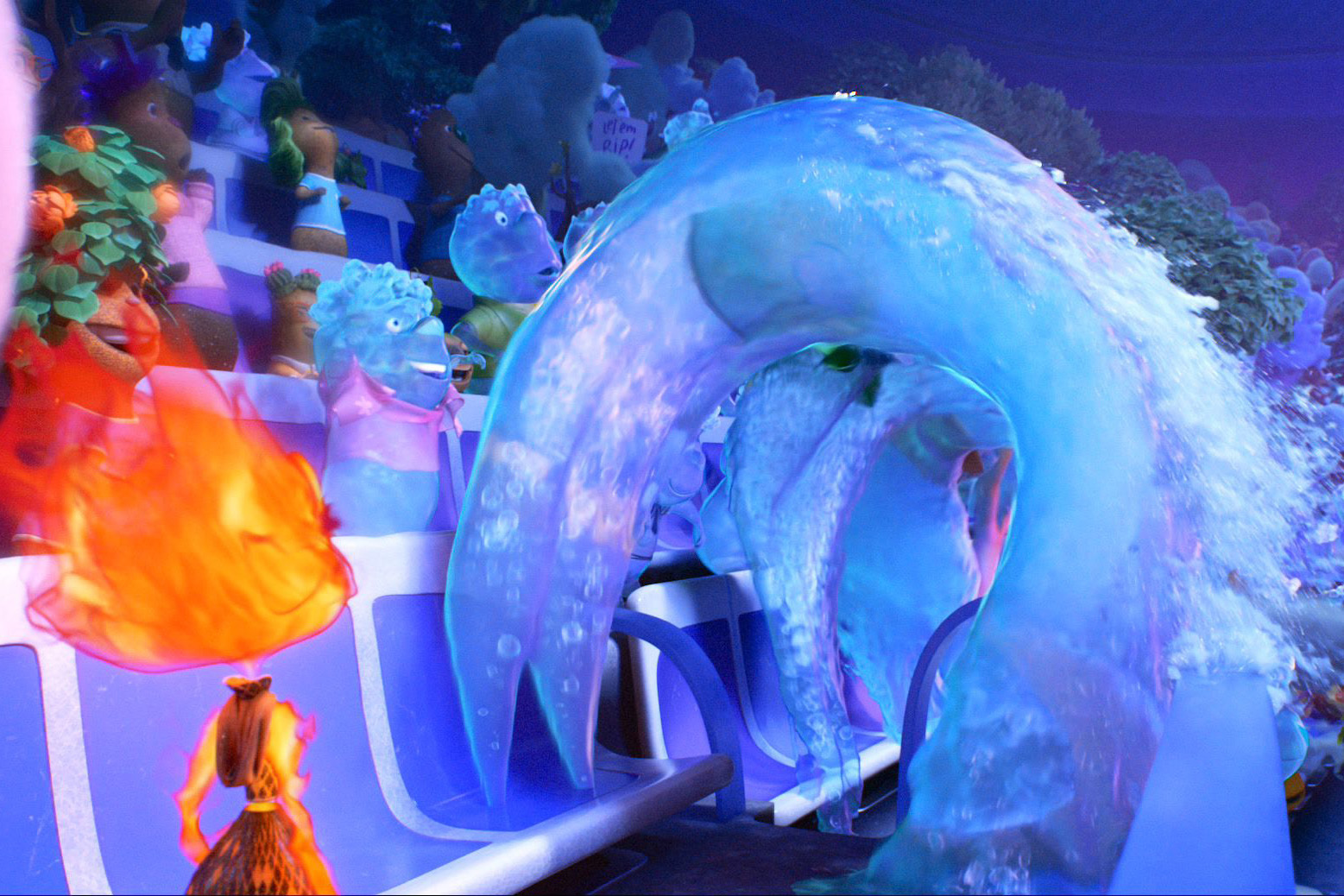
Elemental Characters: Bringing Water to Life Max Gilbert, Jacob Kuenzel, Kris Campbell, Greg Gladstone, Jean-Claude Kalache, Fernando de Goes, Jon Barry May 2023 In Pixar's Elemental, the water characters of Element City are not drenched in water, but made of the element itself. Our goal was to create characters that felt non-human and of water, yet still maintain design, readability and charm. Starting with the concept art (inset) and at every step of ... more Paper (PDF) SIGGRAPH Talks 2023 |
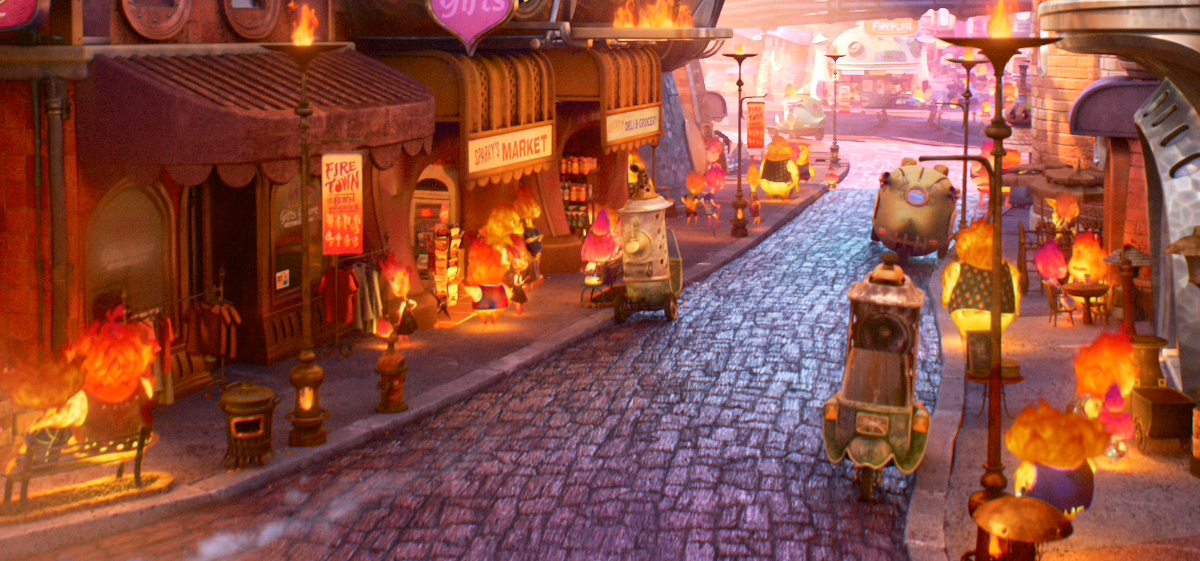 |
Engine-eering a Procedural Pipeline with USD Michael Rice, Joshua Jenny, Will Harrower May 2023 Typical cache-based non-procedural methods can have downsides within a production studio. Modifications to pre-cached data can introduce an expensive feedback loop between departments (e.g. Layout pushing work back to FX). Proceduralism solves this by allowing artists themselves to make their own modifications, without need for a new cache delivery from ... more Paper (PDF) SIGGRAPH Talks 2023 |
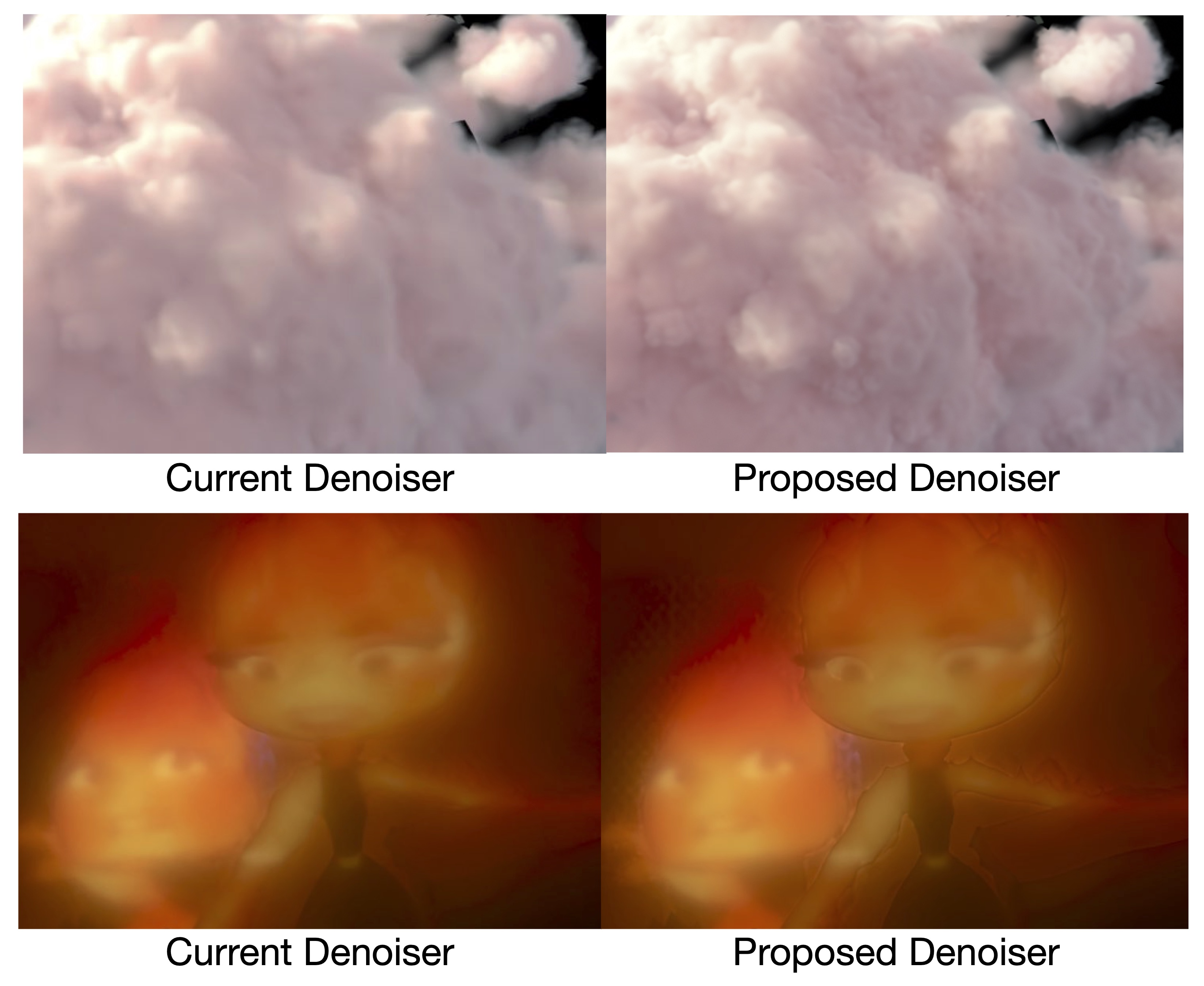 |
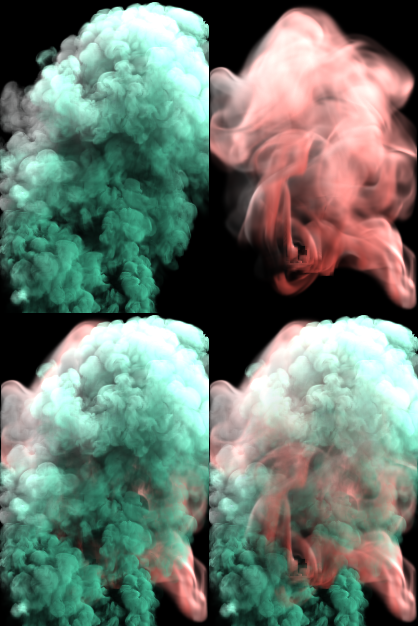
Denoising Production Volumetric Rendering Shilin Zhu, Xianyao Zhang, Gerhard Rothlin, Marios Papas, Mark Meyer May 2023 Denoising is an integral part of production rendering pipelines that use Monte-Carlo (MC) path tracing. Machine learning based denoisers have been proven to effectively remove the residual noise and produce a clean image. However, denoising volumetric rendering remains a problem due to the lack of useful features and large-scale volume ... more Paper (PDF) SIGGRAPH Talks 2023 |
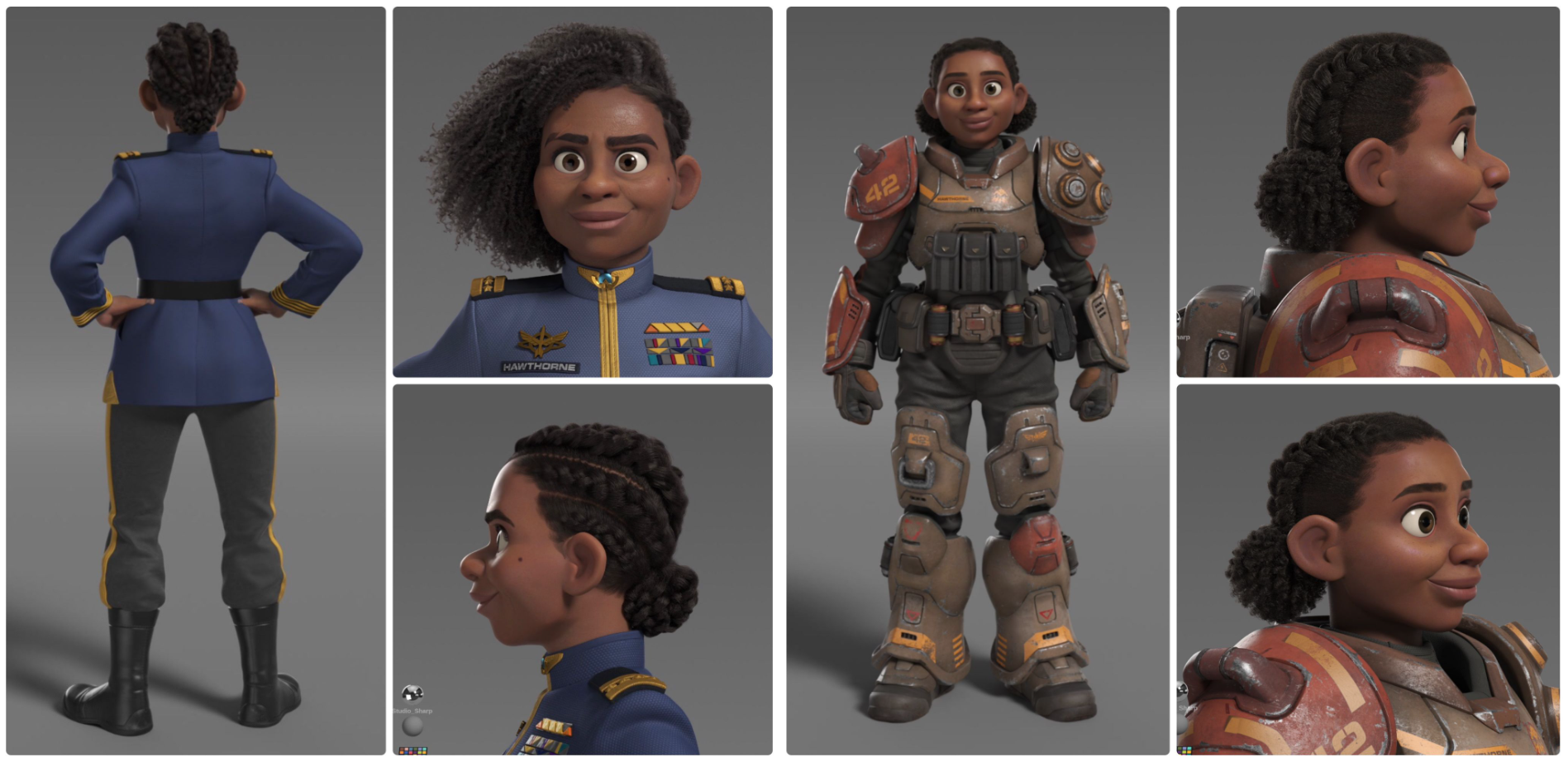 |
Space Rangers with Cornrows Sofya Ogunseitan June 2022 This presentation is a debrief of the processes and methods added to Pixar's groom pipeline to create the hairstyles of Lightyear characters Alisha and Izzy Hawthorne. The processes include novel ways of generating braids, curls, braid partitioning hairs (edge hairs), and graphic shapes populated with hair. Paper (PDF) |
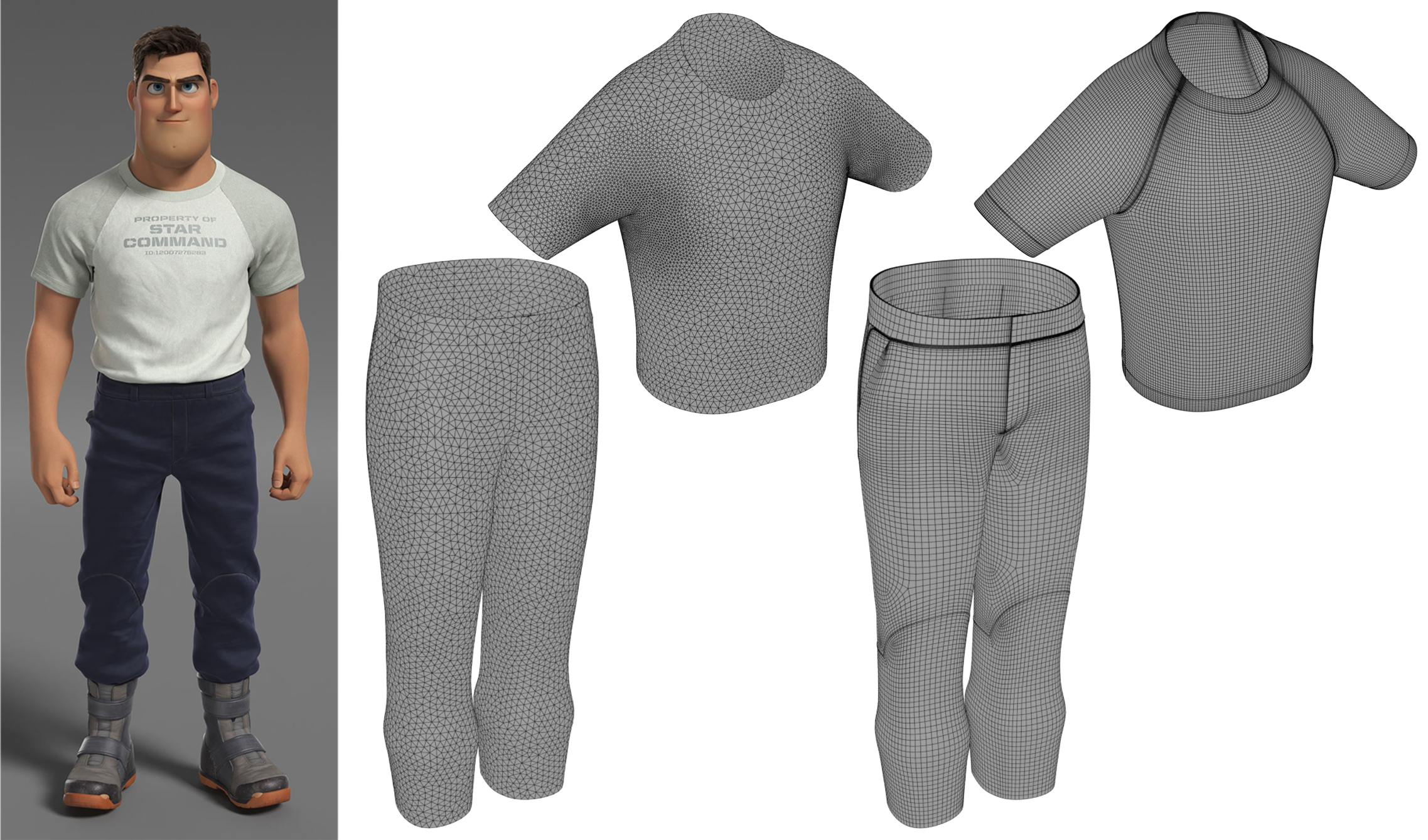 |
Revamping the Cloth Tailoring Pipeline at Pixar Christine Waggoner, Fernando de Goes May 2022 This work presents the most recent updates to the cloth tailoring pipeline at Pixar. We start by reviewing the evolution of cloth authoring tools used at Pixar from 2001 to the present day. Motivated by previous approaches, we introduce a structured workflow for cloth tailoring that manages multiple mesh versions ... more Paper (PDF) Siggraph Talk 2022 |
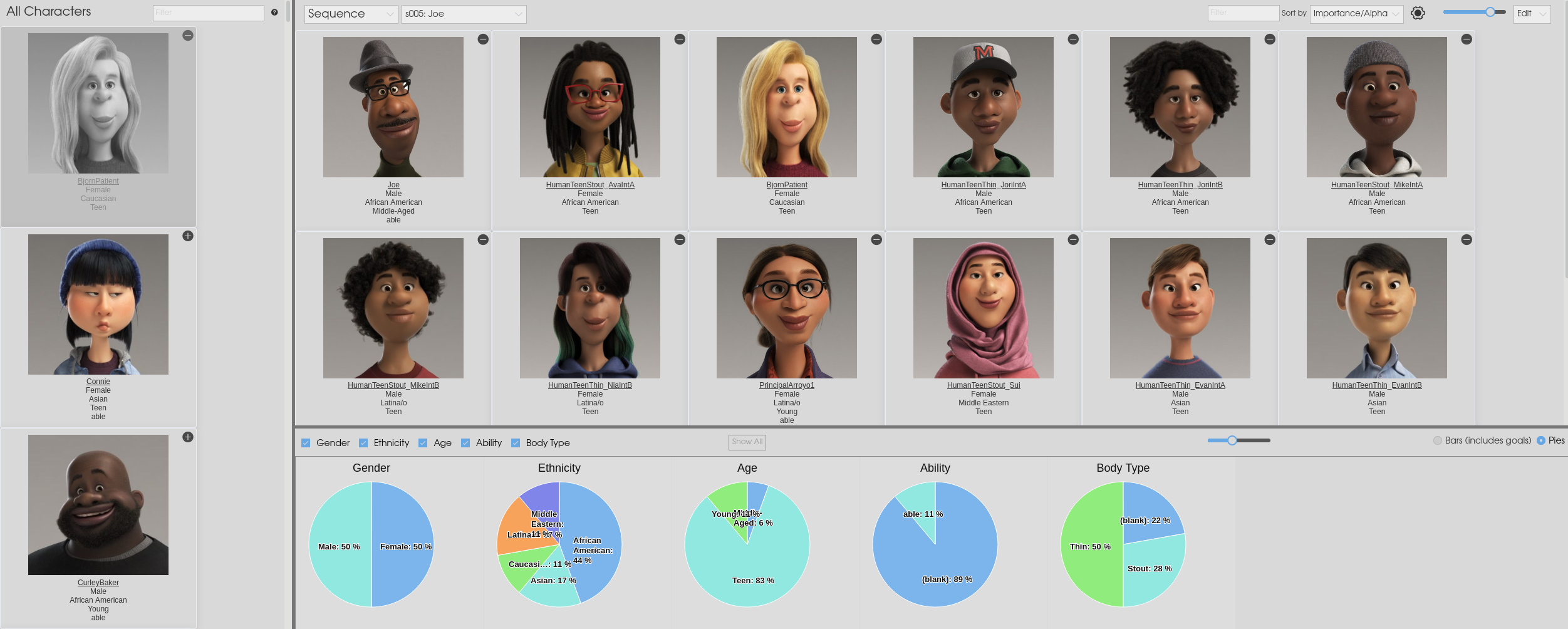 |
Tracking Character Diversity in the Animation Pipeline Mara MacMahon, Emily Wilson, Peter Nye, Gordon Cameron, Jessica Heidt, Joshua Minor, and Paul Kanyuk May 2022 As we explore a broad range of characters and stories in our films, it has become increasingly valuable to view breakdowns of our character pools and selections by demographic: to build and use our assets efficiently, reinforce storytelling and world building choices, and ensure consistent decision-making across the pipeline. With the ... more Paper (PDF) Siggraph Talk 2022 |
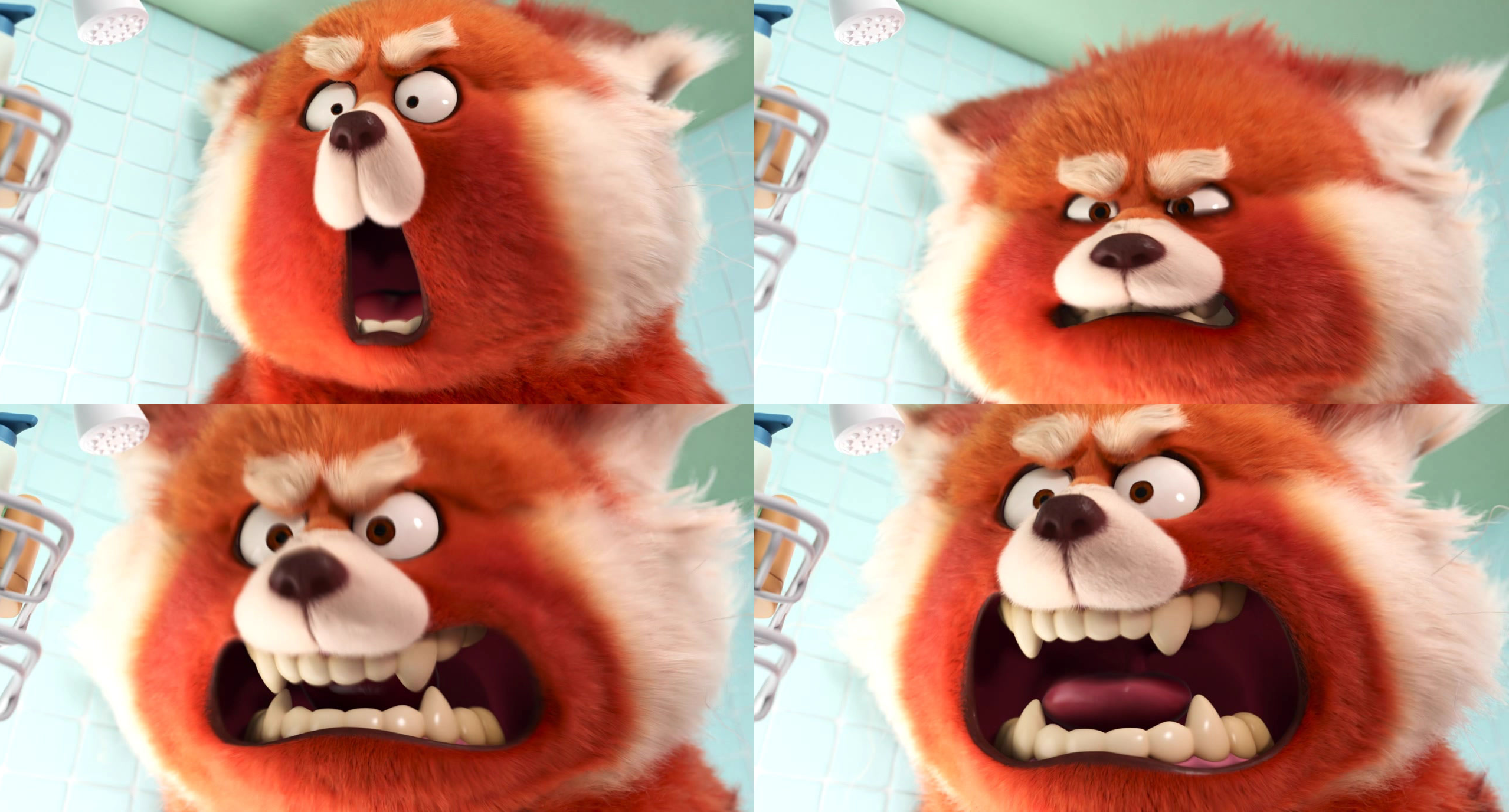 |
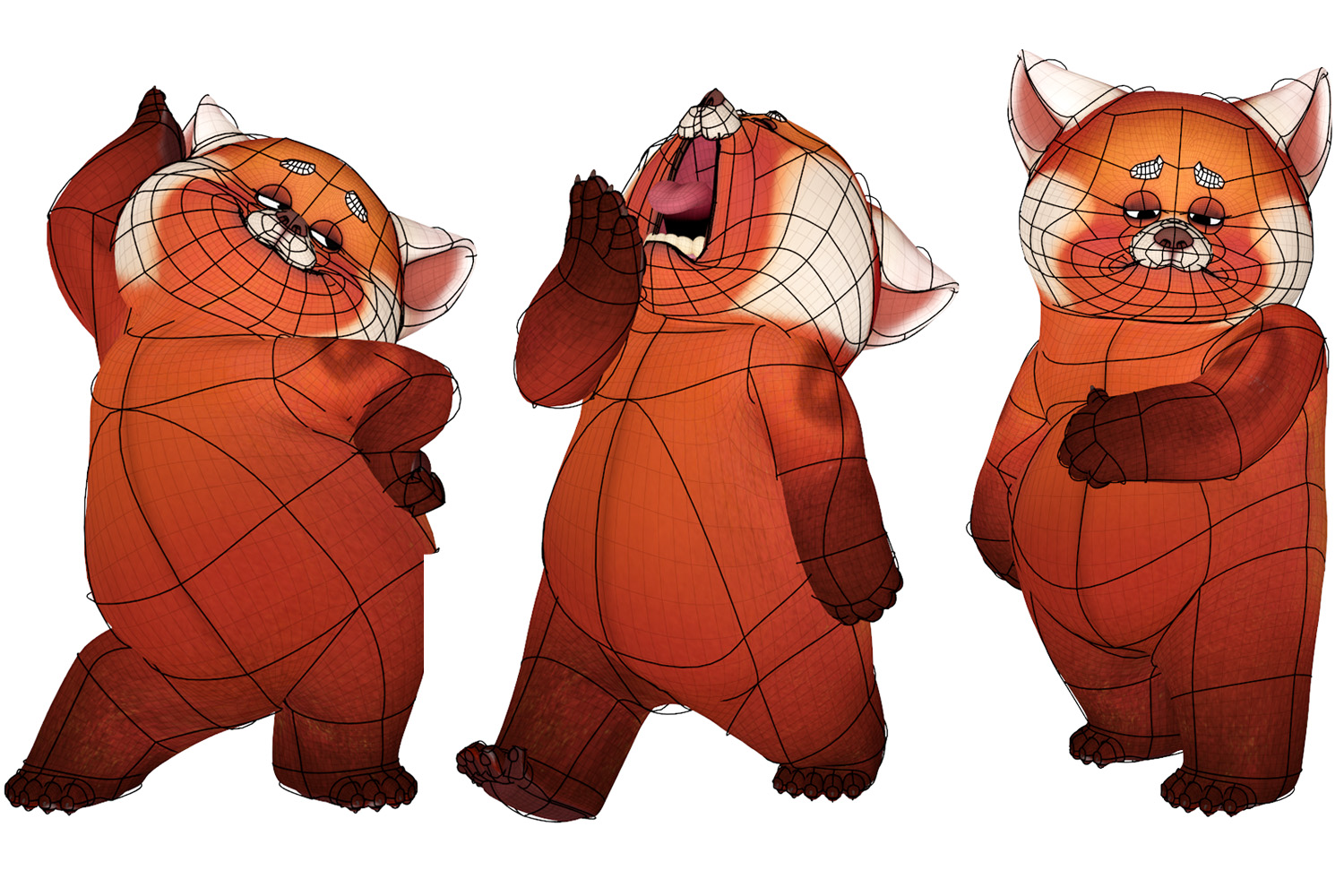
Hair Emoting with Style Guides in Turning Red Brandon Montell, Fernando de Goes, Jacob Brooks May 2022 For Pixar's feature film Turning Red, the grooming and simulation teams faced the challenge of handling characters with millions of fur and hair curves, which often needed to behave differently in each shot reflecting the characters' emotional states. This work describes new tools developed to assist artists in managing and ... more Paper (PDF) Siggraph Talk 2022 |
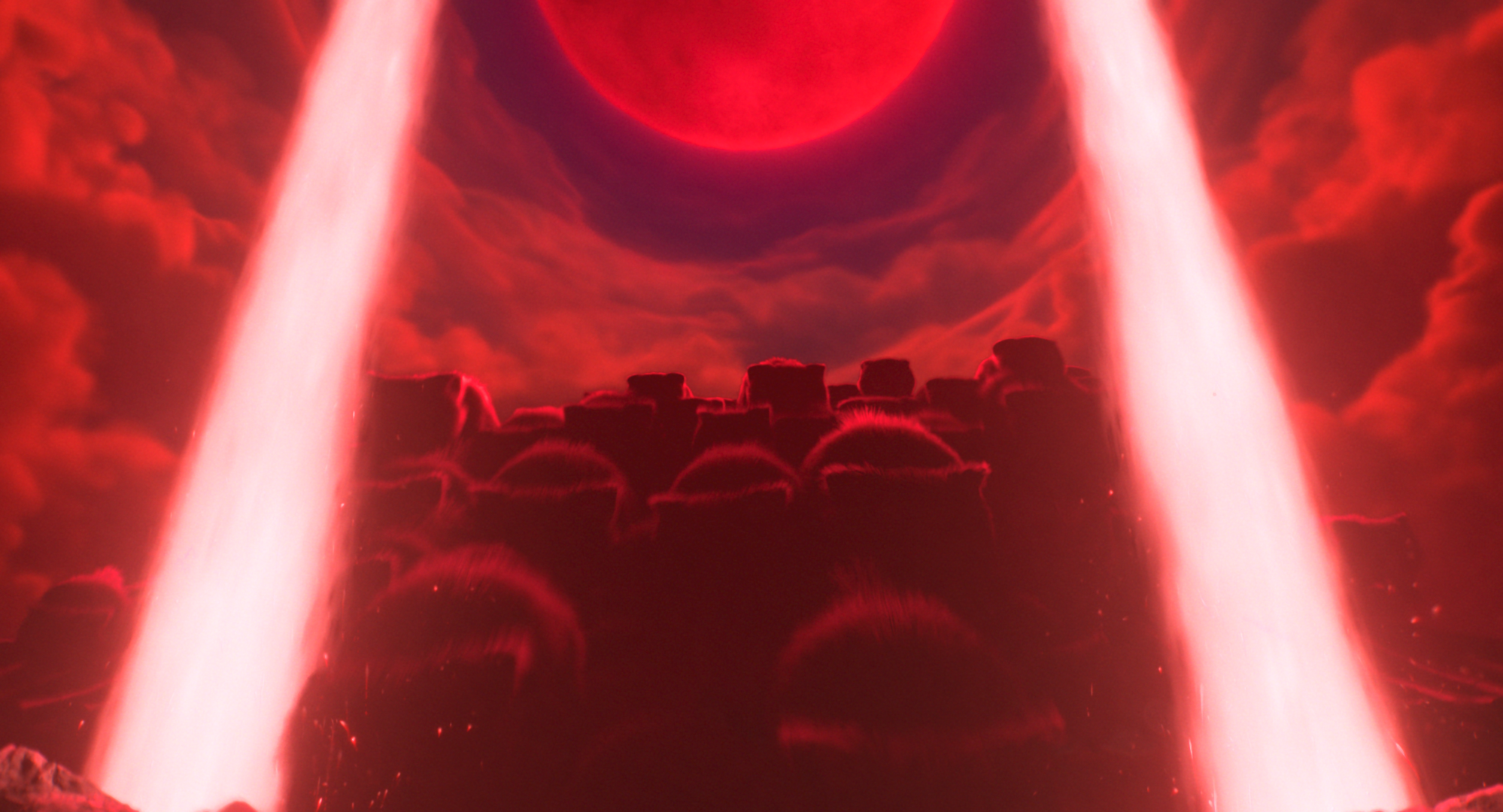 |
From Procedural Panda-monium to Fast Vectorized Execution using PCF Crowd Primitives Aaron Lo, Venkateswaran Krishna, J.D. Northrup, Mark Hessler, Arnold Moon, Michael Lorenzen, Jonah Laird, and Paul Kanyuk May 2022 In animation and VFX, crowds are too often considered an "edge case", to be handled by specialized pipeline outside the main workflows. Requirements of scale and traditional reliance on history based simulation have been obstacles to properly building crowd systems into the core functionality of digital content creation software. Pixar's ... more Paper (PDF) Siggraph Talk 2022 |
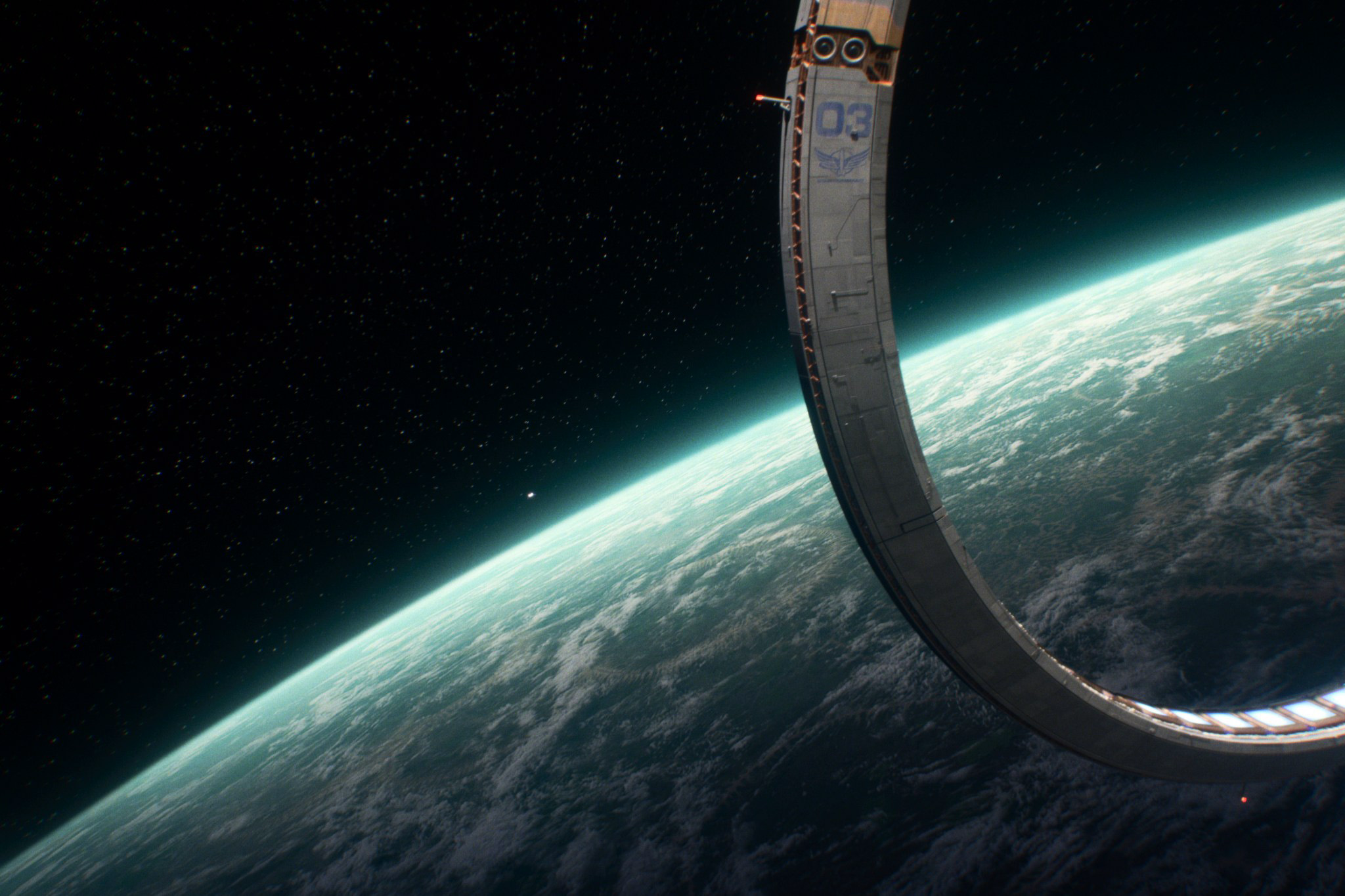 |
Creating a Planet and Clouds Lightyears Away Laura Murphy, Joshua Jenny, Michael O'Brien, Colin Thompson May 2022 For Lightyear, Space Ranger Buzz Lightyear's exploits take him on a journey around the planet, T'Kani Prime and its neighboring star. In order to create realistic planets as seen from his star ship, we built a new workflow for creating procedural planet terrains and volumetric clouds as seen from space. ... more Paper (PDF) Siggraph Talk 2022 |
 |
Character Articulation through Profile Curves Fernando de Goes, William Sheffler, Kurt Fleischer 05 2022 Computer animation relies heavily on rigging setups that articulate character surfaces through a broad range of poses. Although many deformation strategies have been proposed over the years, constructing character rigs is still a cumbersome process that involves repetitive authoring of point weights and corrective sculpts with limited and indirect shaping ... more Paper (PDF) Video Video SIGGRAPH 2022 |
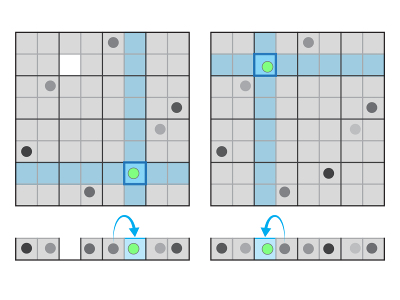 |
Stochastic Generation of (t,s) Sample Sequences Andrew Helmer, Per Christensen, and Andrew Kensler Nov 2021 We introduce a novel method to generate sample sequences that are progressively stratified both in high dimensions and in lower-dimensional projections. Our method comes from a new observation that Owen-scrambled quasi-Monte Carlo (QMC) sequences can be generated as stratified samples, merging the QMC construction and random scrambling into a stochastic ... more Paper (PDF) Additional materials: [suppl.pdf] Eurographics Symposium on Rendering 2021 |
 |
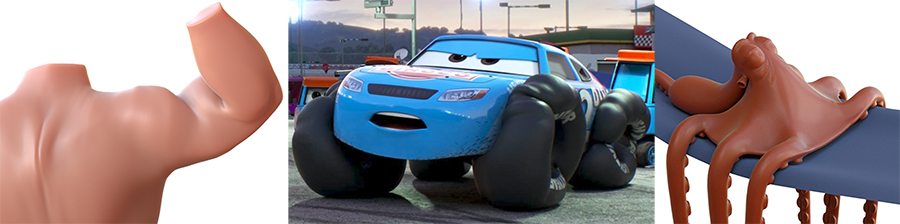
Hypertextural Garments on Pixar's Soul Jonathan Hoffman, Matt Kuruc, Junyi Ling, Alex Marino, George Nguyen, Sasha Ouellet July 2020 The art direction of Souls version of New York City sought a highly detailed "hypertextural" style to contrast the ethereal volumetric world our characters visit later in the film. The Soul characters team identified that increasing the detail of our garment assets heightened the separation between the two worlds. To ... more Paper (PDF) |
 |
Dynamic Deformables: Implementation and Production Practicalities Theodore Kim, David Eberle July 2020 Simulating dynamic deformation has been an integral component of Pixar's storytelling since Boo's shirt in Monsters, Inc. (2001). Recently, several key transformations have been applied to Pixar's core simulator Fizt that improve its speed, robustness, and generality. Starting with Coco (2017), improved collision detection and response were incorporated into the ... more Paper (PDF) Video Additional materials: [code.zip] |
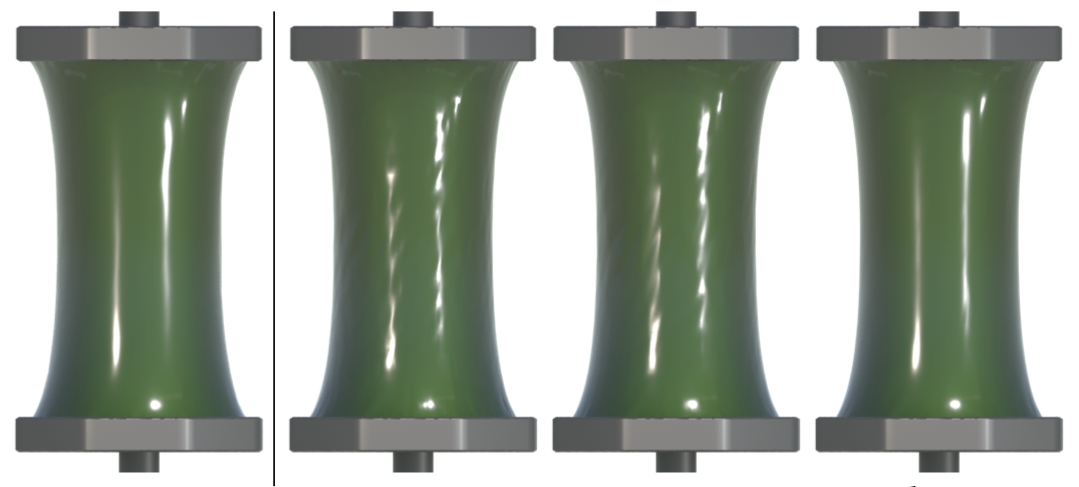 |
Phong Deformation: A better C0 interpolant for embedded deformation Doug L. James July 2020 Physics-based simulations of deforming tetrahedral meshes are widely used to animate detailed embedded geometry. Unfortunately most practitioners still use linear interpolation (or other low-order schemes) on tetrahedra, which can produce undesirable visual artifacts, e.g., faceting and shading artifacts, that necessitate increasing the simulation's spatial resolution and, unfortunately, cost. In this paper, ... more Paper (PDF) Video |
 |
Rasterizing Volumes and Surfaces for Crowds on Soul Sasha Ouellet, Daniel Garcia, Stephen Gustafson, Matt Kuruc, Michael Lorenzen, George Nguyen, Grace Gilbert July 2020 In order to produce shots with hundreds of multi-volume crowd characters for Soul, we developed a pipeline rooted in rasterization techniques to pose density fields and other shading signals entirely at render-time. Paper (PDF) |
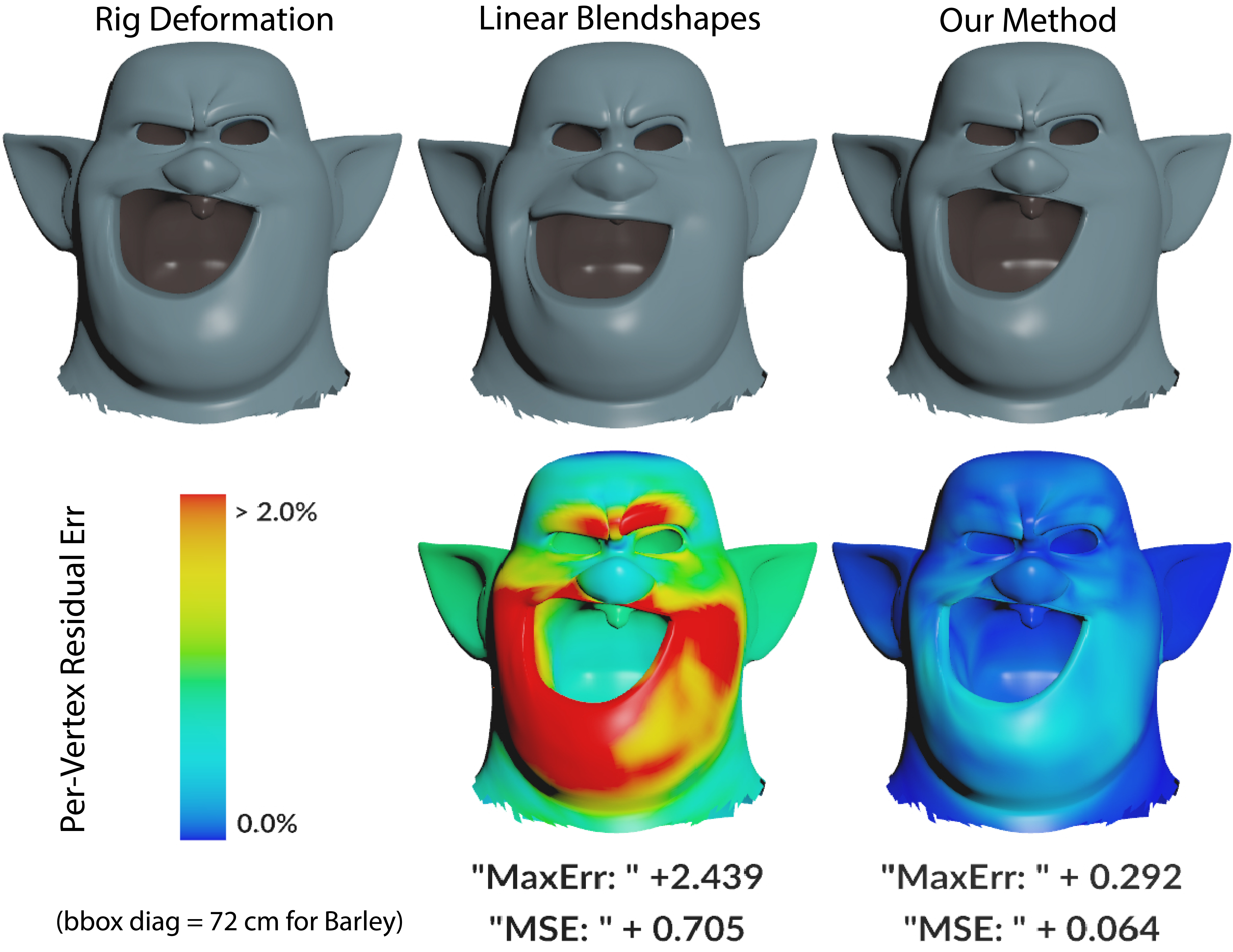 |
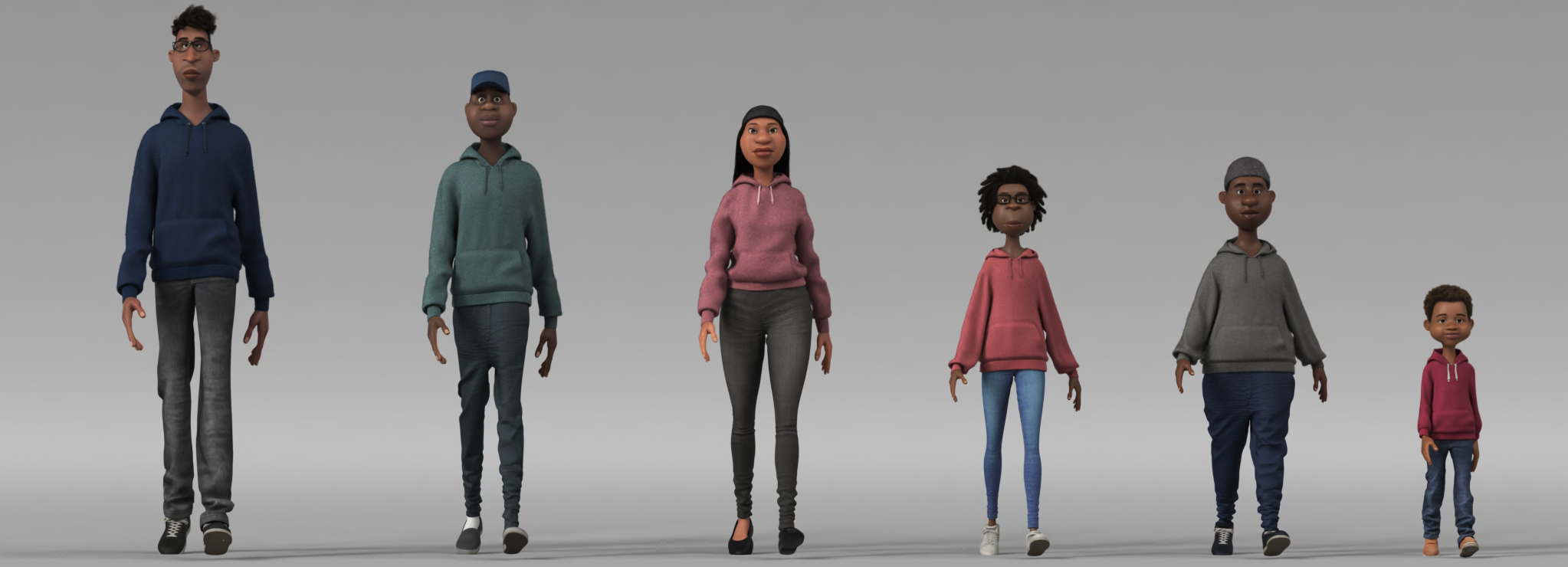
FaceBaker: Baking Character Facial Rigs with Machine Learning Sarah Radzihovsky, Fernando de Goes, Mark Meyer June 2020 Character rigs are procedural systems that deform a character's shape driven by a set of rig-control variables. Film quality character rigs are highly complex and therefore computationally expensive and slow to evaluate. We present a machine learning method for approximating facial mesh deformations which reduces rig computations, increases longevity of ... more Paper (PDF) Video |
 |
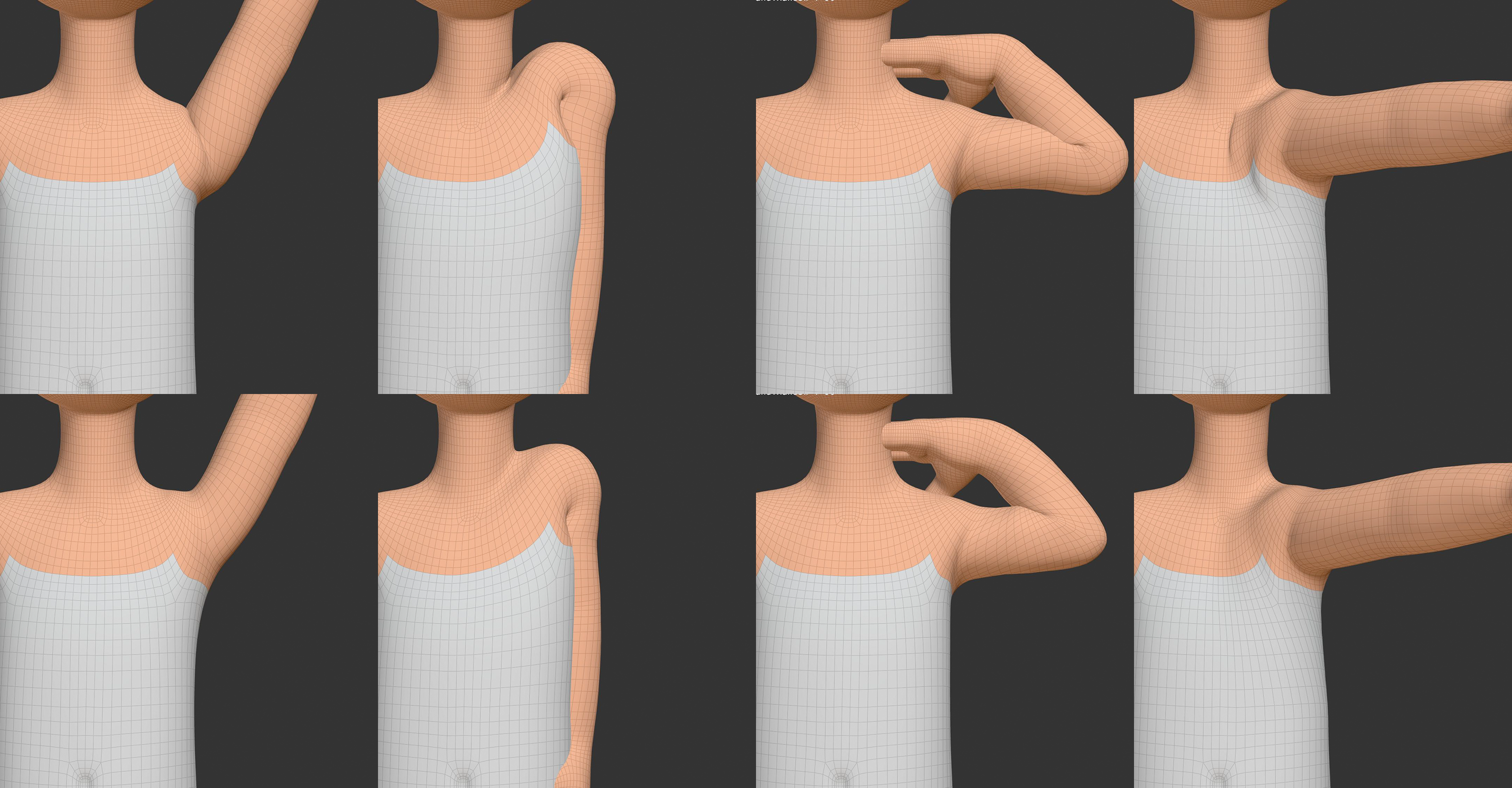
Garment Refitting for Digital Characters Fernando de Goes, Donald Fong, Meredith O'Malley June 2020 We present a new technique to refit garments between characters of different shapes. Our approach is based on a novel iterative scheme that alternates relaxation and rebinding optimizations. In the relaxation step, we use affine-invariant coordinates in order to adapt the input 3D garment to the shape of a target ... more Paper (PDF) Video |
 |
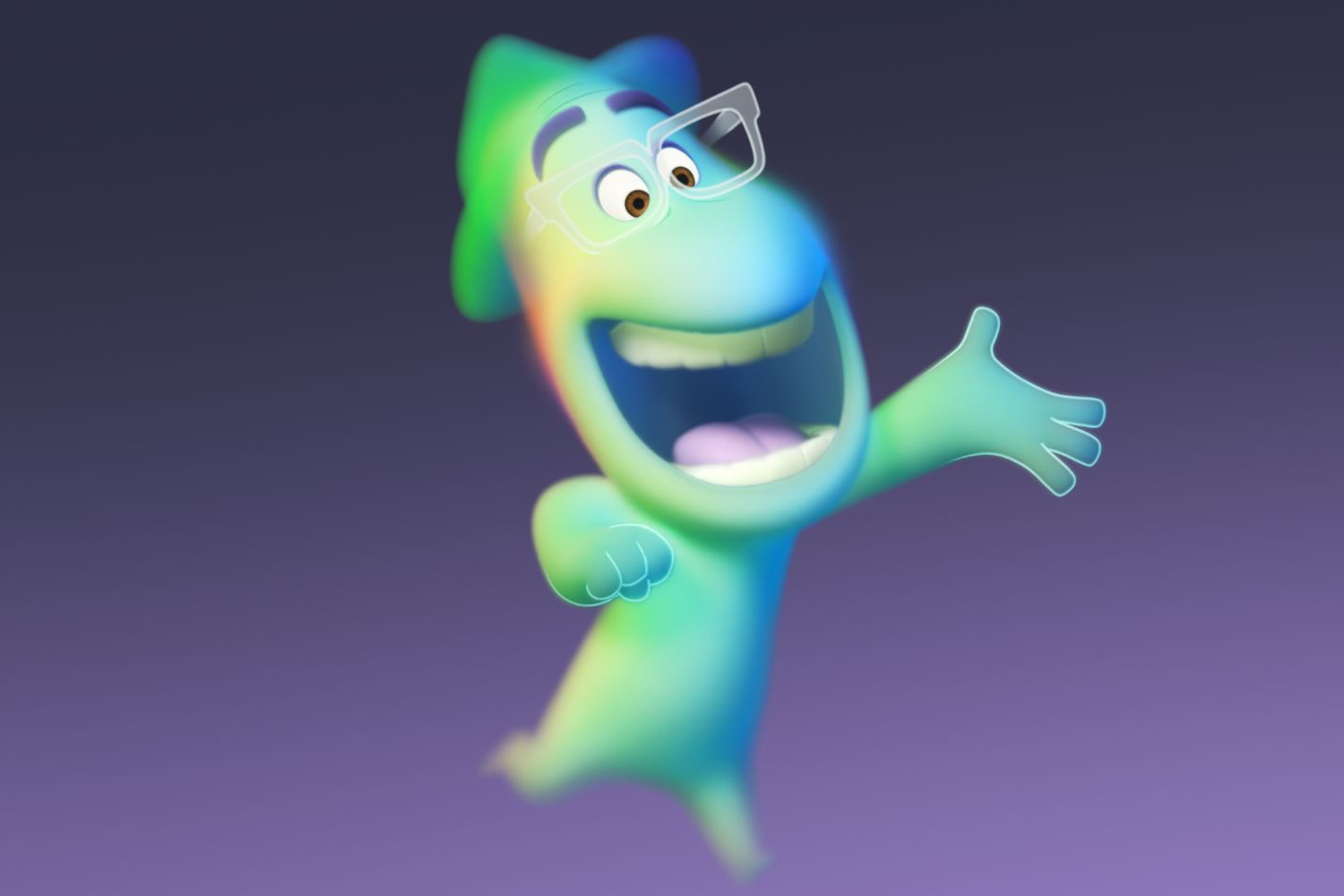
Sculpt Processing for Character Rigging Fernando de Goes, Patrick Coleman, Michael Comet, Alonso Martinez June 2020 Pose-space sculpting is a key component in character rigging workflows used by digital artists to create shape corrections that fire on top of deformation rigs. However, hand-crafting sculpts one pose at a time is notoriously laborious, involving multiple cleanup passes as well as repetitive manual edits. In this work, we ... more Paper (PDF) Video |
 |
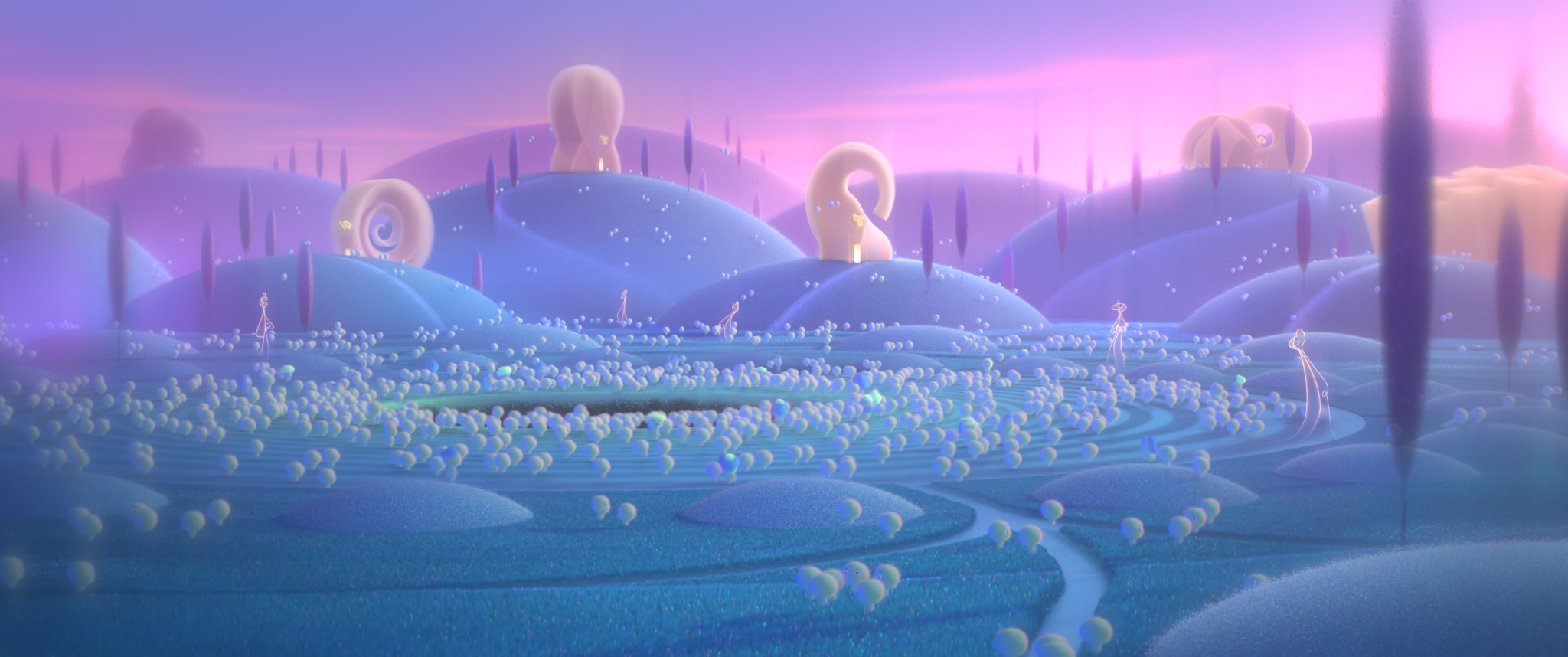
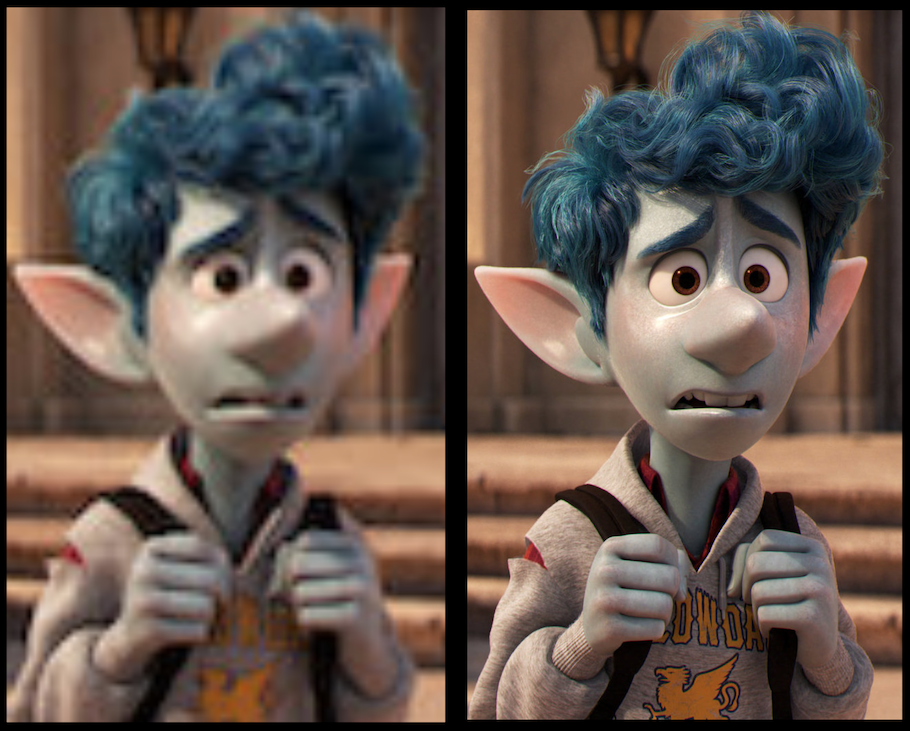
Making Souls: Methods and a Pipeline for Volumetric Characters Patrick Coleman, Laura Murphy, Markus Kranzler, Max Gilbert June 2020 The soul characters in Disney/Pixar's Soul have a stylized appearance that sets them into a unique world, which introduced many new challenges. Everyone from the art department and character modelers and shaders to the technical directors and developers in the effects, lighting, and software groups collaborated to bring this new ... more Paper (PDF) Video |
 |
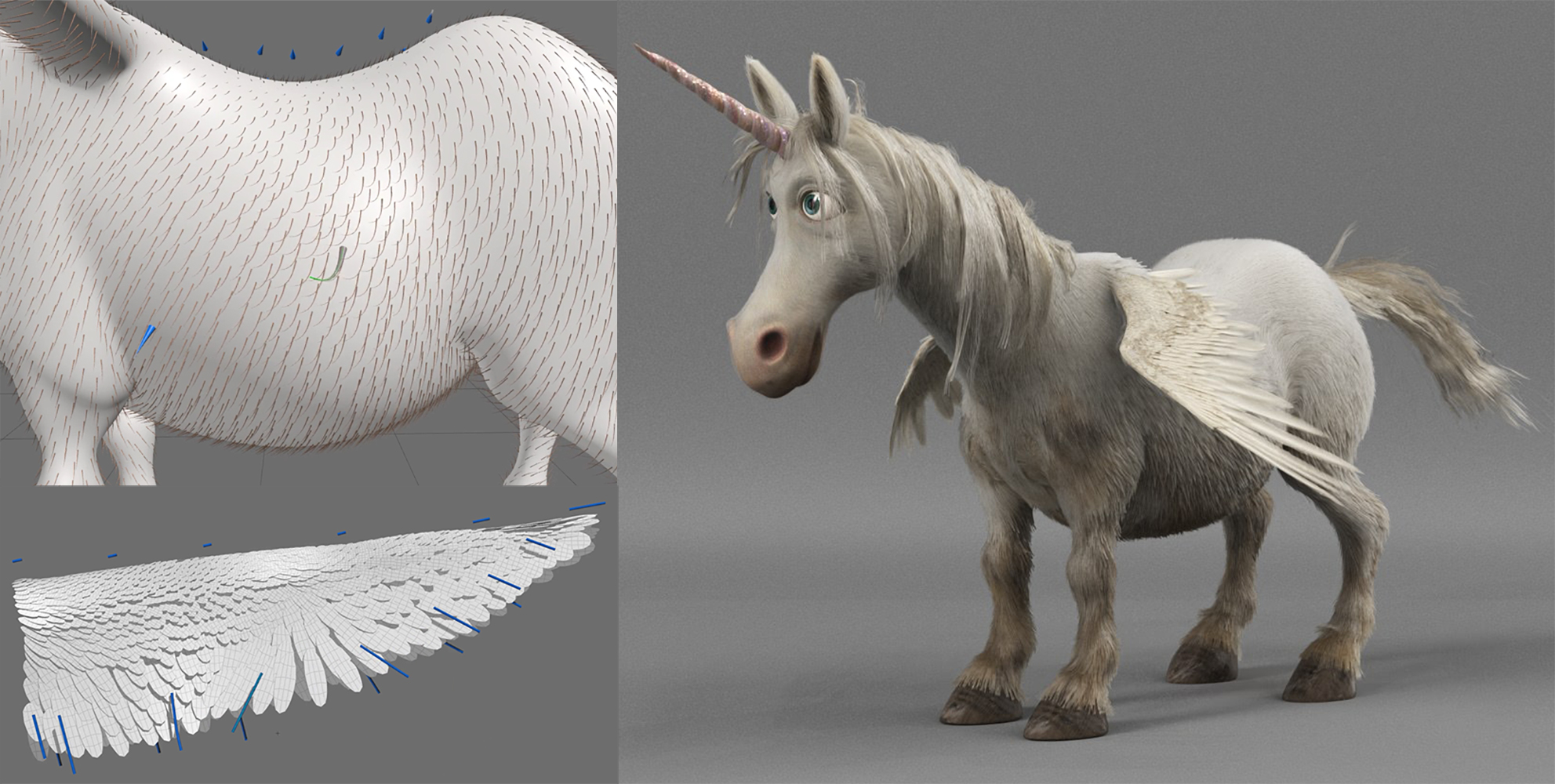
Deep Learned Super Resolution for Feature Film Production Vaibhav Vavilala, Mark Meyer June 2020 Upscaling techniques are commonly used to create high resolution images, which are cost-prohibitive or even impossible to produce otherwise. In recent years, deep learning methods have improved the detail and sharpness of upscaled images over traditional algorithms. Here we discuss the motivation and challenges of bringing deep learned super resolution ... more Paper (PDF) |
 |
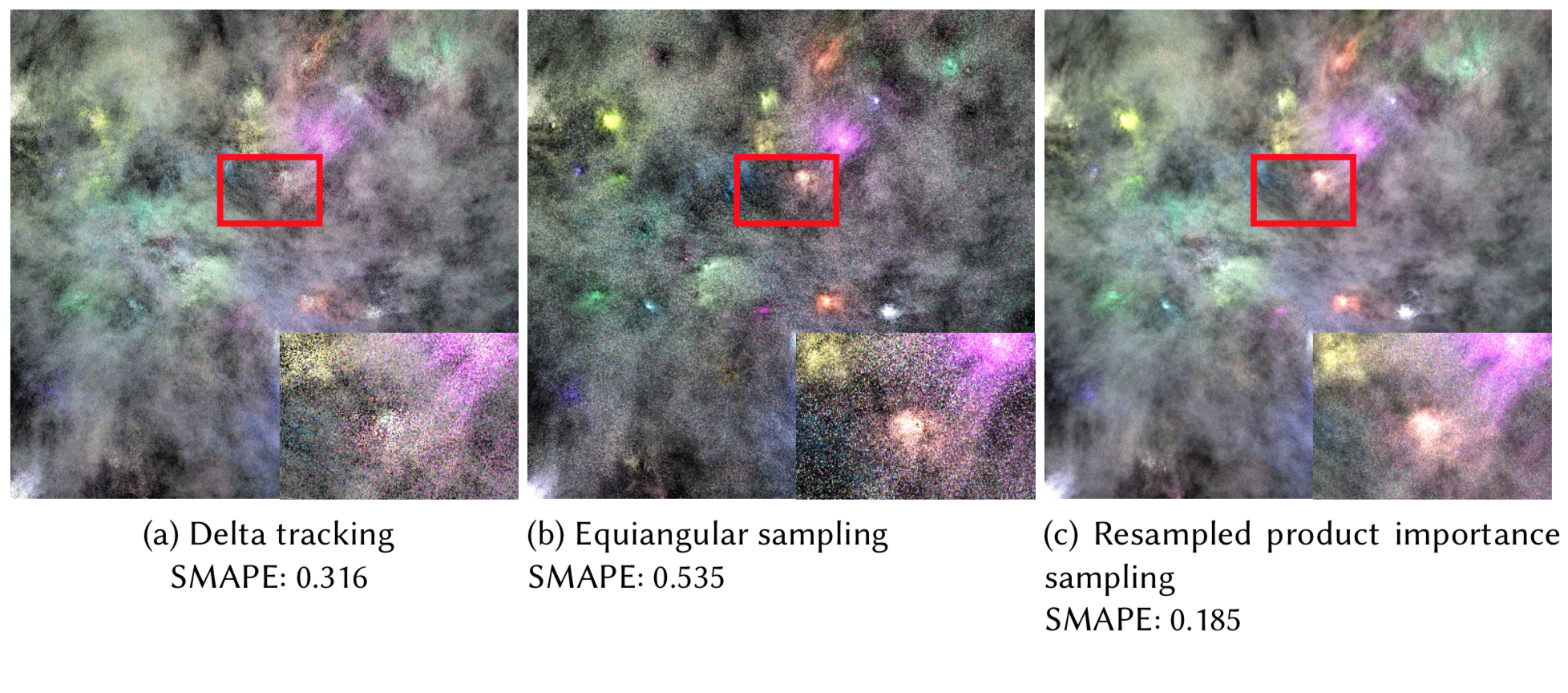
Discrete Differential Operators on Polygonal Meshes Fernando de Goes, Andrew Butts, Mathieu Desbrun April 2020 Geometry processing of surface meshes relies heavily on the discretization of differential operators such as gradient, Laplacian, and covariant derivative. While a variety of discrete operators over triangulated meshes have been developed and used for decades, a similar construction over polygonal meshes remains far less explored despite the prevalence of ... more Paper (PDF) |
 |
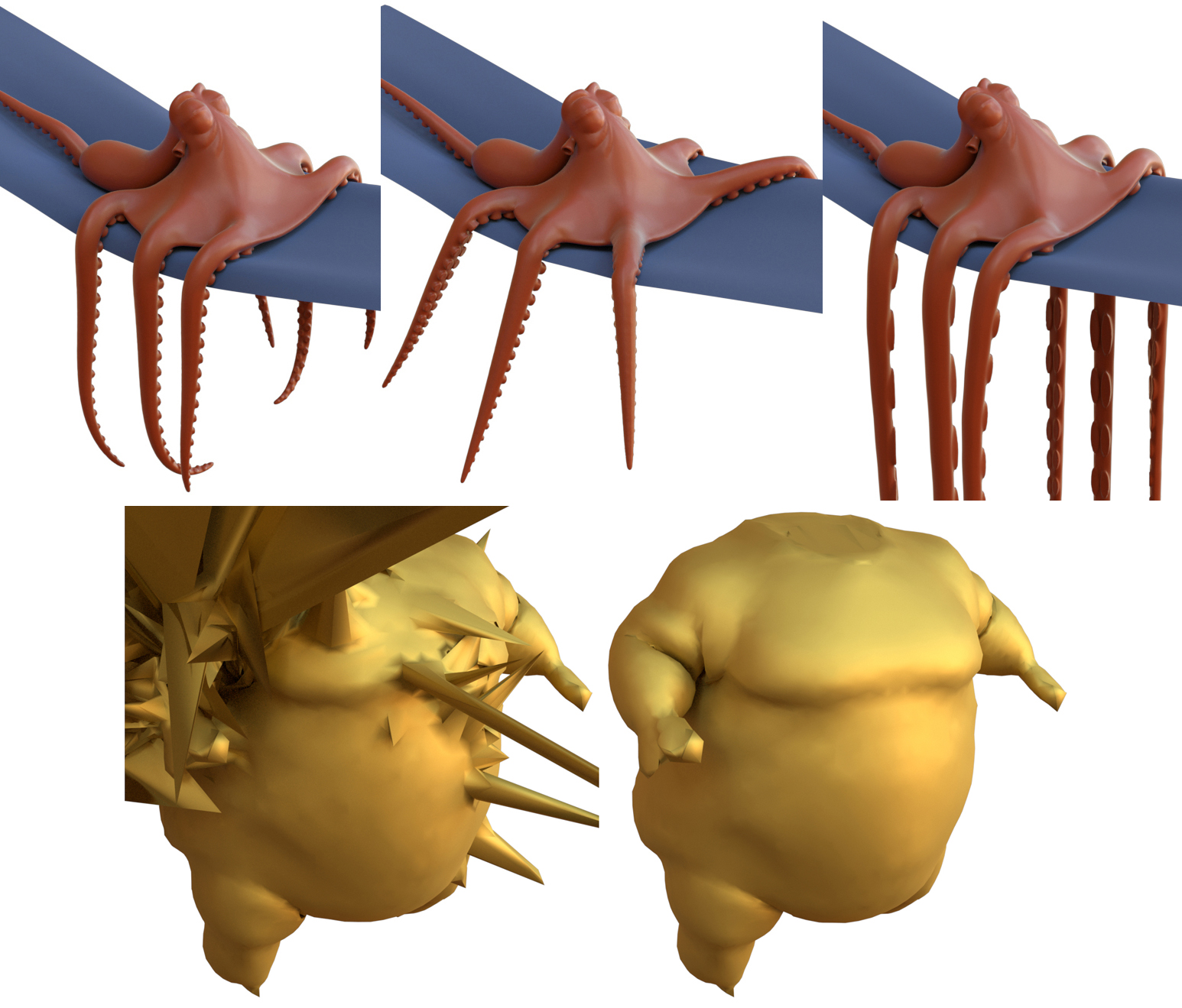
Product Importance Sampling of the Volume Rendering Equation using Virtual Density Segments Magnus Wrenninge, Ryusuke Villemin January 2020 We propose a new volumetric integration method that combines guiding of candidate point positions and importance resampling. We refer to this as the virtual density segment method (VDS). In particular, we show that this control can be driven by treating invertible PDFs as virtual density sources, which in turn ... more Paper (PDF) Available as Pixar Technical Memo #20-01 |
 |
Anisotropic Elasticity for Inversion-Safety and Element Rehabilitation Theodore Kim, Fernando de Goes, Hayley Iben July 2019 We present an analysis of anisotropic hyperelasticity, specifically transverse isotropy, that obtains closed-form expressions for the eigendecompositions of many common energies. We then use these to build fast and concise Newton implementations. We leverage our analysis in two separate applications. First, we show that existing anisotropic energies are not inversion-safe, ... more Paper (PDF) Video Additional materials: [Anisotropy2019_supplement.pdf], [matlab.zip] |
 |
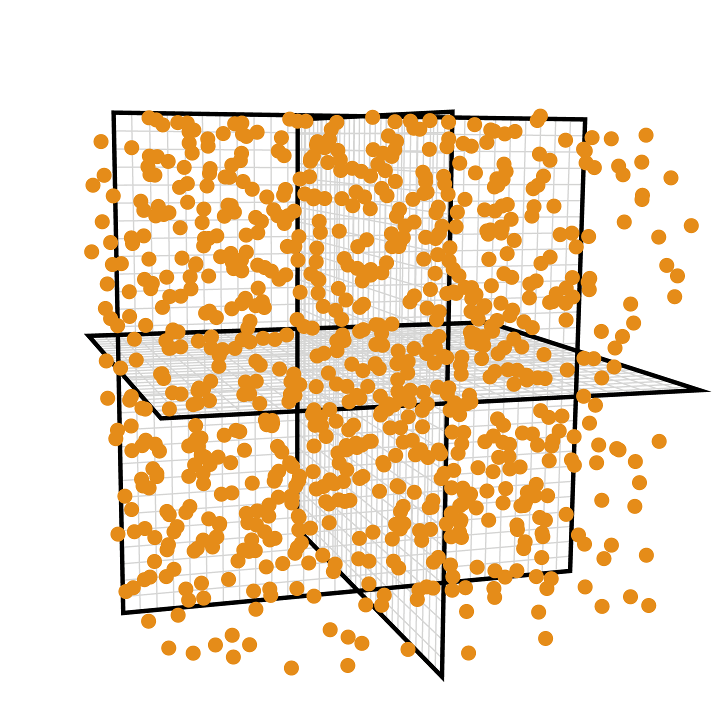
Light Pruning on Toy Story 4 Vaibhav Vavilala July 2019 Pixar films have recently seen drastically rising light counts via procedural generation, resulting in longer render times and slower interactive workflows. Here we present a fully automated, scalable, and error-free light pruning pipeline deployed on Toy Story 4 that reduces final render times by 15-50% in challenging cases, accelerates interactive ... more Paper (PDF) |
 |
Orthogonal Array Sampling for Monte Carlo Rendering Wojciech Jarosz, Afnan Enayet, Andrew Kensler, Charlie Kilpatrick, Per Christensen July 2019 We generalize N-rooks, jittered, and (correlated) multi-jittered sampling to higher dimensions by importing and improving upon a class of techniques called orthogonal arrays from the statistics literature. Renderers typically combine or "pad" a collection of lower-dimensional (e.g. 2D and 1D) stratified patterns to form higher-dimensional samples for integration. ... more Paper (PDF) Additional materials: [images.tar.xz], [supplemental.pdf] |
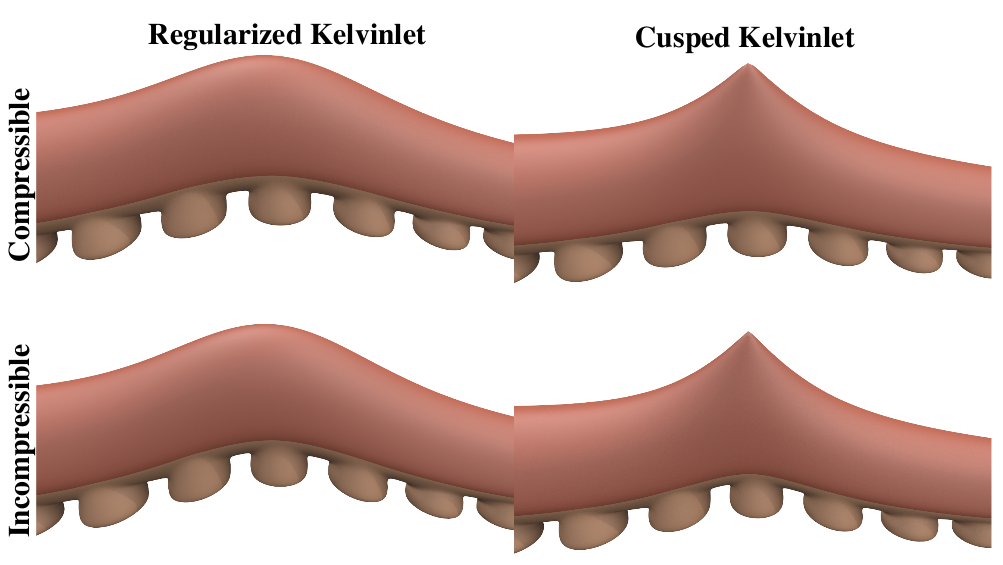 |
Sharp Kelvinlets: Elastic Deformations with Cusps and Localized Falloffs Fernando de Goes, Doug L. James July 2019 In this work, we present an extension of the regularized Kelvin-let technique suited to non-smooth, cusp-like edits. Our approach is based on a novel multi-scale convolution scheme that layers Kelvinlet deformations into a finite but spiky solution, thus offering physically based volume sculpting with sharp falloff profiles. We also show ... more Paper (PDF) Video Additional materials: [code.zip] |
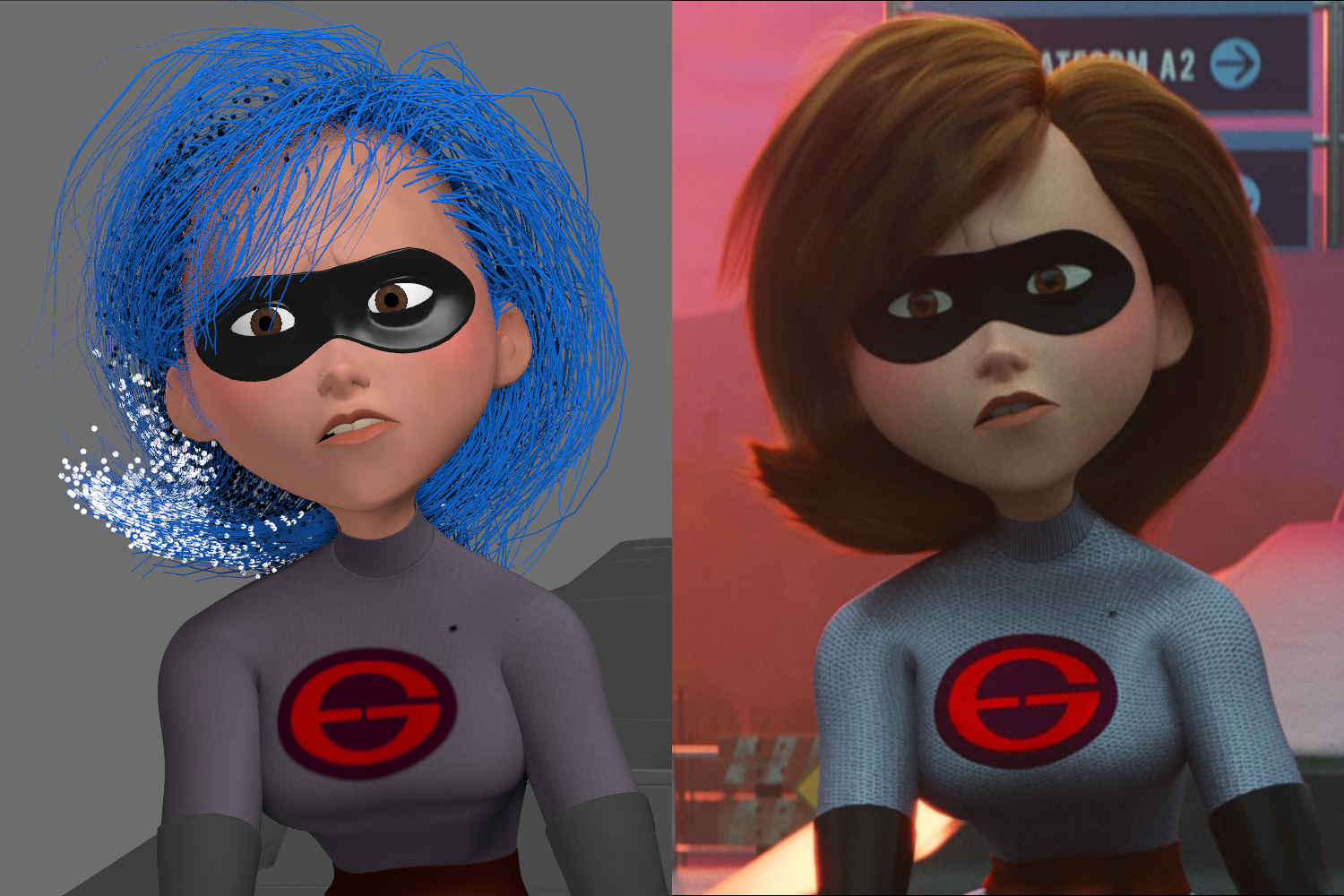 |
Holding the Shape in Hair Simulation Hayley Iben, Jacob Brooks, Christopher Bolwyn July 2019 Hair simulation models are based on physics, but require additional controls to achieve certain looks or art directions. A common simulation control is to use hard or soft constraints on the kinematic points provided by the articulation of the scalp or explicit rigging of the hair [Kaur et al. 2018; ... more Paper (PDF) Video |
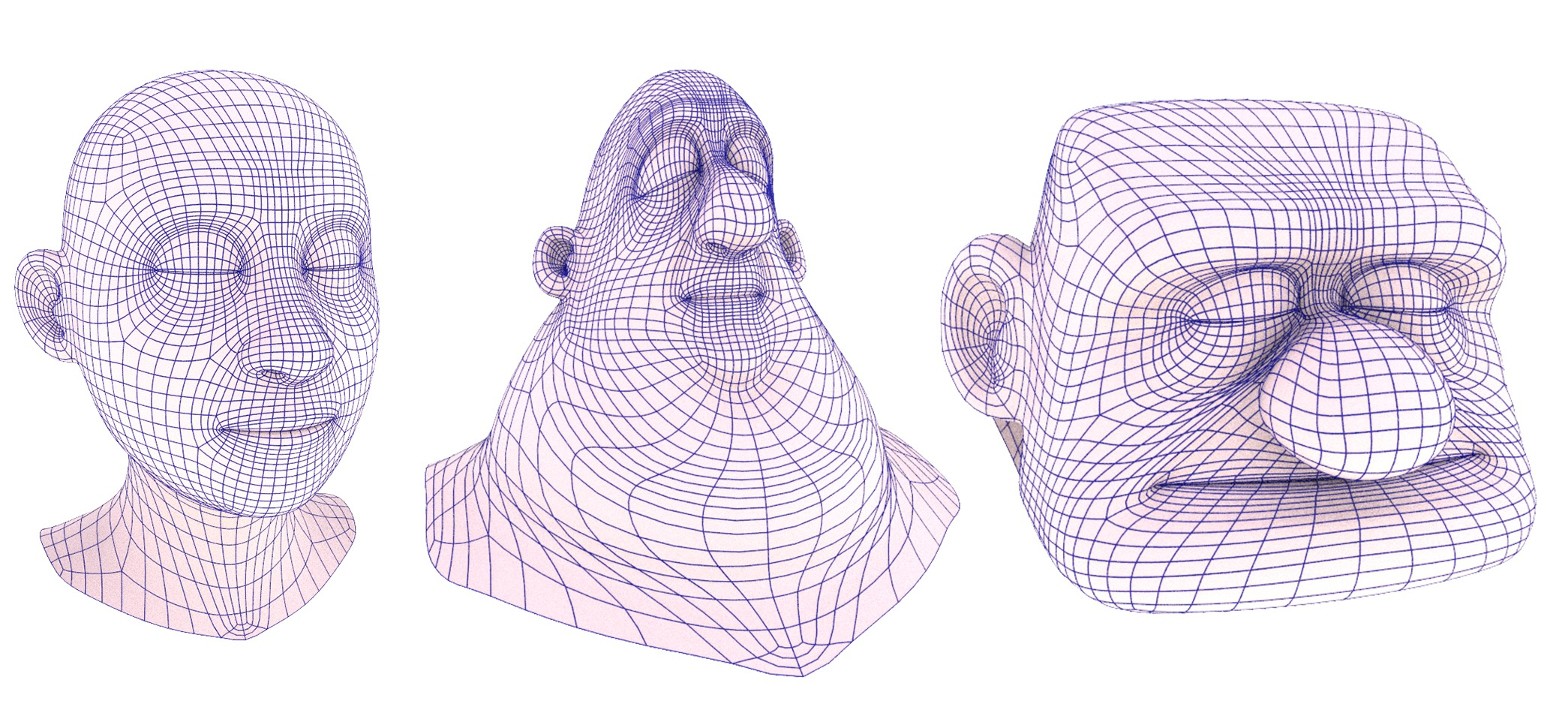 |
Mesh Wrap based on Affine-Invariant Coordinates Fenando de Goes, Alonso Martinez July 2019 We present a new technique to transfer the mesh connectivity between 3D models of different shapes. In contrast to prior work, our method is designed to wrap meshes under large, locally non-rigid deformations, which are commonly found in feature animations. To achieve this goal, we enrich the traditional iterative closest ... more Paper (PDF) Video |
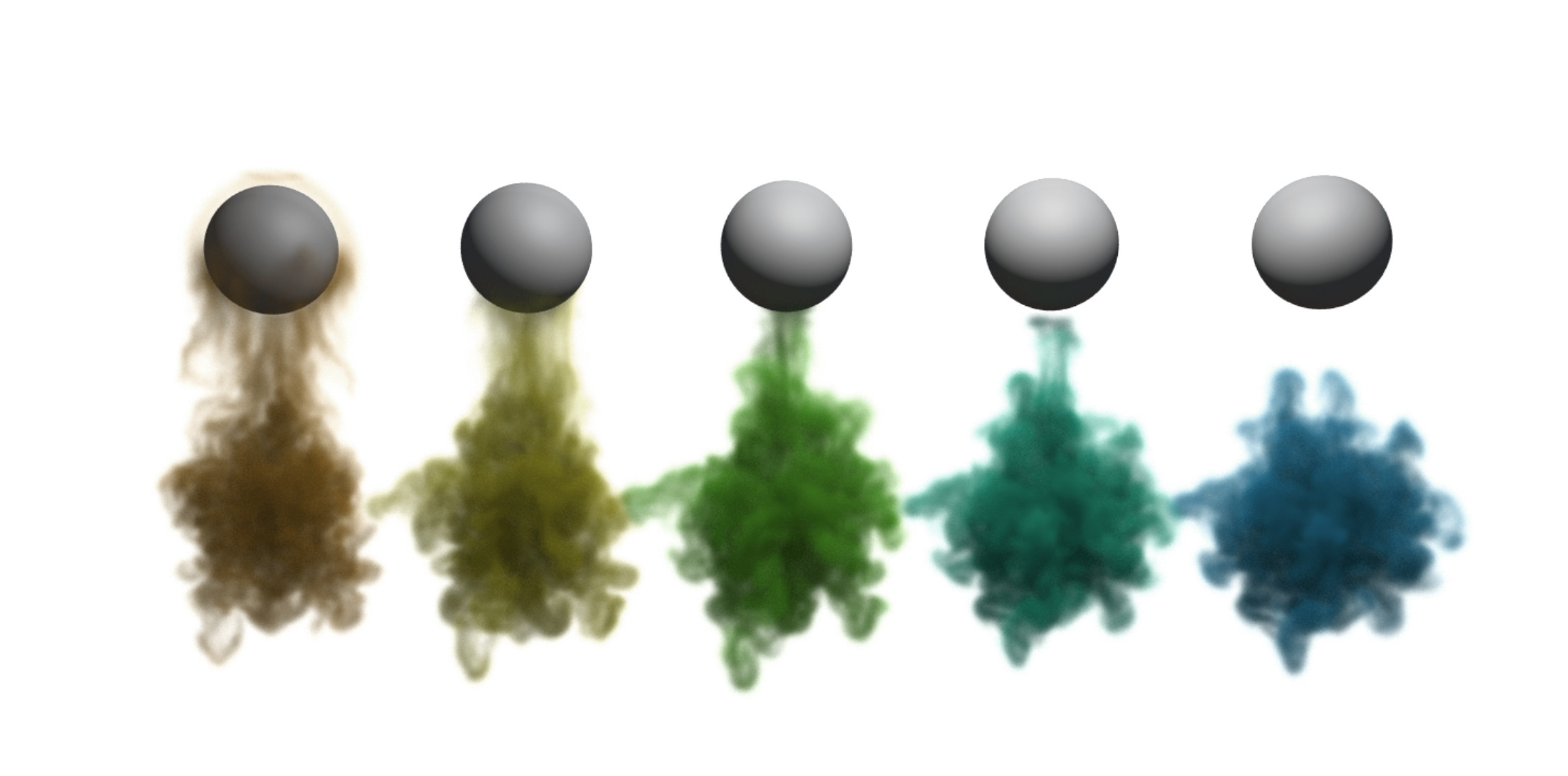 |
Reduced Boundary Viscosity for Smoke Alexis Angelidis June 2019 We propose a method to reduce viscosity at the boundaries of incompressible flows. Our method allows artists to control the amount of boundary viscosity by mixing a new slip boundary solution with an existing no-slip solution. The cost of our method is an additional pre-computation and a post-computation that can ... more Paper (PDF) Available as Pixar Technical Memo #19-02 |
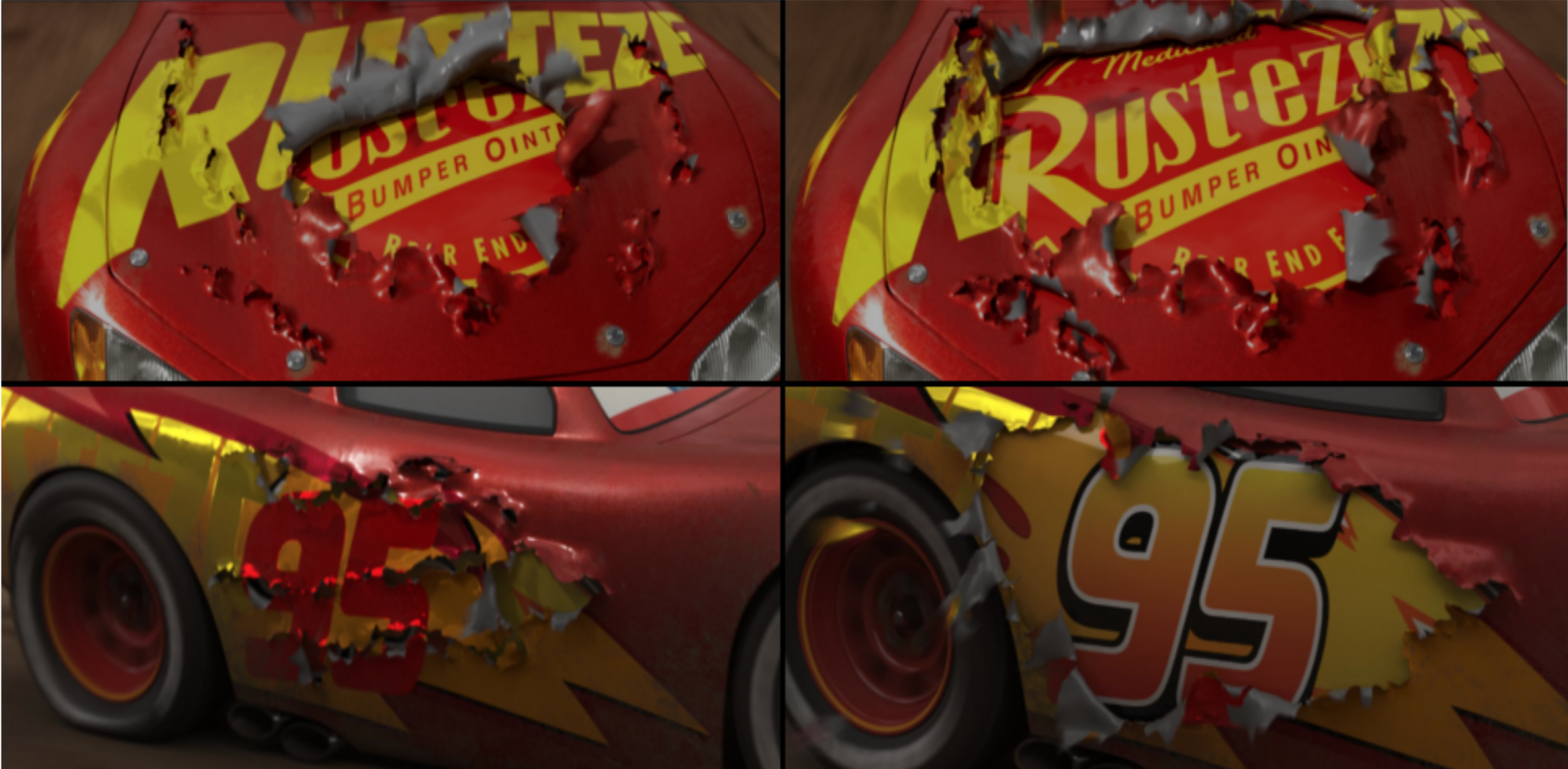 |
Art-Directed Surface Tearing Simulation Leon Jeong Wook Park January 2019 A key sequence in Pixar's Cars 3 includes dramatic surface tearing effects on Lightning McQueen's new body suit. Controlling and stylizing physically-based simulation is one of the hardest topics in CGI productions. To achieve our director's specific vision, we developed an art-directable surface tearing simulation framework. This talk presents our ... more Paper (PDF) Available as Pixar Technical Memo #19-01 |
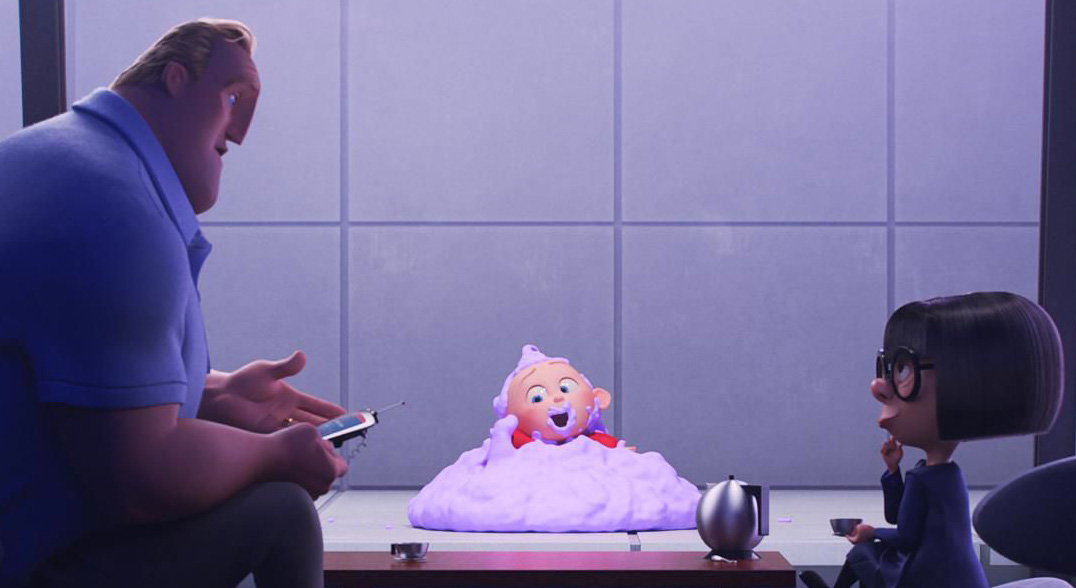 |
Art and Technology at Pixar (SIGGRAPH Asia 2018 Course) Ryusuke Villemin, Chia-Chi Hu, Sonoko Konishi, Hiroaki Narita, Magnus Wrenninge, David Yu December 2018 As described by this now famous quote "The art challenges technology, and the technology inspires art", technology has always played an important part in Pixar's movie making process. This course will show how we develop and utilize new technical advancements to tell more appealing stories, using real-world examples from our latest movie Incredibles ... more Paper (PDF) SIGGRAPH Asia 2018 Course |
 |
Analytic Eigensystems for Isotropic Distortion Energies Breannan Smith, Fernando de Goes, Theodore Kim September 2018 Many strategies exist for optimizing non-linear distortion energies in geometry and physics applications, but devising an approach that achieves the convergence promised by Newton-type methods remains challenging. In order to guarantee the positive semi-definiteness required by these methods, a numerical eigendecomposition or approximate regularization is usually needed. In this paper, ... more Paper (PDF) Additional materials: [Matlab.zip], [movie.mov], [supplement.pdf] |
 |
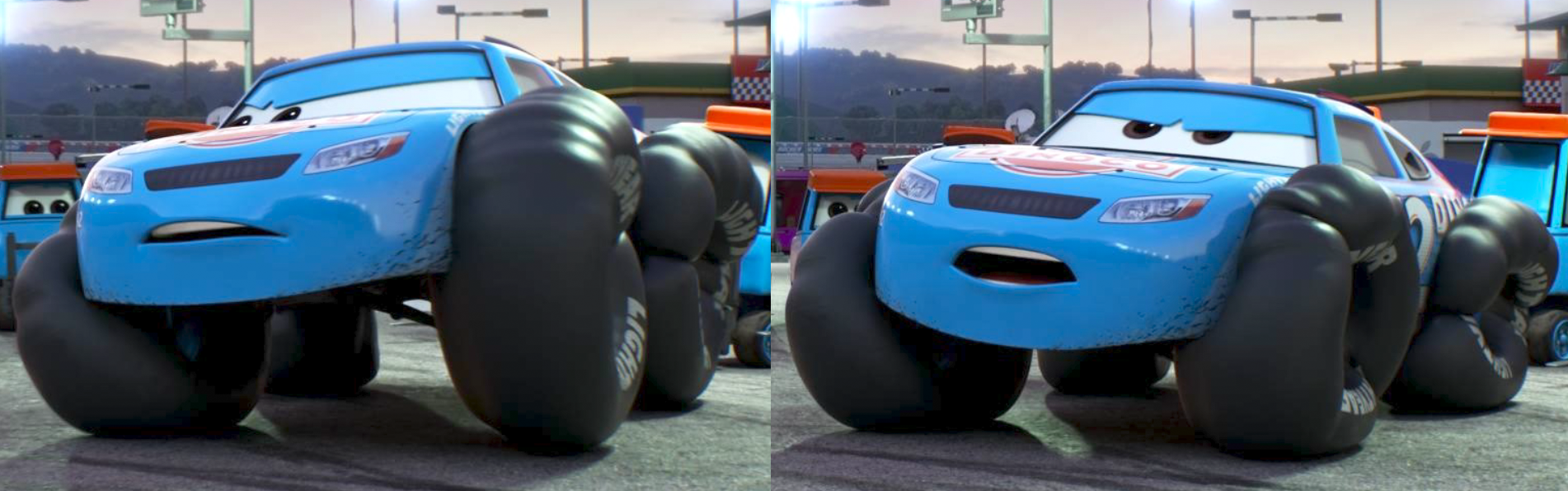
Efficient Unbiased Rendering of Thin Participating Media Ryusuke Villemin, Magnus Wrenninge, Julian Fong September 2018 In recent years, path tracing has become the dominant image synthesis technique for production rendering. Unbiased methods for volume intergration have followed, and techniques such as delta tracking, ratio tracking and spectral decomposition tracking are all in active use, and this paper is focused on optimizing the underlying mechanics ... more Paper (PDF) |
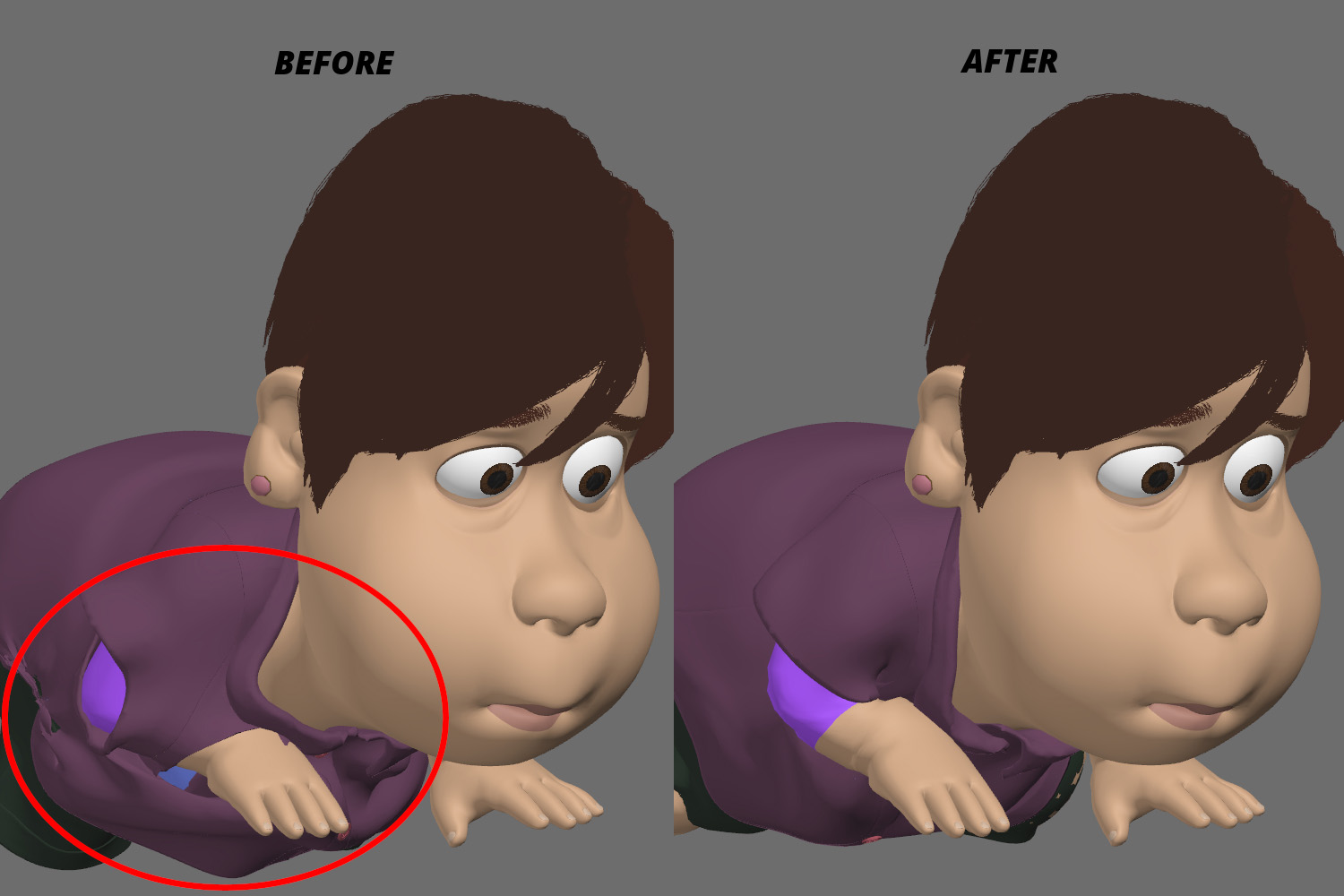 |
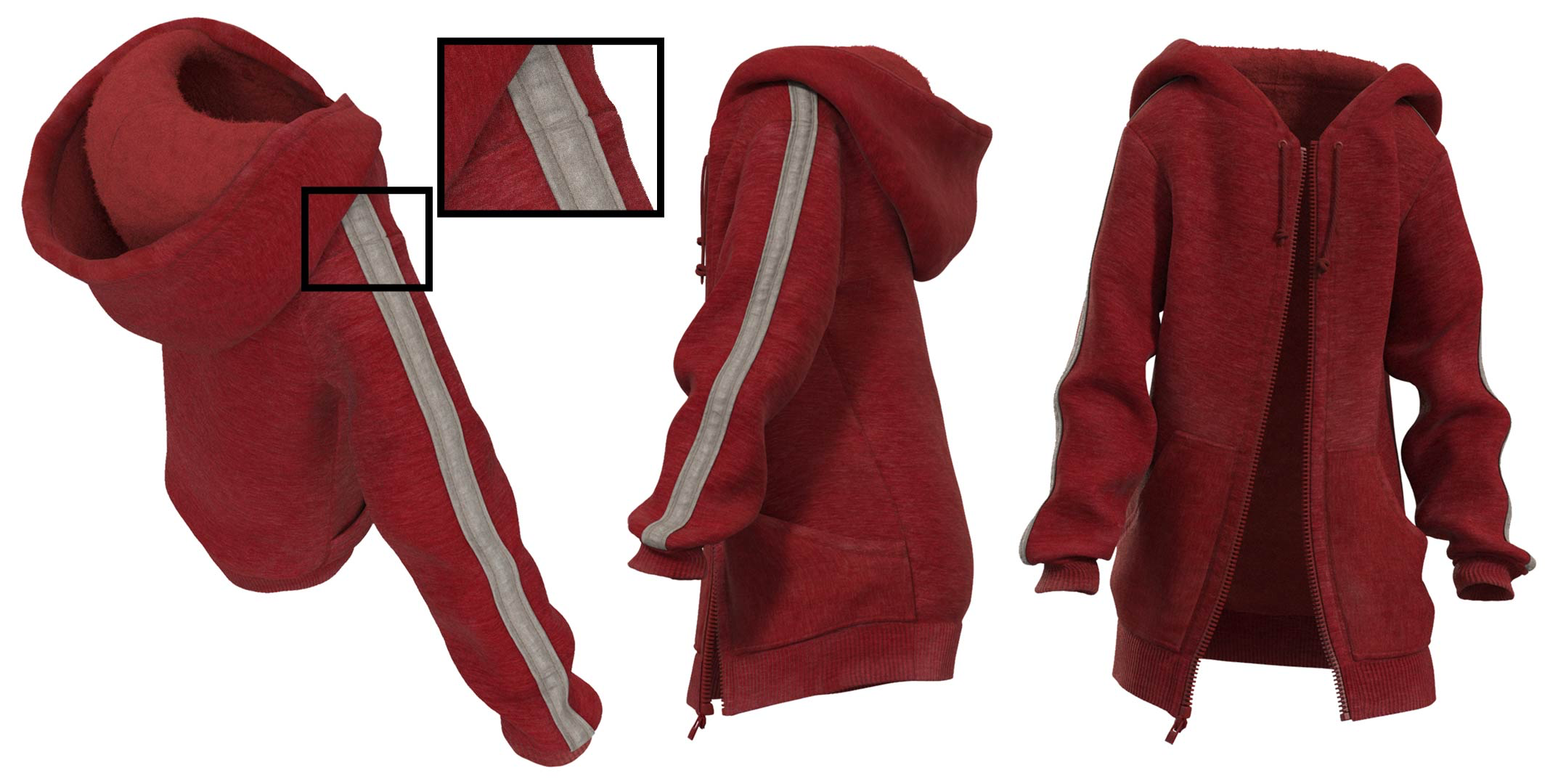
Clean Cloth Inputs: Removing Character Self-Intersections With Volume Simulation Audrey Wong, David Eberle, Theodore Kim August 2018 Simulation artists frequently work with characters that self-intersect. When these characters are sent as inputs to a cloth simulator, the results can often contain terrible artifacts that must be addressed by tediously sculpting either the input characters or the output cloth. In this talk, we apply volume simulation to character ... more Paper (PDF) |
 |
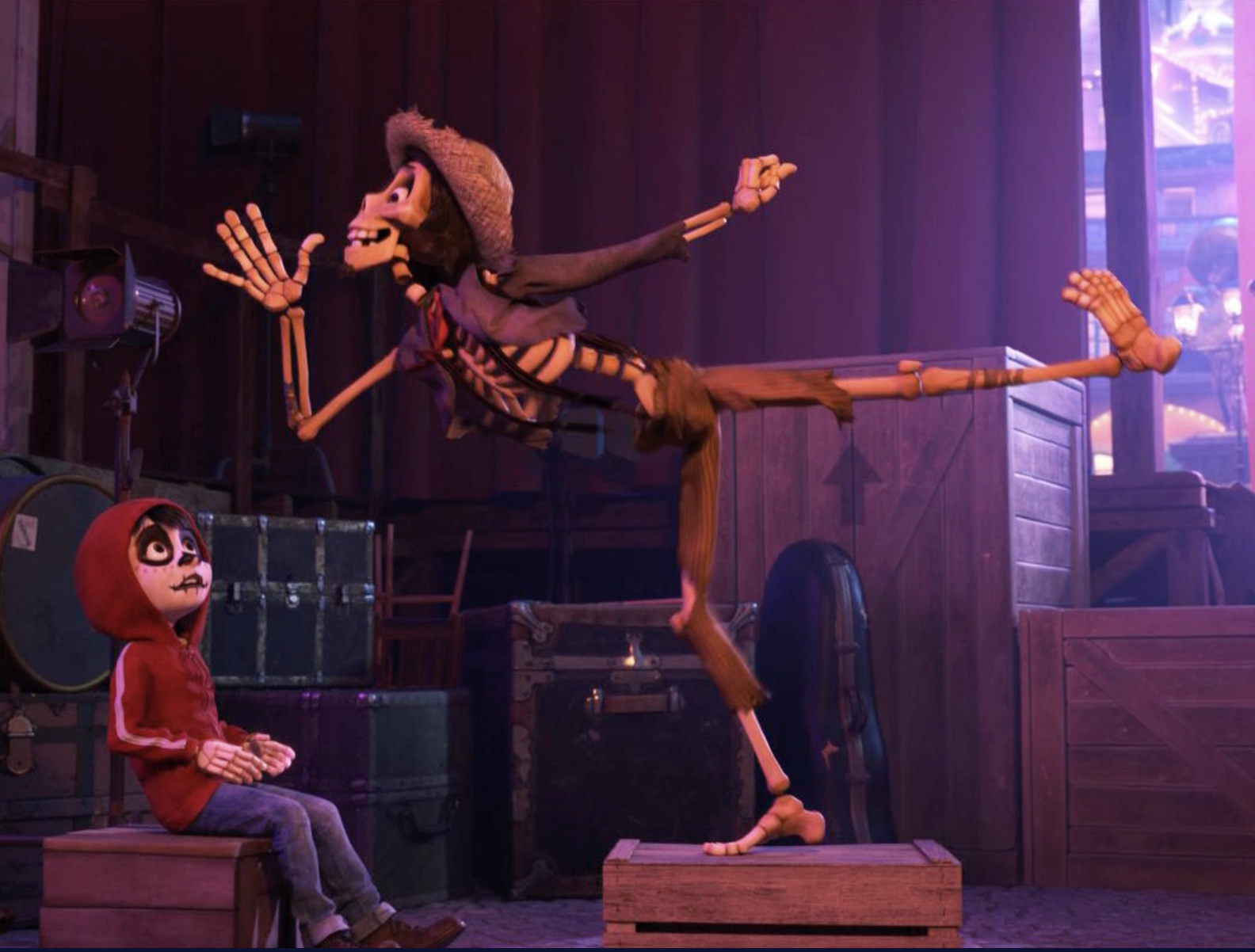
Automating the Handmade: Shading Thousands of Garments for Coco Byron Bashforth, Fernando de Goes, Jacob Kuenzel, Jake Merrell, Athena Xenakis August 2018 Coco presented a challenge for the garment shading team. Firstly, the scale of the movie is significant with both the human and skeleton worlds filled with primary, secondary, and background characters. Secondly, the garments speak to a specific culture and our shading needed to be very detailed to ... more Paper (PDF) |
 |
Scalable Laplacian Eigenfluids Qiaodong Cui, Pradeep Sen, Theodore Kim August 2018 The Laplacian Eigenfunction method for fluid simulation, which we refer to as Eigenfluids, introduced an elegant new way to capture intricate fluid flows with near-zero viscosity. However, the approach does not scale well, as the memory cost grows prohibitively with the number of eigenfunctions. The method also lacks generality, because ... more Paper (PDF) Additional materials: [ScalableEigenFluidMainVideo.mp4], [ScalableEigenFluidSupplementalVideo.mp4], [supplement.pdf] |
 |
Better Collisions and Faster Cloth for Pixar's Coco David Eberle August 2018 Among the many technical challenges of Pixar's Coco was the need to handle cloth simulation for a densely populated city of skeleton characters. Skeletons posed new challenges to the collision algorithms of our in-house cloth system, Fizt. Continuous collision detection and response is an obvious solution to handling fast motion ... more Paper (PDF) |
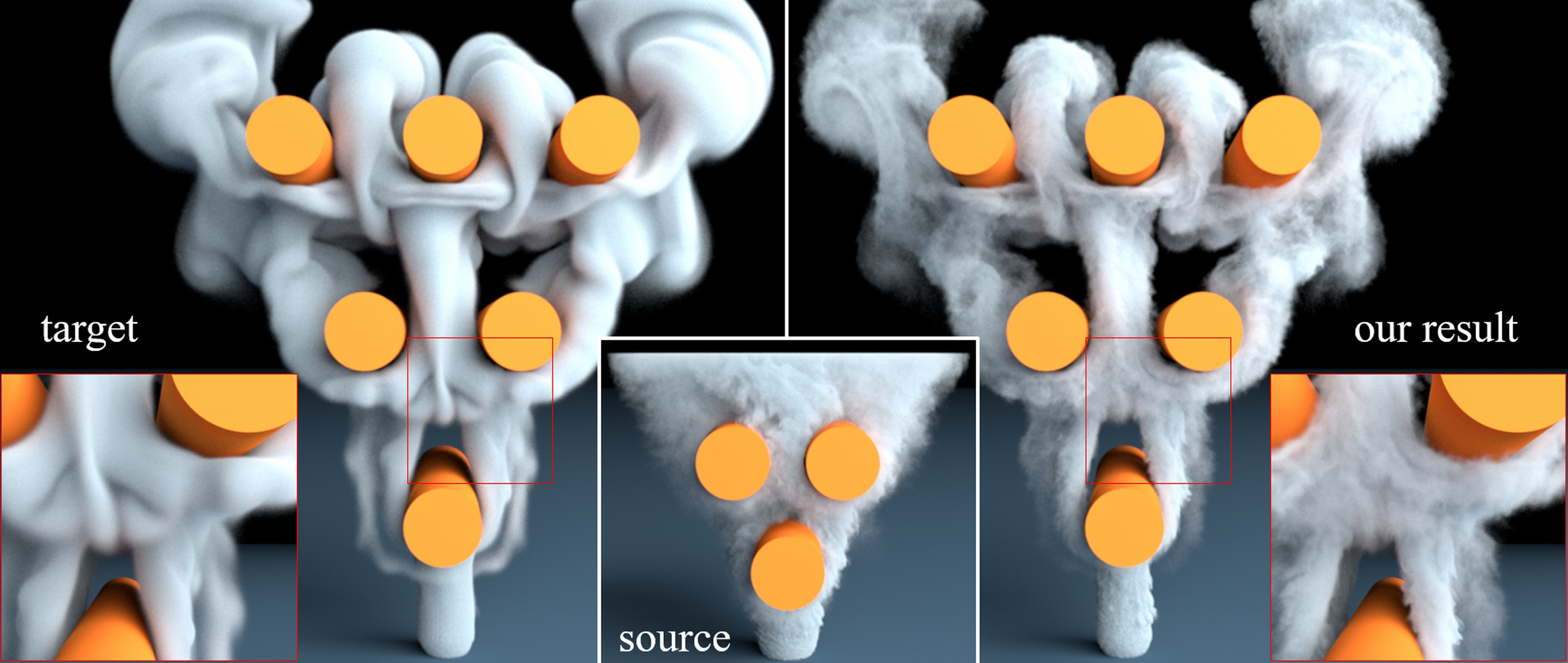 |
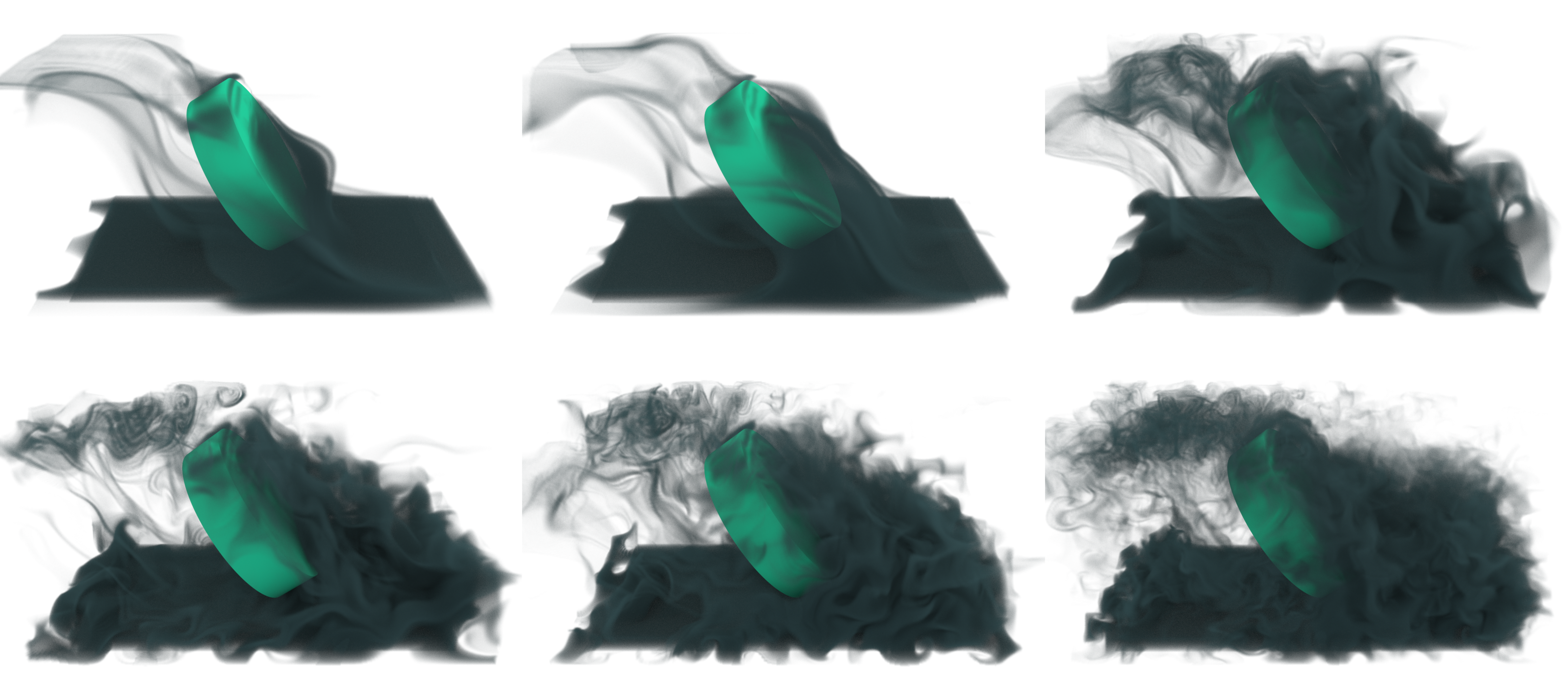
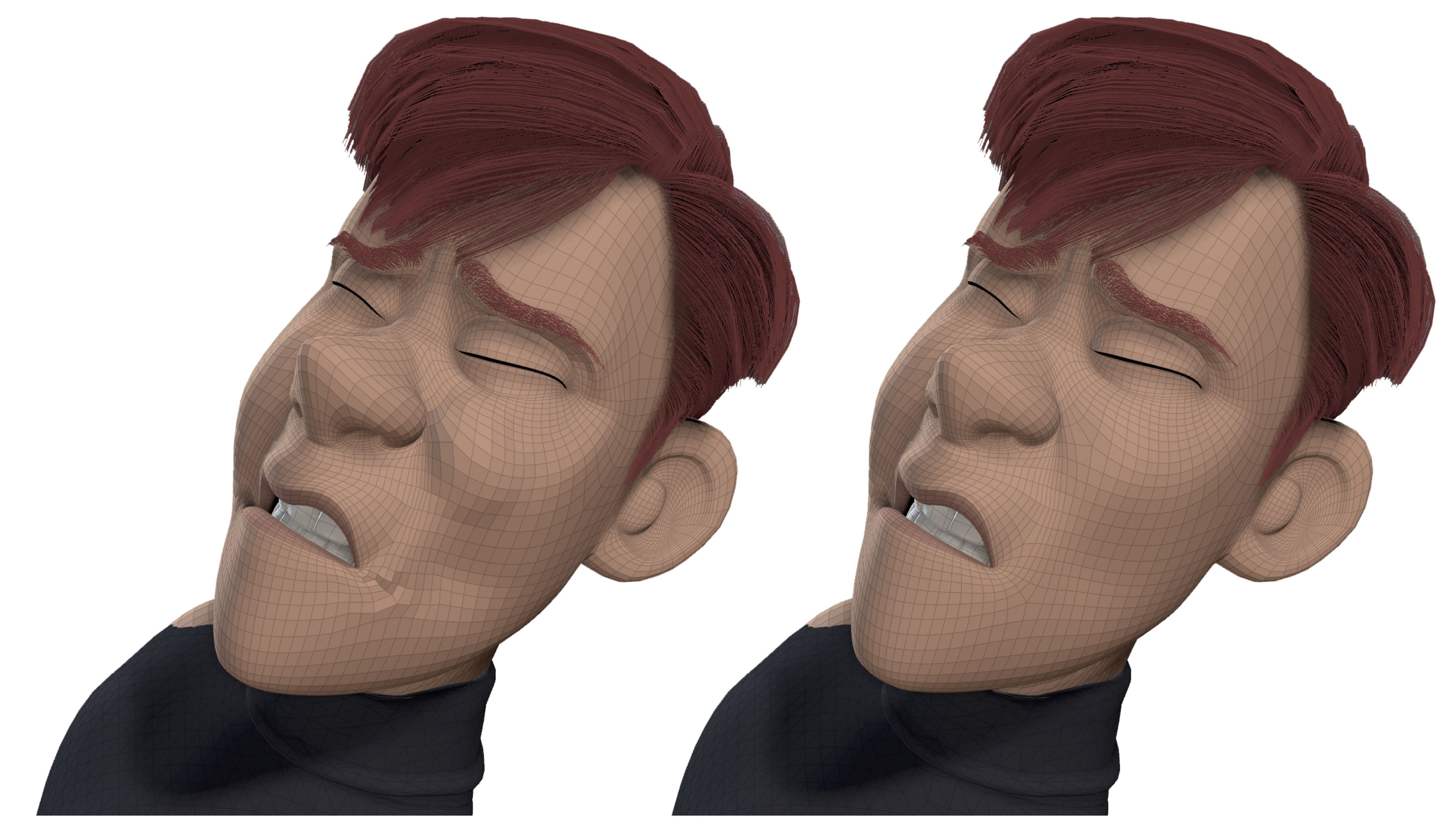
Example-based Turbulence Style Transfer Syuhei Sato, Yoshinori Dobashi, Theodore Kim, Tomoyuki Nishita August 2018 Generating realistic fluid simulations remains computationally expensive, and animators can expend enormous effort trying to achieve a desired motion. To reduce such costs, several methods have been developed in which high-resolution turbulence is synthesized as a post process. Since global motion can then be obtained using a fast, low-resolution simulation, ... more Paper (PDF) Additional materials: [FluidStyleTransfer.mp4], [FluidStyleTransfer_Supplemental.mp4] |
 |
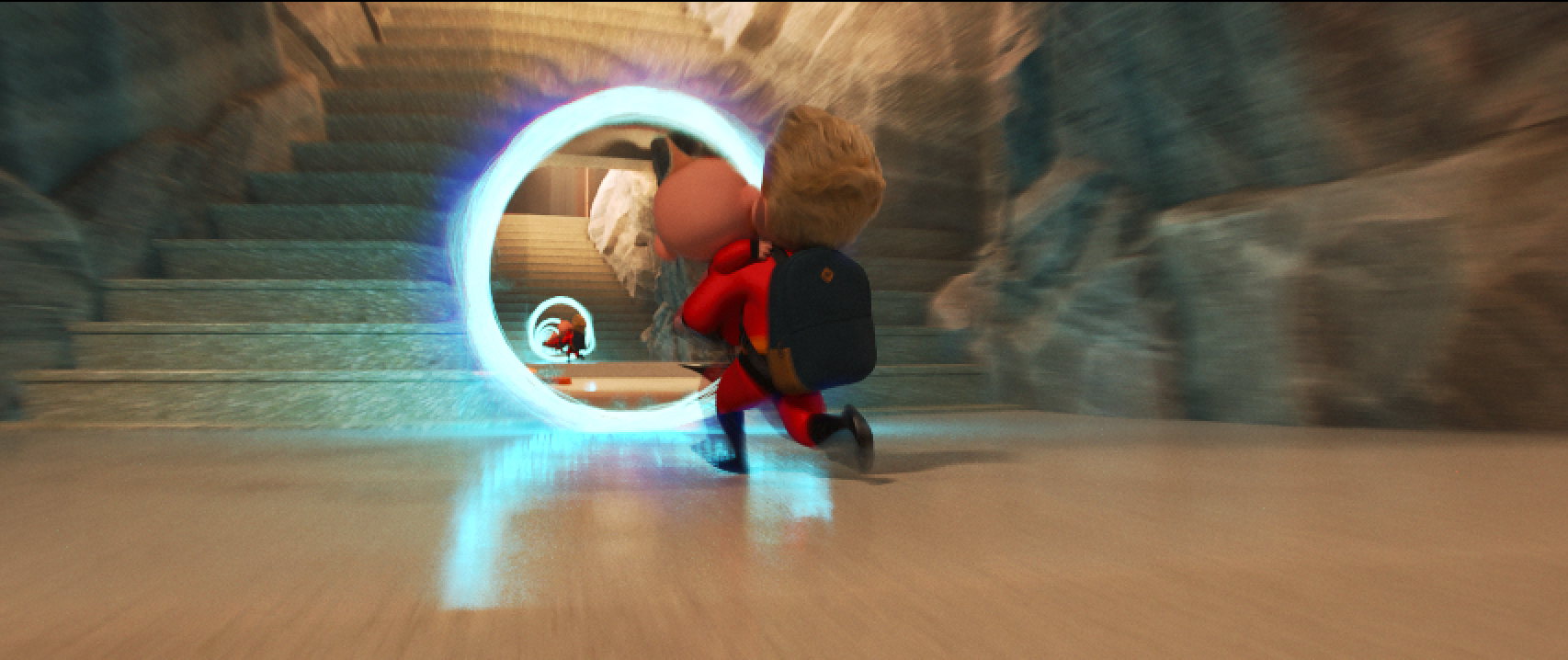
Patch-based Surface Relaxation Fernando de Goes, William Sheffler, Michael Comet, Alonso Martinez, Aimei Kutt August 2018 From rigging to post-simulation cleanups, surface relaxation is a widely used procedure in feature animation. Over the years, Pixar has experimented with several techniques for this task, mostly based on variants of Laplacian smoothing. Notably, none of existing approaches are suited to reproduce the patch layout of a baseline mesh. ... more Paper (PDF) |
 |
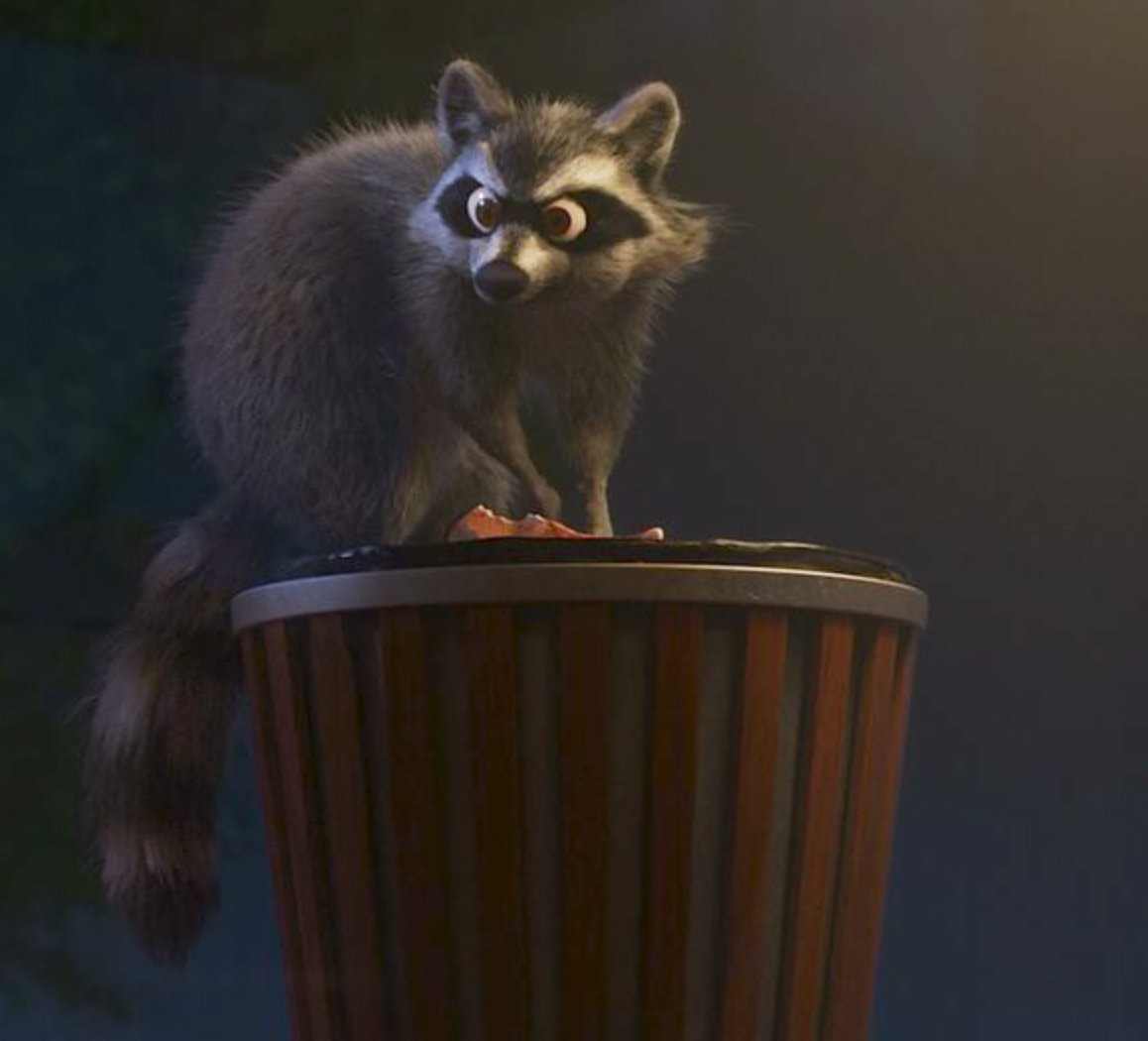
Into the Voyd: Teleportation of Light Transport in Incredibles 2 Patrick Coleman, Darwyn Peachey, Tom Nettleship, Ryusuke Villemin, Tobin Jones August 2018 In Incredibles 2, a character named Voyd has the ability to create portals that connect two locations in space. A particular challenge for this film is the presence of portals in a number of fast-paced action sequences with multiple characters and objects passing through them, causing multiple views of ... more Paper (PDF) Additional materials: [digiproPortals.mov] |
 |
Robust Skin Simulation in Incredibles 2 Ryan Kautzman, Gordon Cameron, Theodore Kim August 2018 Robustly simulating the dynamics of skin sliding over a character's body is an ongoing challenge. Skin can become non-physically "snagged" in curved or creased regions, such as armpits, and create unusable results. These problems usually arise when it becomes ambiguous which kinematic surface the skin should be sliding along. We ... more Paper (PDF) |
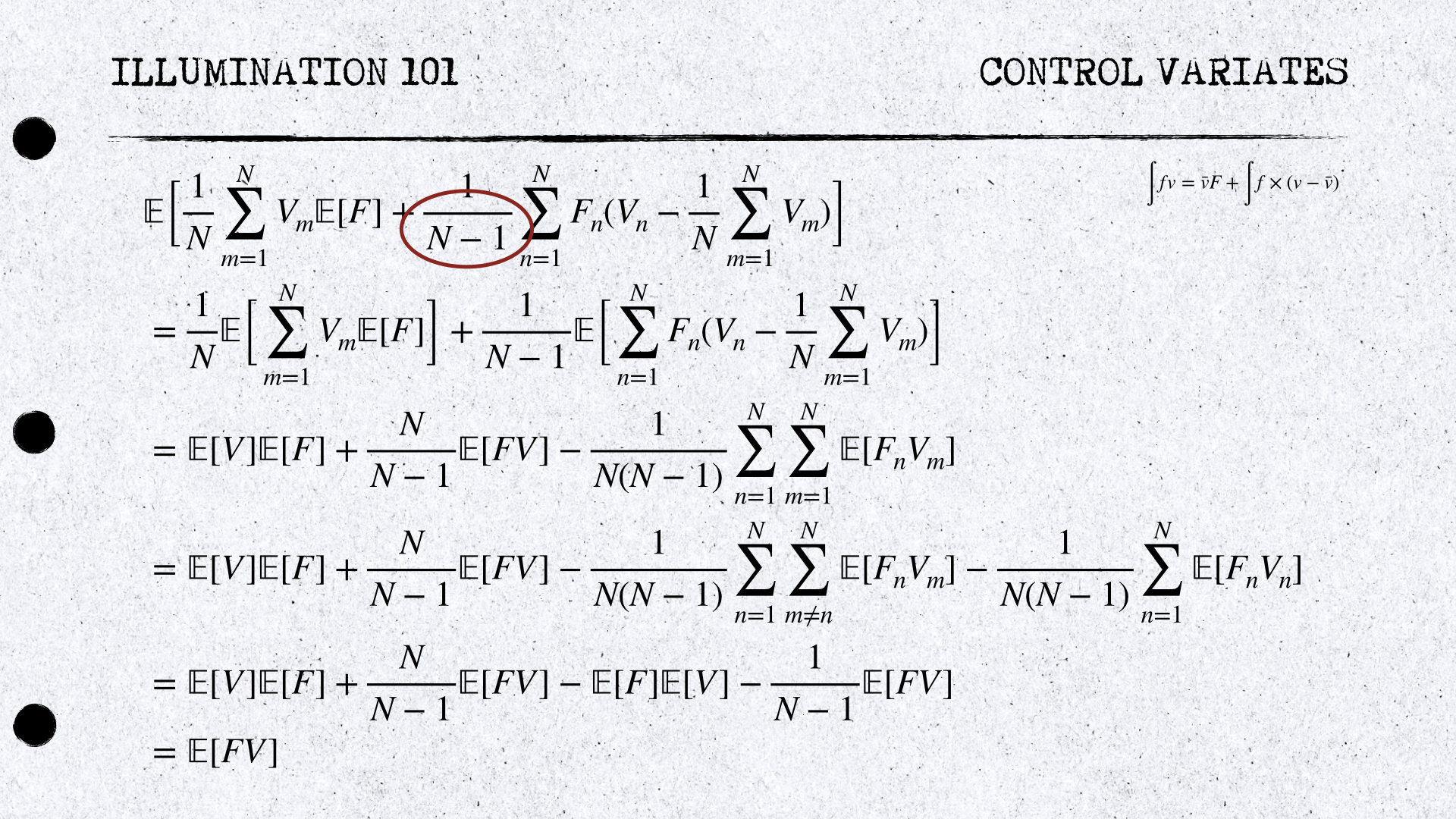 |
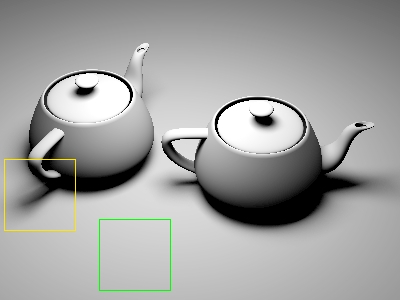
MCQMC 2018 Illumination 101 Christophe Hery July 2018 We talked at MCQMC 2018 in Rennes (France) about the usage of control variates for direct ligting computation. Paper (PDF) MCQMC 2018 Talk Slides |
 |
Progressive Multi-Jittered Sample Sequences Per Christensen, Andrew Kensler, Charlie Kilpatrick July 2018 We introduce three new families of stochastic algorithms to generate progressive 2D sample point sequences. This opens a general framework that researchers and practitioners may find useful when developing future sample sequences. Our best sequences have the same low sampling error as the best known sequence (a particular randomization of ... more Paper (PDF) Additional materials: [pmj_slides.pdf], [pmj_suppl.pdf] Computer Graphics Forum (Proceedings of the Eurographics Symposium on Rendering 2018) |
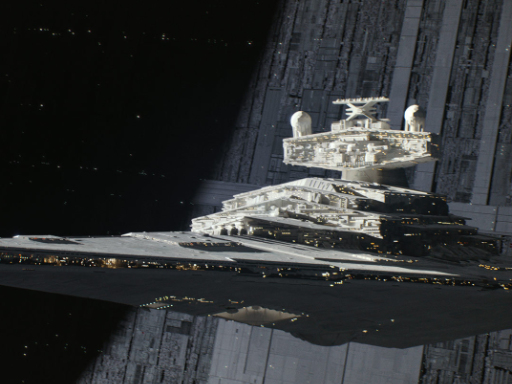 |
RenderMan: An Advanced Path Tracing Architecture for Movie Rendering Per Christensen, Julian Fong, Jonathan Shade, Wayne Wooten, Brenden Schubert, Andrew Kensler, Stephen Friedman, Charlie Kilpatrick, Cliff Ramshaw, Marc Bannister, Brenton Rayner, Jonathan Brouillat, Max Liani July 2018 Pixar's RenderMan renderer is used to render all of Pixar's films, and by many film studios to render visual effects for live-action movies. RenderMan started as a scanline renderer based on the Reyes algorithm, and was extended over the years with ray tracing and several global illumination algorithms. This paper describes the modern version of ... more Paper (PDF) |
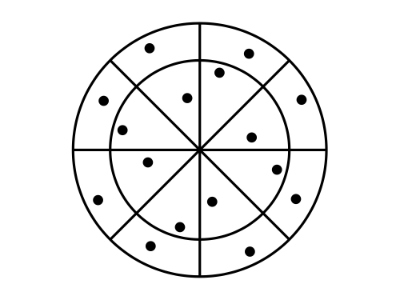 |
Progressive Sampling Strategies for Disk Light Sources Per Christensen June 2018 This technical memo compares six different strategies for sampling a disk area light source. We test padding the domain with zero values, rejection sampling, polar mapping, concentric mapping, and two new strategies we call polar4 and concentric4 mapping. We test the six strategies with nine different sample sequences ... more Paper (PDF) Available as Pixar Technical Memo #18-02 |
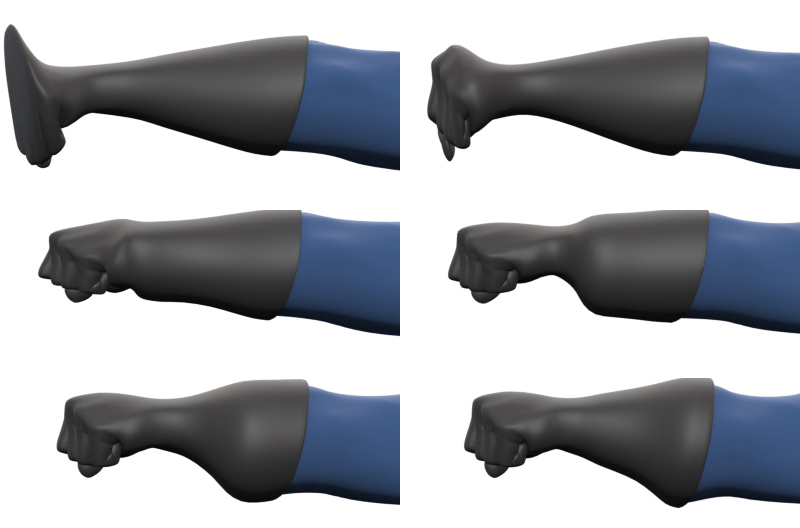 |
Dynamic Kelvinlets: Secondary Motions based on Fundamental Solutions of Elastodynamics Fernando de Goes, Doug L. James May 2018 We introduce Dynamic Kelvinlets, a new analytical technique for real-time physically based animation of virtual elastic materials. Our formulation is based on the dynamic response to time-varying force distributions applied to an infinite elastic medium. The resulting displacements provide the plausibility of volumetric elasticity, the dynamics of compressive and shear ... more Paper (PDF) Video Additional materials: [code.zip], [suppl.zip] Available as Pixar Technical Memo #18-05 |
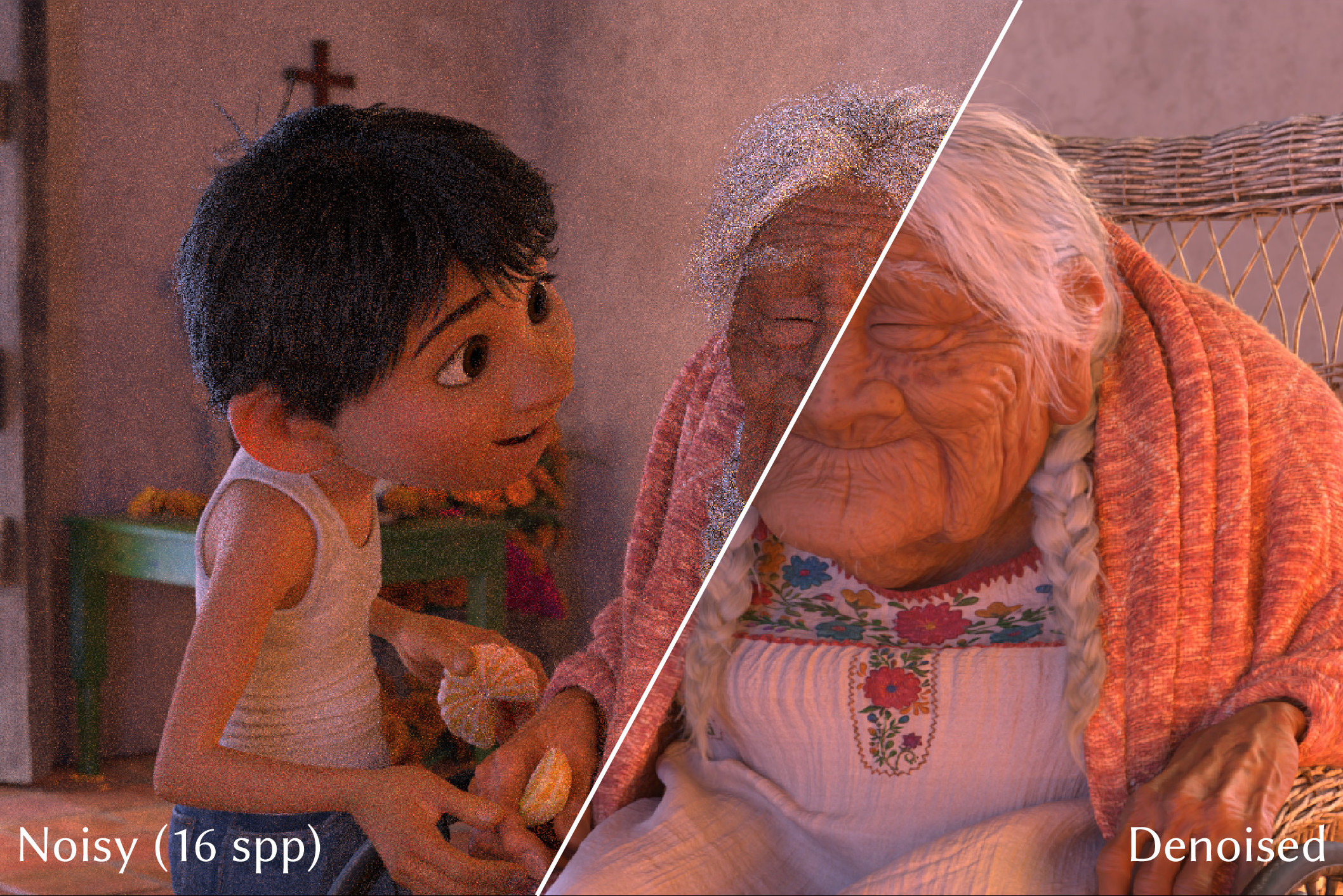 |
Denoising with Kernel Prediction and Asymmetric Loss Functions Thijs Vogels, Fabrice Rouselle, Brian McWilliams, Gerhard Roethlin, Alex Harvill, David Adler, Mark Meyer, Jan Novak May 2018 We present a modular convolutional architecture for denoising rendered images. We expand on the capabilities of kernel-predicting networks by combining them with a number of task-specific modules, and optimizing the assembly using an asymmetric loss. The source aware encoder - the first module in the assembly - extracts ... more Paper (PDF) |
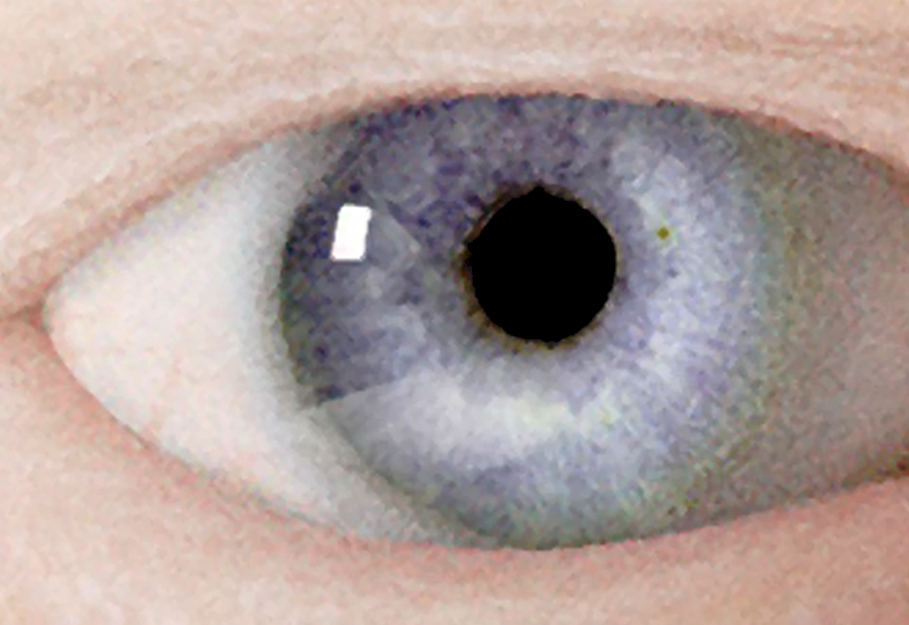 |
Caustic Connection Strategies for Bidirectional Path Tracing Sebastien Speierer, Christophe Hery, Ryusuke Villemin, Wenzel Jakob March 2018 We propose a new type of sampling strategy for connection-based path tracing algorithms such as bidirectional path tracing. Classical bidirectional path tracing generally exhibits poor performance when sampling light paths involving specular transport (e.g. refraction through dielectrics). We therefore introduce specialized connection strategies that connect through chains of specular events. ... more Paper (PDF) Available as Pixar Technical Memo #18-01 |
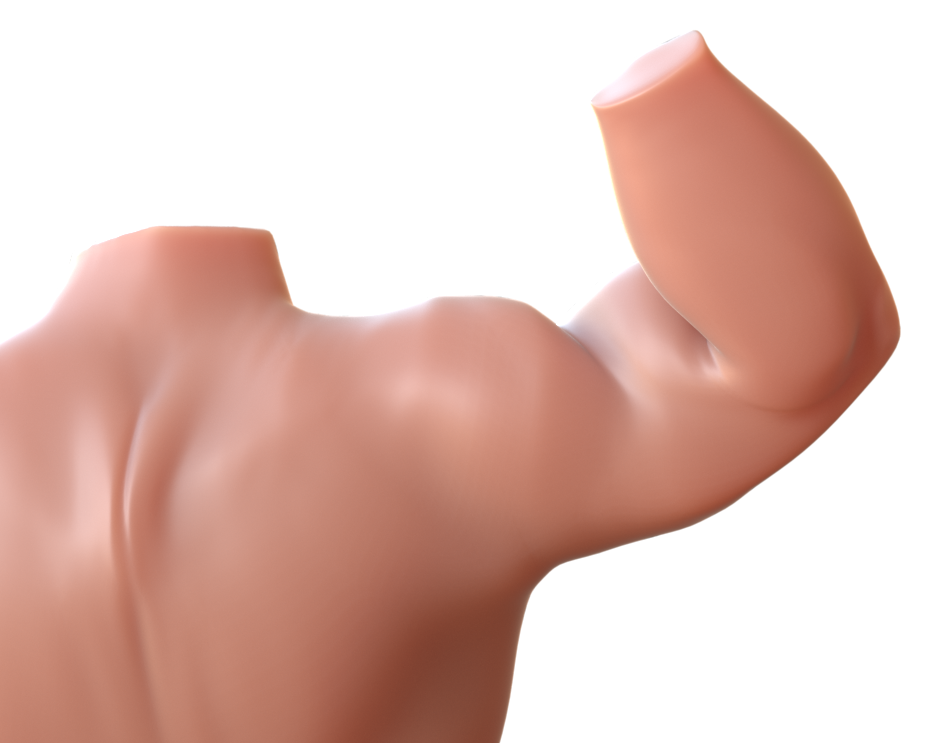 |
Stable Neo-Hookean Flesh Simulation Breannan Smith, Fernando de Goes, Theodore Kim December 2017 Non-linear hyperelastic energies play a key role in capturing the fleshy appearance of virtual characters. Real-world, volume-preserving biological tissues have Poisson's ratios near 1/2, but numerical simulation within this regime is notoriously challenging. In order to robustly capture these visual characteristics, we present a novel version of Neo-Hookean elasticity. Our ... more Paper (PDF) Video Additional materials: [snh_code.tar.bz2], [stable_neo_hookean_supplement.pdf] Errata: The expression for alpha on the last line of Page 4 contained a typo that we have fixed. |
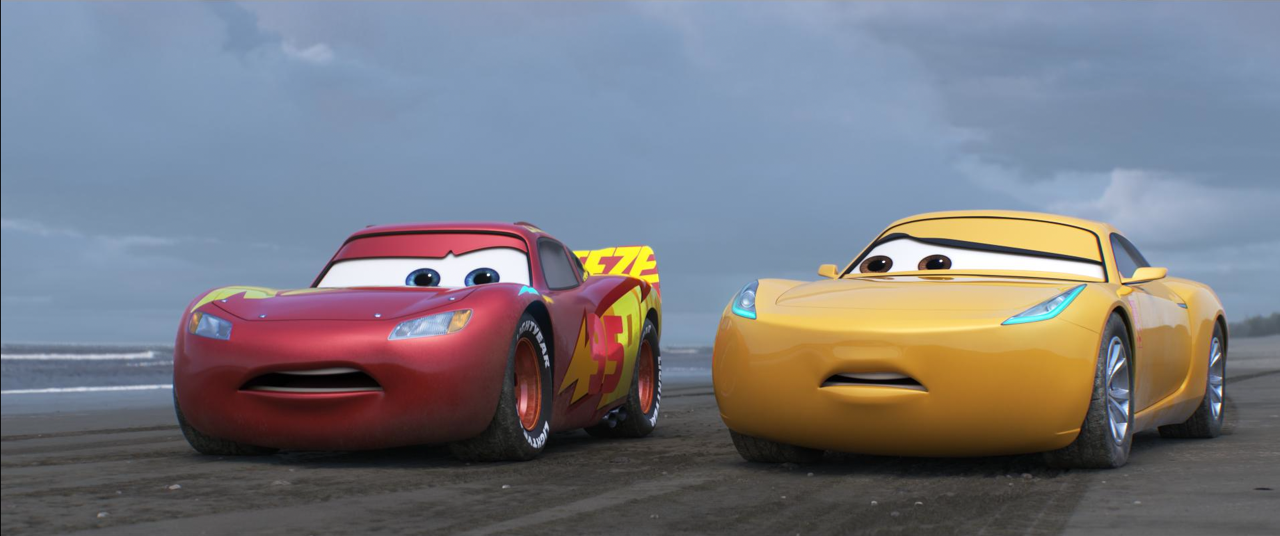 |
Pixar's Foundation for Materials Christophe Hery, Ryusuke Villemin, Junyi Ling August 2017 Though the philosophies and main principles behind our setups date back to our work on Physically Based Lighting for Monsters University, we present the mental models and more modern features and usages covered by PxrSurface and PxrMarschnerHair. Paper (PDF) SIGGRAPH 2017 Course Notes |
 |
Deep Compositing Using Lie Algebras Tom Duff July 2017 Deep compositing is an important practical tool in creating digital imagery, but there has been little theoretical analysis of the underlying mathematical operators. Motivated by finding a simple formulation of the merging operation on OpenEXR-style deep images, we show that the Porter-Duff over function is the operator of a Lie group. In its corresponding ... more Paper (PDF) To appear in ACM Transactions on Graphics |
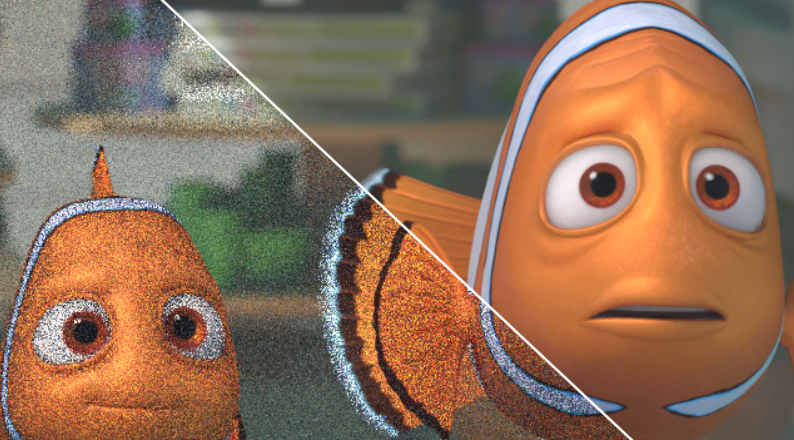 |
Kernel-Predicting Convolutional Networks for Denoising Monte Carlo Renderings Steve Bako, Thijs Vogels, Brian McWilliams, Mark Meyer, Jan Novak, Alex Harvill, Pradeep Sen, Tony DeRose, Fabrice Rousselle July 2017 Regression-based algorithms have shown to be good at denoising Monte Carlo (MC) renderings by leveraging its inexpensive by-products (e.g., feature buffers). However, when using higher-order models to handle complex cases, these techniques often overfit to noise in the input. For this reason, supervised learning methods have been proposed that ... more Paper (PDF) SIGGRAPH 2017 |
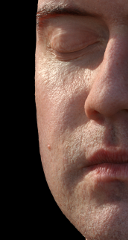 |
Path Traced Subsurface Scattering using Anisotropic Phase Functions and Non-Exponential Free Flights Magnus Wrenninge, Ryusuke Villemin, Christophe Hery July 2017 With the recent move to path tracing for both surface and volume rendering, subsurface scattering has been one of the last light transport modes to rely on empirical or approximate models. Although rendering of subsurface scattering using path tracing is conceptually simple, making the model artist friendly is not. Our new ... more Paper (PDF) Additional materials: [PTSSSAlbedoInversionCoeffs.txt] Available as Pixar Technical Memo #17-07 |
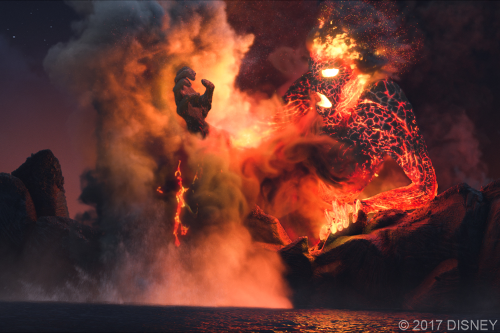 |
Production Volume Rendering Julian Fong, Magnus Wrenninge, Christopher Kulla, Ralf Habel July 2017 This course provides an overview of production volume rendering, focused on path tracing. The course will describe practical fundamentals for adding volume rendering to an existing path tracer, cover a complete range of volume integration scenarios and techniques, and describe in detail recent production-proven techniques for optimizing volume rendering. Paper (PDF) SIGGRAPH 2017 Course Notes |
 |
Regularized Kelvinlets: Sculpting Brushes based on Fundamental Solutions of Elasticity Fernando de Goes, Doug L. James May 2017 We introduce a new technique for real-time physically based volume sculpting of virtual elastic materials. Our formulation is based on the elastic response to localized force distributions associated with common modeling primitives such as grab, scale, twist, and pinch. The resulting brush-like displacements correspond to the regularization of fundamental solutions ... more Paper (PDF) Video: Regularized Kelvinlets Video: Additional example with ~2M triangles Additional materials: [gradDerivation.pdf], [multiScaleDerivation.pdf] SIGGRAPH 2017 Available as Pixar Technical Memo #17-03 |
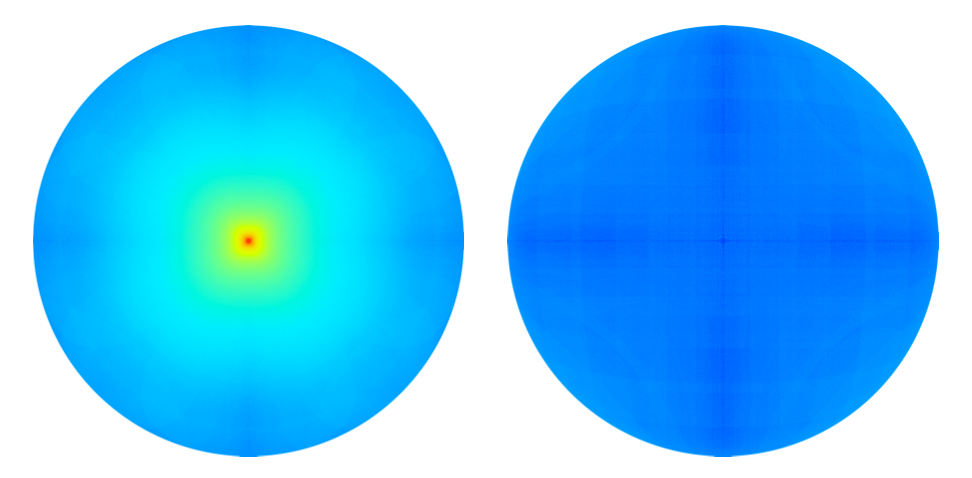 |
Building an Orthonormal Basis, Revisited Tom Duff, James Burgess, Per Christensen, Christophe Hery, Andrew Kensler, Max Liani, Ryusuke Villemin March 2017 Frisvad [2012b] describes a widely-used computational method for augmenting a given single unit vector with two other vectors to produce an orthonormal frame in three dimensions, a useful operation for any physically based renderer. The implementation has a precision problem: as the z component of the input vector approaches -1, floating point cancellation causes ... more Paper (PDF) |
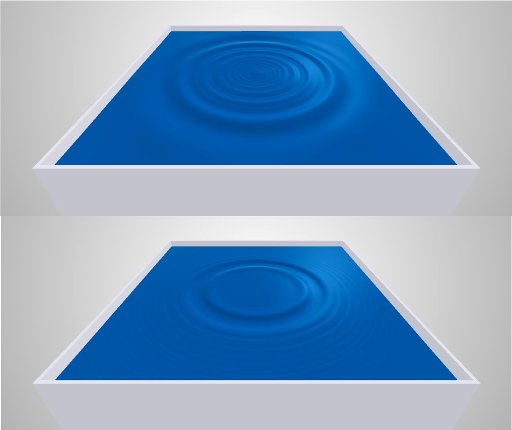 |
Dispersion Kernels for Water Wave Simulation Jose Angel Canabal, David Miraut, Nils Thuerey, Theodore Kim, Javier Portilla, Miguel Otaduy December 2016 We propose a method to simulate the rich, scale-dependent dynamics of water waves. Our method preserves the dispersion properties of real waves, yet it supports interactions with obstacles and is computationally efficient. Fundamentally, it computes wave accelerations by way of applying a dispersion kernel as a spatially variant filter, which ... more Paper (PDF) |
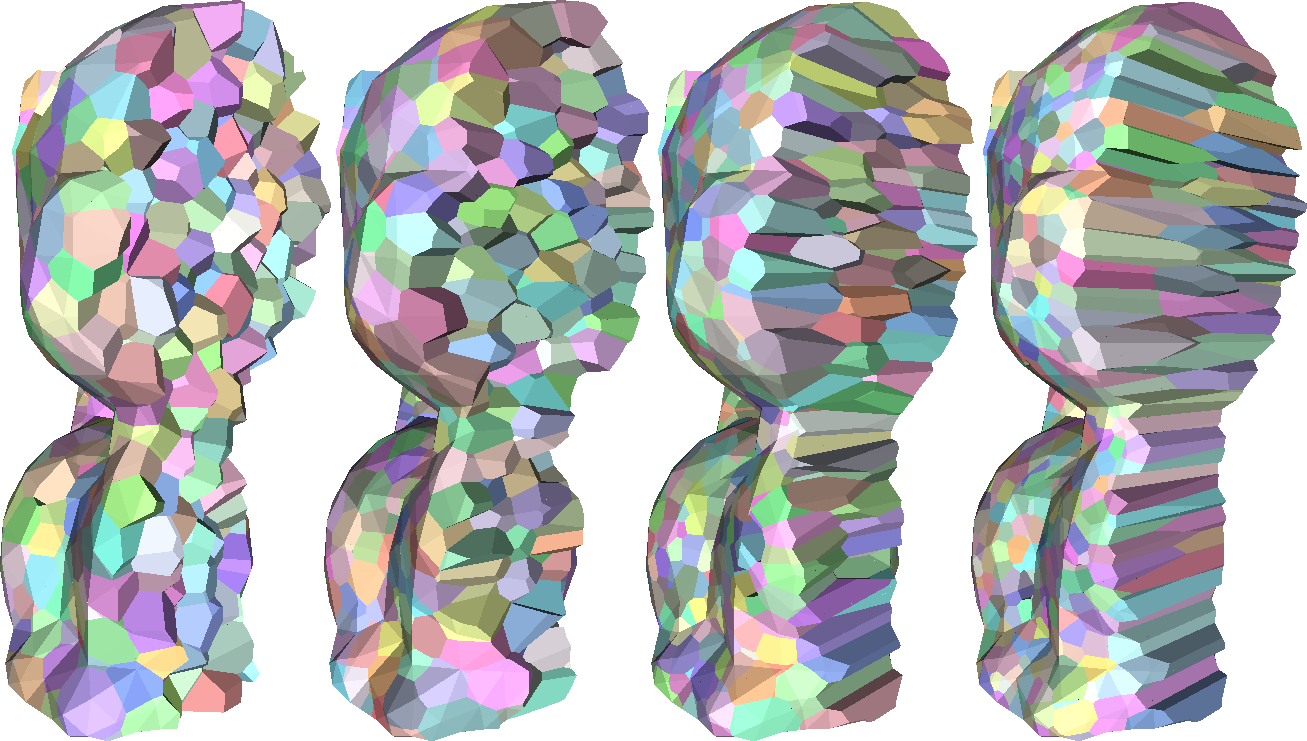 |
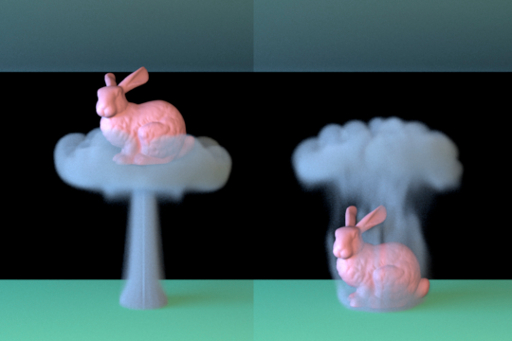
Optimal Voronoi Tessellations with Hessian-based Anisotropy Max Budninskiy, Beibei Liu, Fernando de Goes, Yiying Tong, Pierre Alliez, Mathieu Desbrun December 2016 This paper presents a variational method to generate cell complexes with local anisotropy conforming to the Hessian of any given convex function and for any given local mesh density. Our formulation builds upon approximation theory to offer an anisotropic extension of Centroidal Voronoi Tessellations which can be seen as a ... more Paper (PDF) Additional materials: [BLdG+16_SuppMat.pdf] SIGGRAPH Asia 2016 |
 |
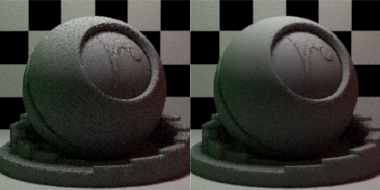
Eulerian Solid-Fluid Coupling Yun Teng, David I.W. Levin, Theodore Kim December 2016 We present a new method that achieves a two-way coupling between deformable solids and an incompressible fluid where the underlying geometric representation is entirely Eulerian. Using the recently developed Eulerian Solids approach [Levin et al. 2011], we are able to simulate multiple solids undergoing complex, frictional contact while simultaneously interacting ... more Paper (PDF) |
 |
Importance Resampling for BSSRDF Ryusuke Villemin, Christophe Hery, Per Christensen November 2016 We present a method to improve BSSRDF rendering, which reduces variance due to sampling of the scattering exit point. By using importance resampling, we are able to sample any arbitrary diffusion model, taking into account the geometry of the object at the same time. The new method is trivial to implement ... more Paper (PDF) Available as Pixar Technical Memo #16-05 |
 |
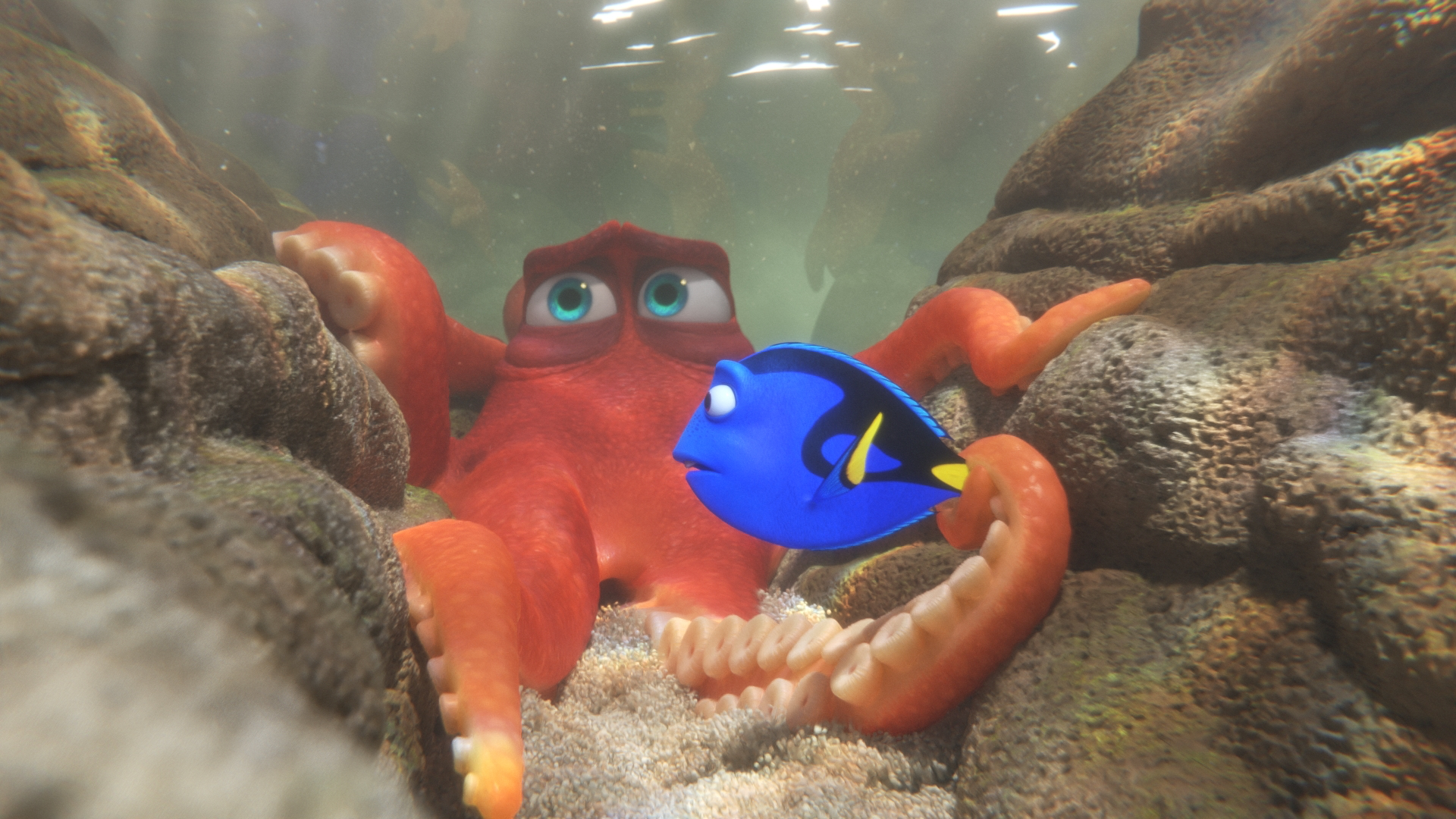
The Path to Path-Traced Movies Per H. Christensen, Wojciech Jarosz October 2016 Path tracing is one of several techniques to render photorealistic images by simulating the physics of light propagation within a scene. The roots of path tracing are outside of computer graphics, in the Monte Carlo simulations developed for neutron transport. A great strength of path tracing is that it is conceptually, mathematically, and often-times algorithmically ... more Paper (PDF) Appeared as: Foundation and Trends in Computer Graphics and Vision, volume 10, number 2, pages 103-175. |
 |
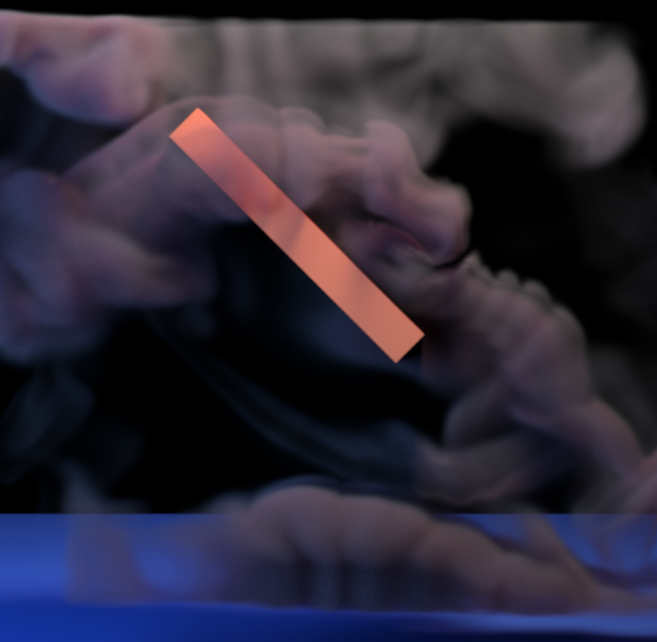
Towards Bidirectional Path Tracing at Pixar Christophe Hery, Ryusuke Villemin, Florian Hecht July 2016 On Finding Dory and Piper, we were faced with rendering a lot of water, or creatures and sets seen through water and glass. We worked with production artists to give controls for resolving these difficult light transports. We also learned to cheat these effects where appropriate. In these course notes, ... more Paper (PDF) |
 |
Compressing Fluid Subspaces Aaron Demby-Jones, Pradeep Sen, Theodore Kim May 2016 Subspace fluid simulations, also known as reduced-order simulations, can be extremely fast, but also require basis matrices that consume an enormous amount of memory. Motivated by the extreme sparsity of Laplacian eigenfunctions in the frequency domain, we design a frequency-space codec that is capable of compressing basis matrices by up ... more Paper (PDF) |
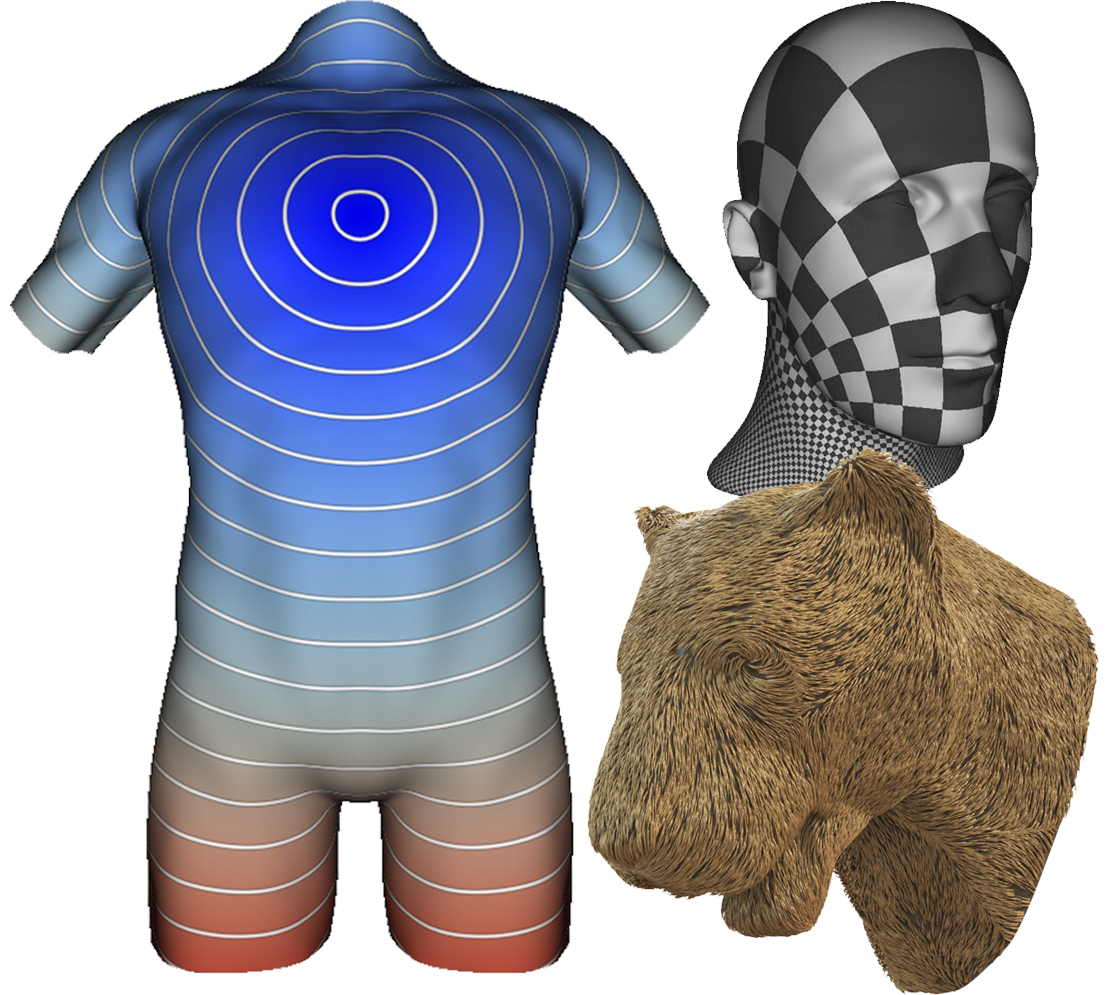 |
Subdivision Exterior Calculus for Geometry Processing Fernando de Goes, Mathieu Desbrun, Mark Meyer, Tony DeRose April 2016 This paper introduces a new computational method to solve differential equations on subdivision surfaces. Our approach adapts the numerical framework of Discrete Exterior Calculus (DEC) from the polygonal to the subdivision setting by exploiting the refinability of subdivision basis functions. The resulting Subdivision Exterior Calculus (SEC) provides significant improvements in ... more Paper (PDF) Additional materials: [supplemental.pdf], [supplementalFigs.pdf] SIGGRAPH 2016 Available as Pixar Technical Memo #16-01 |
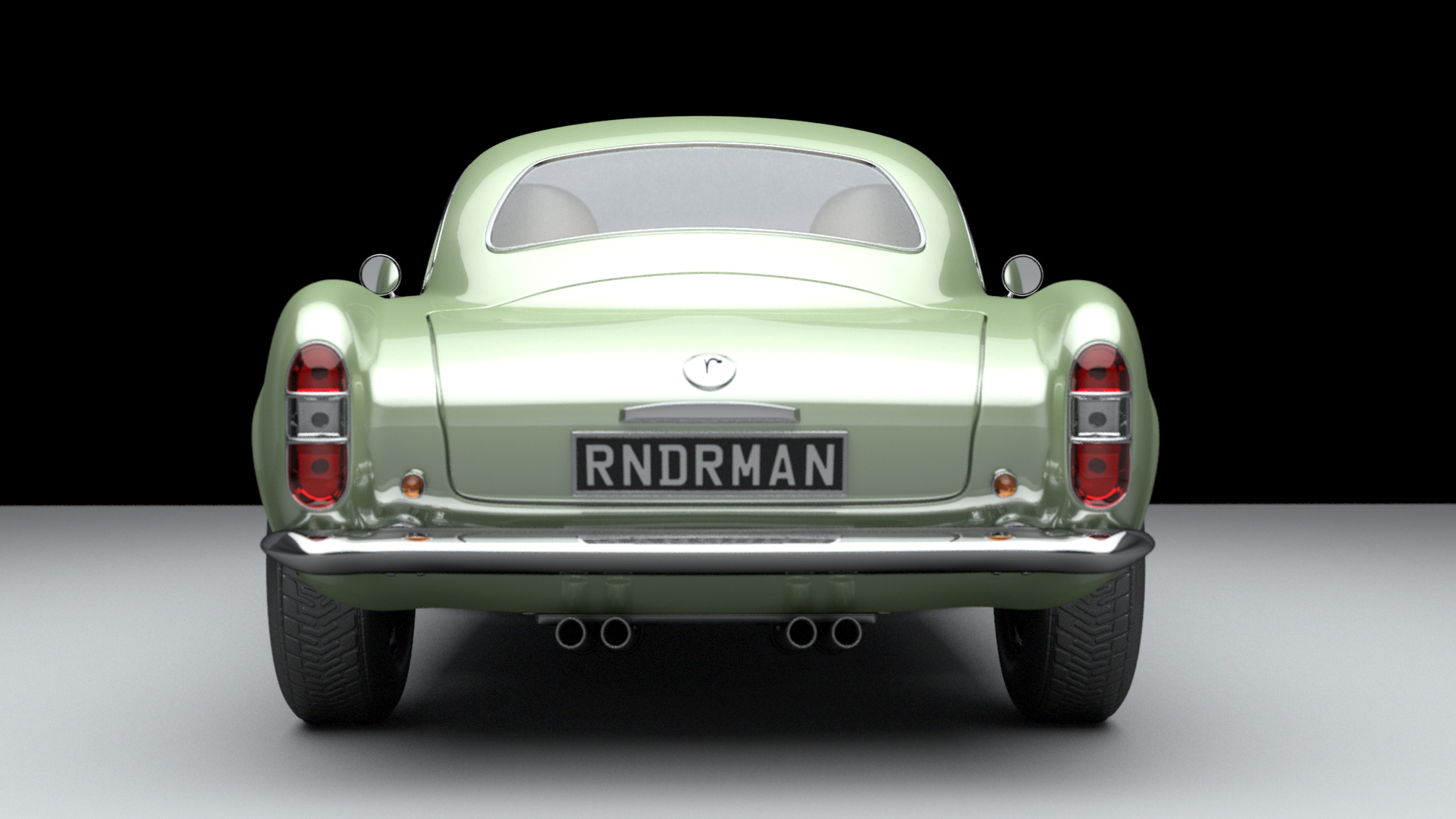 |
Art and Technology at Pixar, from Toy Story to Today Ryusuke Villemin, Christophe Hery, Sonoko Konishi, Takahito Tejima, David Yu November 2015 Technology has always played an important part in Pixar's movie making process, starting with Toy Story over 20 years ago. This course will take you on a journey through that technical evolution, focusing on how story drove our technical designs and how we utilized new technical advancements to tell more appealing stories. Finally ... more Paper (PDF) SIGGRAPH Asia 2015 Course Notes. |
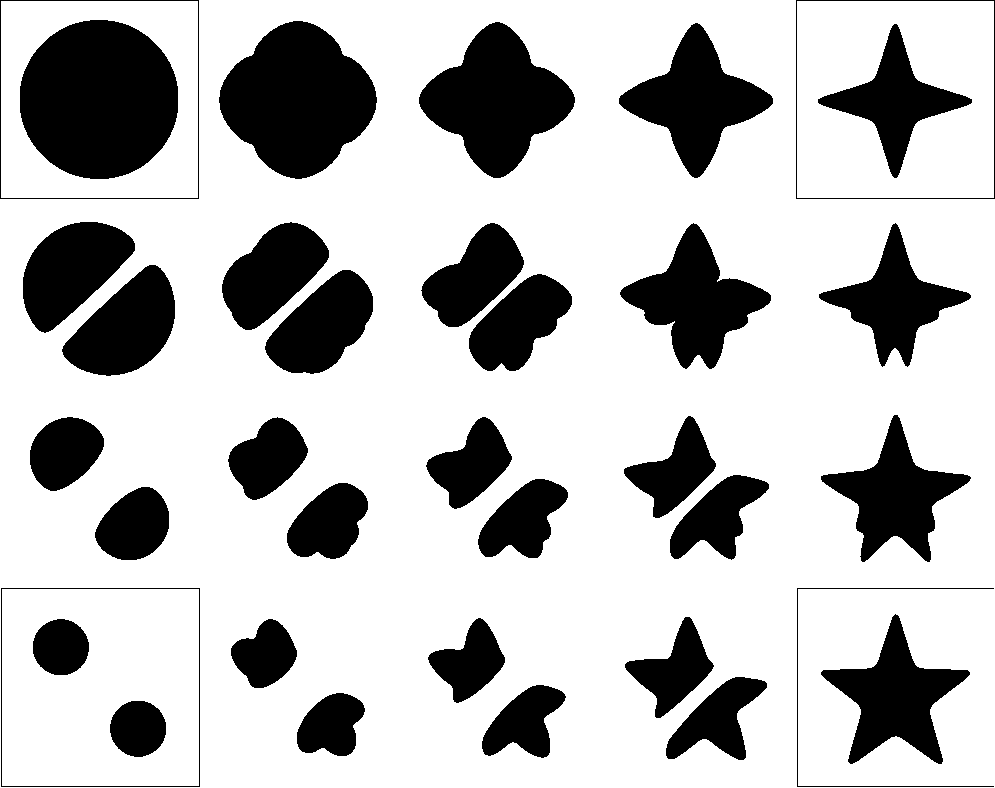 |
Convolutional Wasserstein Distances: Efficient Optimal Transportation on Geometric Domains Justin Solomon, Fernando de Goes, Gabriel Peyre, Marco Cuturi, Adrian Butscher, Andy Nguyen, Tao Du, Leonidas Guibas August 2015 This paper introduces a new class of algorithms for optimization problems involving optimal transportation over geometric domains. Our main contribution is to show that optimal transportation can be made tractable over large domains used in graphics, such as images and triangle meshes, improving performance by orders of magnitude compared to ... more Paper (PDF) SIGGRAPH 2015 |
 |
Vector Field Processing on Triangle Meshes Fernando de Goes, Mathieu Desbrun, Yiying Tong August 2015 While scalar fields on surfaces have been staples of geometry processing, the use of tangent vector fields has steadily grown in geometry processing over the last two decades: they are crucial to encoding directions and sizing on surfaces as commonly required in tasks such as texture synthesis, non-photorealistic rendering, digital ... more Paper (PDF) SIGGRAPH Courses 2016, SIGGRAPH Asia Courses 2015 |
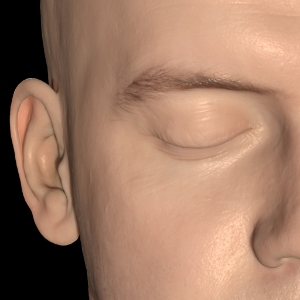 |
Approximate Reflectance Profiles for Efficient Subsurface Scattering Per H. Christensen, Brent Burley July 2015 We present three useful parameterizations of a BSSRDF model based on empirical reflectance profiles. The model is very simple, but with the appropriate parameterization it matches brute-force Monte Carlo references better than state-of-the-art physically-based models (quantized diffusion and photon beam diffusion) for many common materials. Each reflectance profile is a sum of ... more Paper (PDF) Additional materials: [SIGGRAPH_Tech_Talk.pdf], [approxbssrdfslides.pdf] Available as Pixar Technical Memo #15-04 |
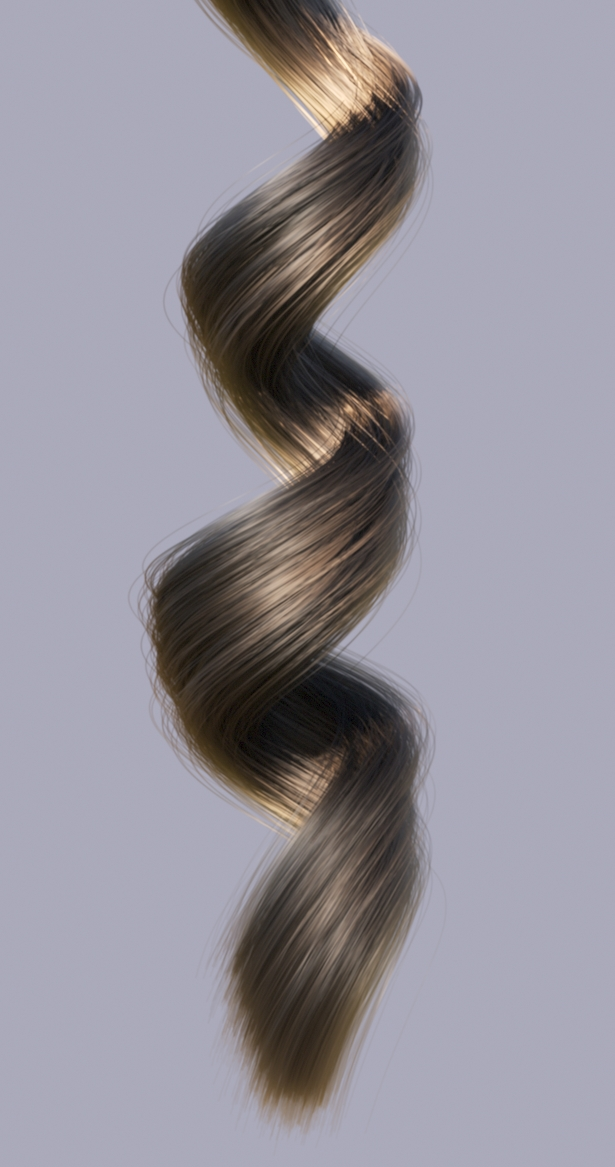 |
A Data-Driven Light Scattering Model for Hair Leonid Pekelis, Christophe Hery, Ryusuke Villemin, Junyi Ling May 2015 We present an implementation of the [Marschner et al. 2003] model for importance sampling light reflected from hair. The implemen- tation makes use of a version of Adaptive Importance Sampling (AIS), specialized to fit easily sampled distributions to BCSDFs. Our model is novel among importance sampling implementations in that it ... more Paper (PDF) Additional materials: [hairlock_eccentricity_085.mov], [hairlock_eccentricity_100.mov] Available as Pixar Technical Memo #15-02 |
 |
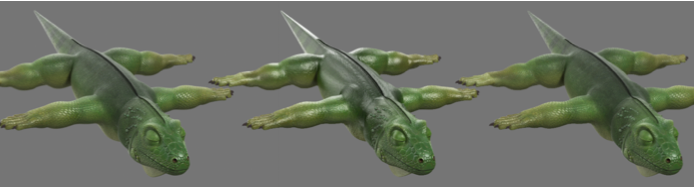
Subspace Condensation: Full Space Adaptivity for Subspace Deformations Yun Teng, Mark Meyer, Tony DeRose, Theodore Kim May 2015 Subspace deformable body simulations can be very fast, but can behave unrealistically when behaviors outside the prescribed subspace, such as novel external collisions, are encountered. We address this limitation by presenting a fast, flexible new method that allows full space computation to be activated in the neighborhood of novel events ... more Paper (PDF) Additional materials: [paper_0089.mov] To appear in SIGGRAPH 2015. Available as Pixar Technical Memo #15-03 |
 |
Vorticle Fluid Simulation Alexis Angelidis February 2015 We present a Lagrangian method for simulating incompressible gases in 3 dimensions. Using the vorticity equation with Lagrangian particles, we create, modify and delete vortices of varying size in a manner that handles buoyancy, boundaries, viscosity and collision with deformable objects using monopoles. Our method scales linearly for parallel processing and provides user controls at varying ... more Paper (PDF) Available as Pixar Technical Memo #15-01 |
 |
Geometry into Shading Christophe Hery, Michael Kass, Junyi Ling October 2014 Sometimes, when 3D CG objects are viewed from a distance, a great deal of geometry can end up inside a single pixel. When this happens, full-sized facets, or pixels in a displacement map should play the role of traditional micro-facets. Here we describe how to alter traditional shading calculations to ... more Paper (PDF) Additional materials: [Bump2Roughness.tar.gz] Available as Pixar Technical Memo #14-04 |
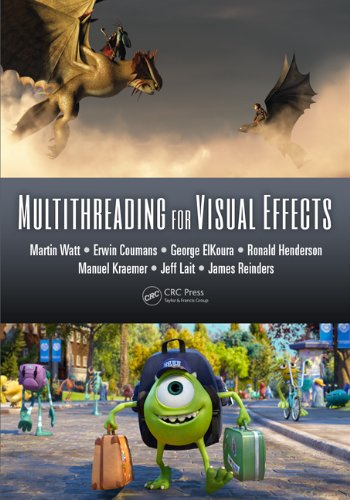 |
Multithreading for Visual Effects Martin Watt, Erwin Coumans, George ElKoura, Ronald Henderson, Manuel Kraemer, Jeff Lait, James Reinders August 2014 In this book, developers from the visual effects industry, including George ElKoura and Manuel Kraemer from Pixar, provide practical advice on multithreading techniques used in popular visual effects software. Concrete examples show how multithreading paradigms are applied to achieve high performance computation for visual effects in the challenging world ... more Paper (PDF) |
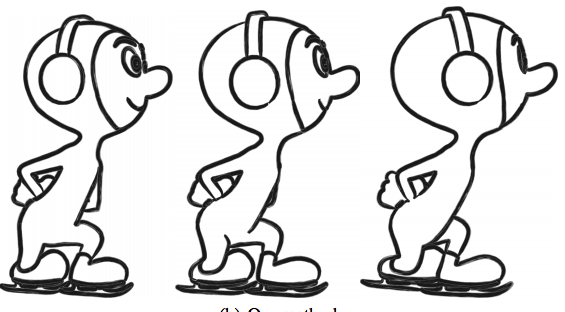 |
Computing Smooth Surface Contours with Accurate Topology Pierre Benard, Aaron Hertzmann, Michael Kass March 2014 This paper introduces a method for accurately computing the visible contours of a smooth 3D surface for stylization. This is a surprisingly difficult problem, and previous methods are prone to topological errors, such as gaps in the outline. Our approach is to generate, for each viewpoint, a new triangle mesh with contours that are topologically-equivalent ... more Paper (PDF) To appear in ACM Transactions on Graphics |
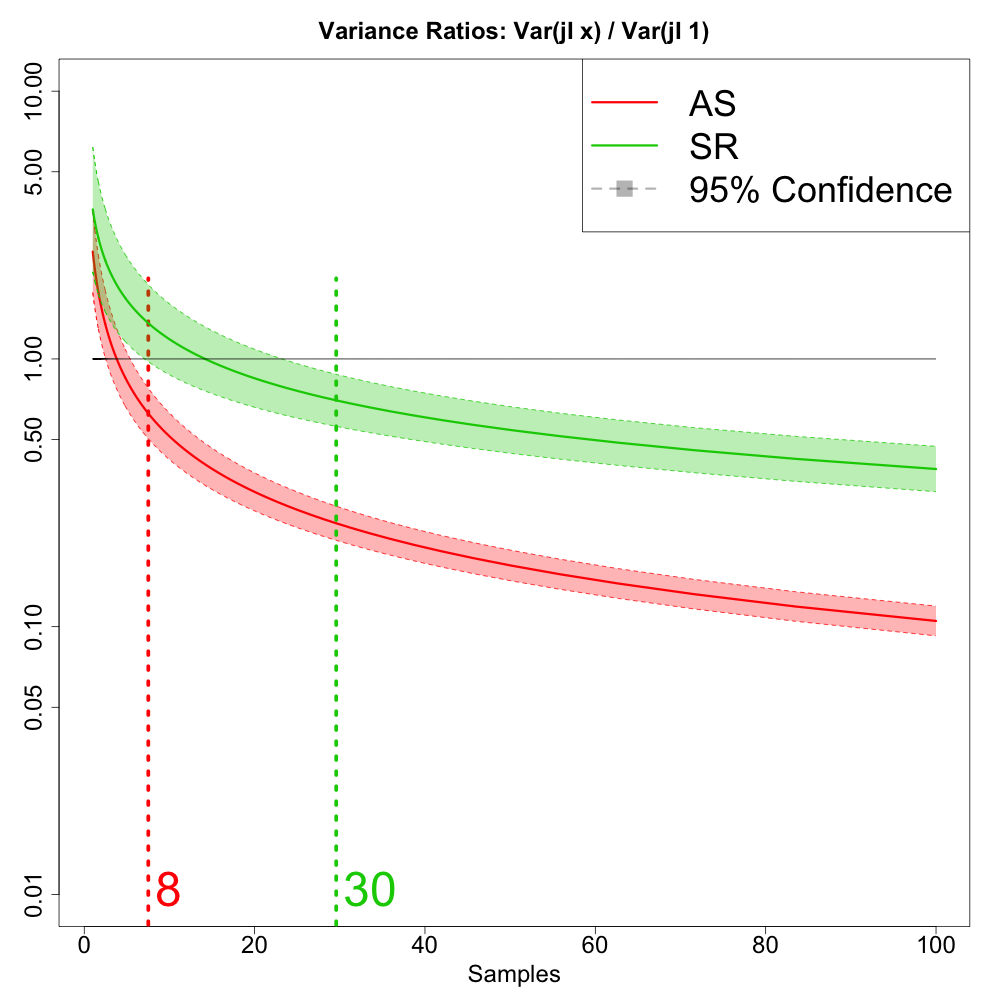 |
A statistical framework for comparing importance sampling methods, and an application to rectangular lights Leonid Pekelis, Christophe Hery February 2014 Importance sampling methods for ray tracing are numerous. One reason is due to the lack of a robust, quantitative method for comparison. This tech memo takes strides to provide a framework for comparing sampling methods on fair ground. We define a simple, mathematical notion of strictly preferring one method to ... more Paper (PDF) Available as Pixar Technical Memo #14-01 |
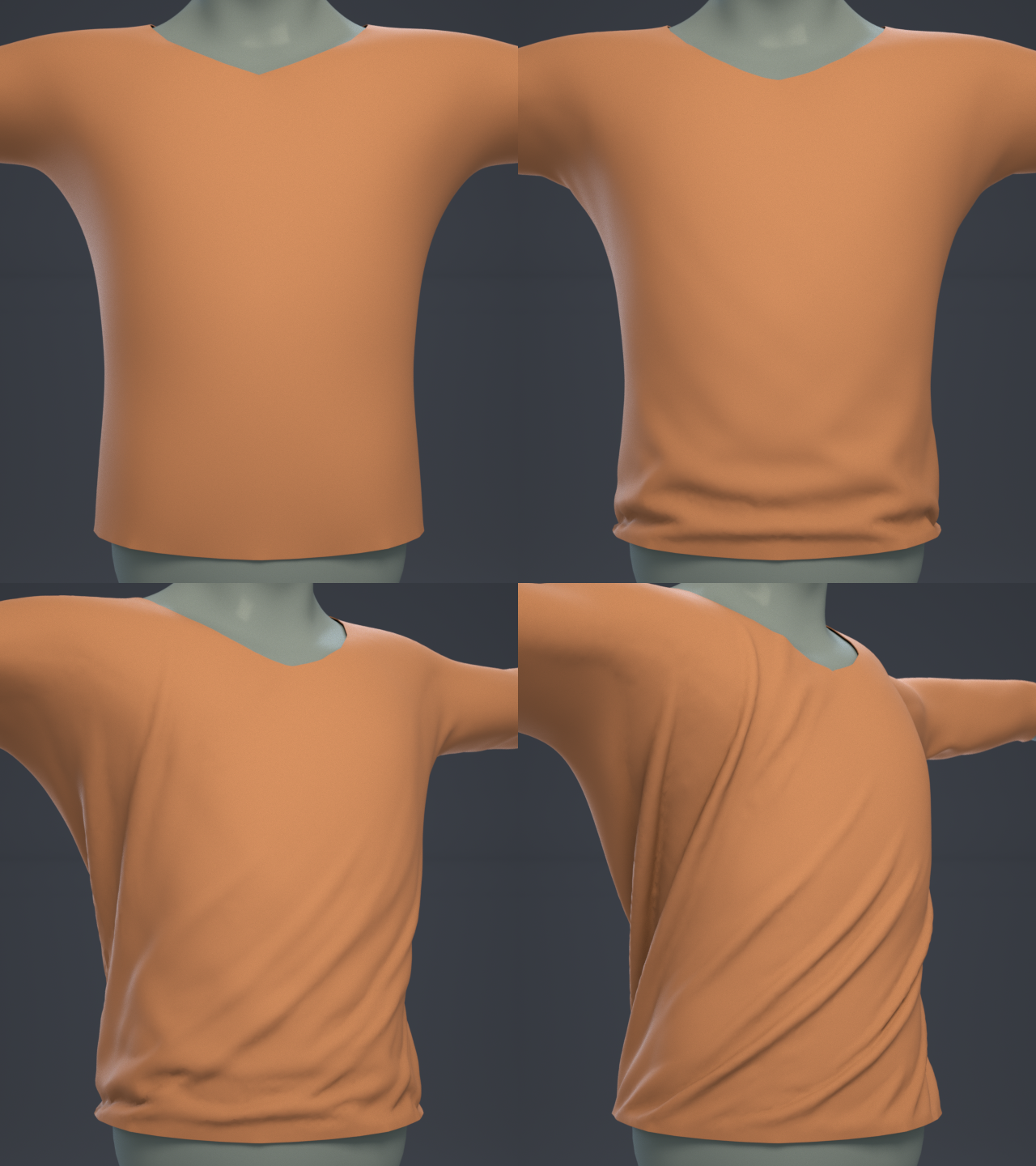 |
Subspace Clothing Simulation using Adaptive Bases Fabian Hahn, Bernhard Thomaszewski, Stelian Coros, Robert W. Sumner, Forrester Cole, Mark Meyer, Tony DeRose, Markus Gross January 2014 We present a new approach to clothing simulation using low-dimensional linear subspaces with temporally adaptive bases. Our method exploits full-space simulation training data in order to construct a pool of low-dimensional bases distributed across pose space. For this purpose, we interpret the simulation data as offsets from a kinematic deformation ... more Paper (PDF) Additional materials: [SubspaceClothingSiggraph2.mp4] Available as Pixar Technical Memo #14-03 |
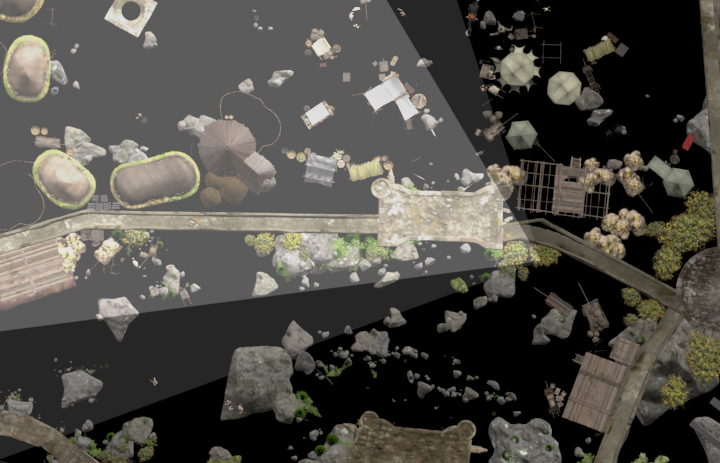 |
Large Scale Geometric Visibility Culling on Brave Zachary Repasky, Patrick Schork, Kevin McNamara, Susan Fong August 2013 Disney/Pixar's Brave is visually complex, containing fully clothed and articulated crowds characters, a forest full of vegetation, ruins littered with debris, and a full fledged castle. In fact, it is so complex that our previous methods to remove unnecessary geometry are no longer adequate in keeping the renders feasible.
On ... more |
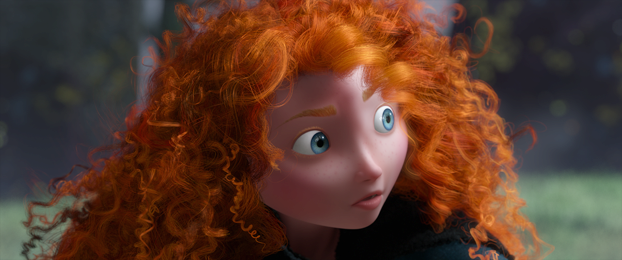 |
Artistic Simulation of Curly Hair Hayley Iben, Mark Meyer, Lena Petrovic, Olivier Soares, John Anderson, Andrew Witkin July 2013 Artistic simulation of hair presents many challenges - ranging from incorporating artistic control to dealing with extreme motions of characters. Additionally, in a production environment, the simulation needs to be fast and results need to be usable "out of the box" (without extensive parameter modifications) in order to produce ... more Paper (PDF) Additional materials: [tazVideo-SCA.mov] Available in the Proceedings of the Symposium on Computer Animation 2013. Available as Pixar Technical Memo #12-03b Other versions: |
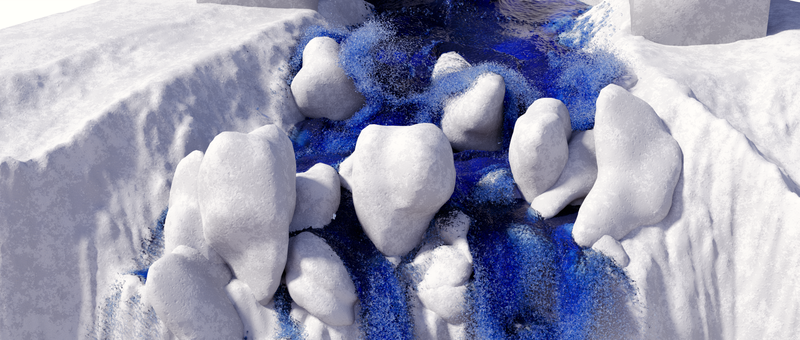 |
Mass Preserving Multi-Scale SPH Christopher Jon Horvath, Barbara Solenthaler July 2013 We present a method for performing very high resolution, incompressible fluid simulations at multiple resolutions of detail, simultaneously.
The particle-based method supports user-defined regions of refinement and can
handle complex collision boundary conditions while remaining smooth and stable.
Conservation of mass in refined detail levels is handled explicitly, overcoming
mass-loss ... more |
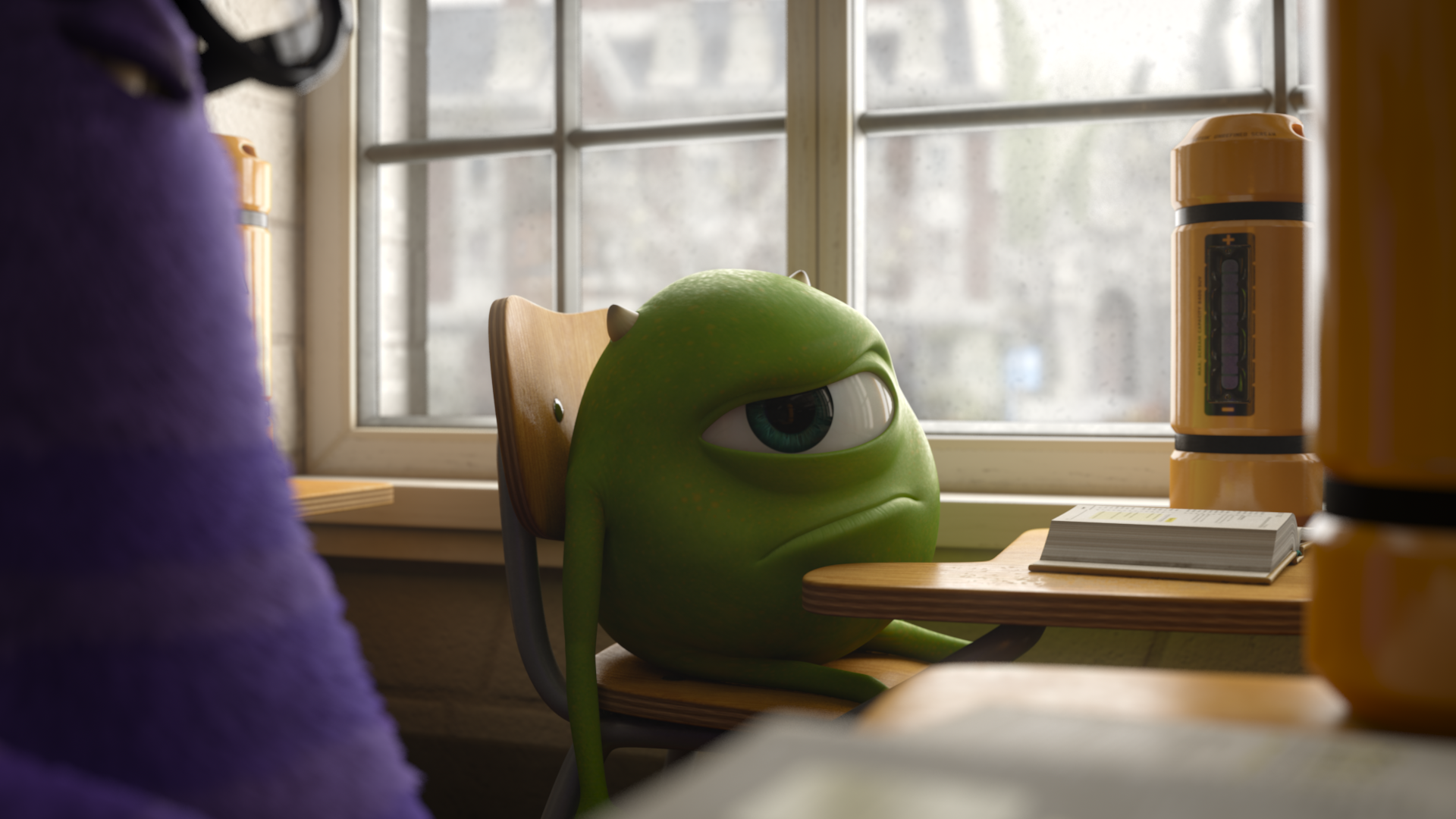 |
Physically Based Lighting at Pixar Christophe Hery, Ryusuke Villemin July 2013 We recently participated in the Siggraph 2013 Physically Based Shading course, with all notes and documents stored at http://blog.selfshadow.com/publications/s2013-shading-course. We provide here direct access to our own chapter, describing the Physically Based System we designed at Pixar (on top of RenderMan) for the movie Monsters University and the short film ... more Paper (PDF) |
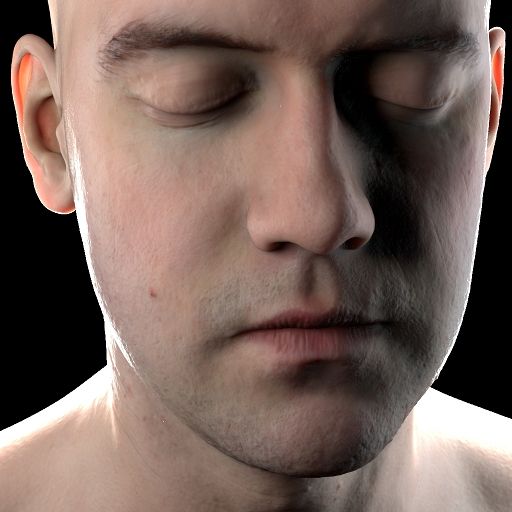 |
Photon Beam Diffusion: A Hybrid Monte Carlo Method for Subsurface Scattering Ralf Habel, Per H. Christensen, Wojciech Jarosz June 2013 We present photon beam diffusion, an efficient numerical method for accurately rendering translucent materials. Our approach interprets incident light as a continuous beam of photons inside the material. Numerically integrating diffusion from such extended sources has long been assumed computationally prohibitive, leading to the ubiquitous single-depth dipole approximation and the recent analytic sum-of-Gaussians approach employed ... more Paper (PDF) Additional materials: [PBD_matlab_v1.03.zip], [supplemental-theory.pdf] Published in Computer Graphics Forum (Proceedings of the Eurographics Symposium on Rendering 2013), volume 32, number 4. Eurographics / Blackwell Publishers, June 2013. (Zaragoza, Spain, June 19-21.). Equation 13 amended July 2013. |
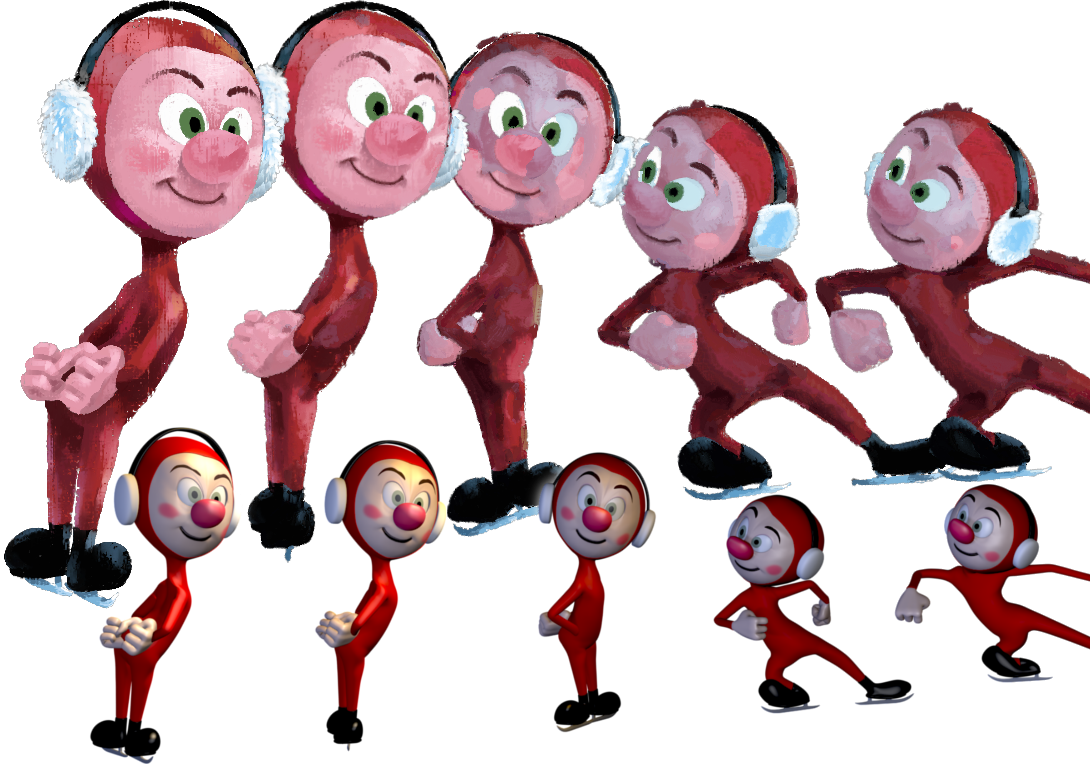 |
Stylizing Animation By Example Pierre Benard, Forrester Cole, Michael Kass, Igor Mordatch, James Hegarty, Martin Sebastian Senn, Kurt Fleischer, Davide Pesare, Katherine Breeden April 2013 Skilled artists, using traditional media or modern computer painting tools, can create a variety of expressive styles that are very appealing in still images, but have been unsuitable for animation. The key difficulty is that existing techniques lack adequate temporal coherence to animate these styles effectively. Here we augment the ... more Paper (PDF) Additional materials: [ComputerGraphicsWorldArticle.pdf], [PaintTweenDistro.tgz], [PaintTweenWorkingSets.tgz], [additionalResults.mov], [mainVideo.mov] Available in the proceedings of SIGGRAPH 2013. Available as Pixar Technical Memo #13-03 |
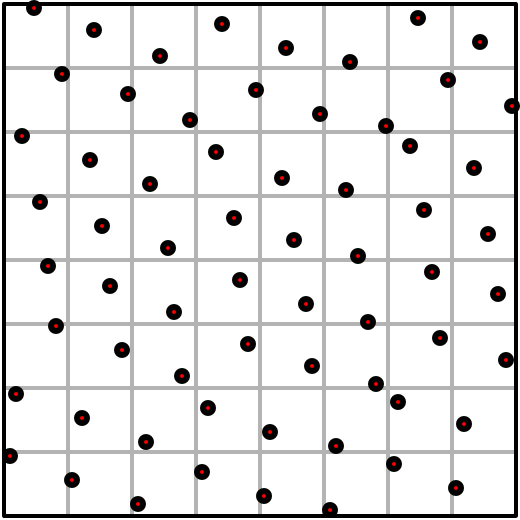 |
Correlated Multi-Jittered Sampling Andrew Kensler March 2013 We present a new technique for generating sets of stratified samples on the unit square. Though based on jittering, this method is competitive with low-discrepancy quasi-Monte Carlo sequences while avoiding some of the structured artifacts to which they are prone. An efficient implementation is provided that allows repeatable, ... more Paper (PDF) Available as Pixar Technical Memo #13-01 |
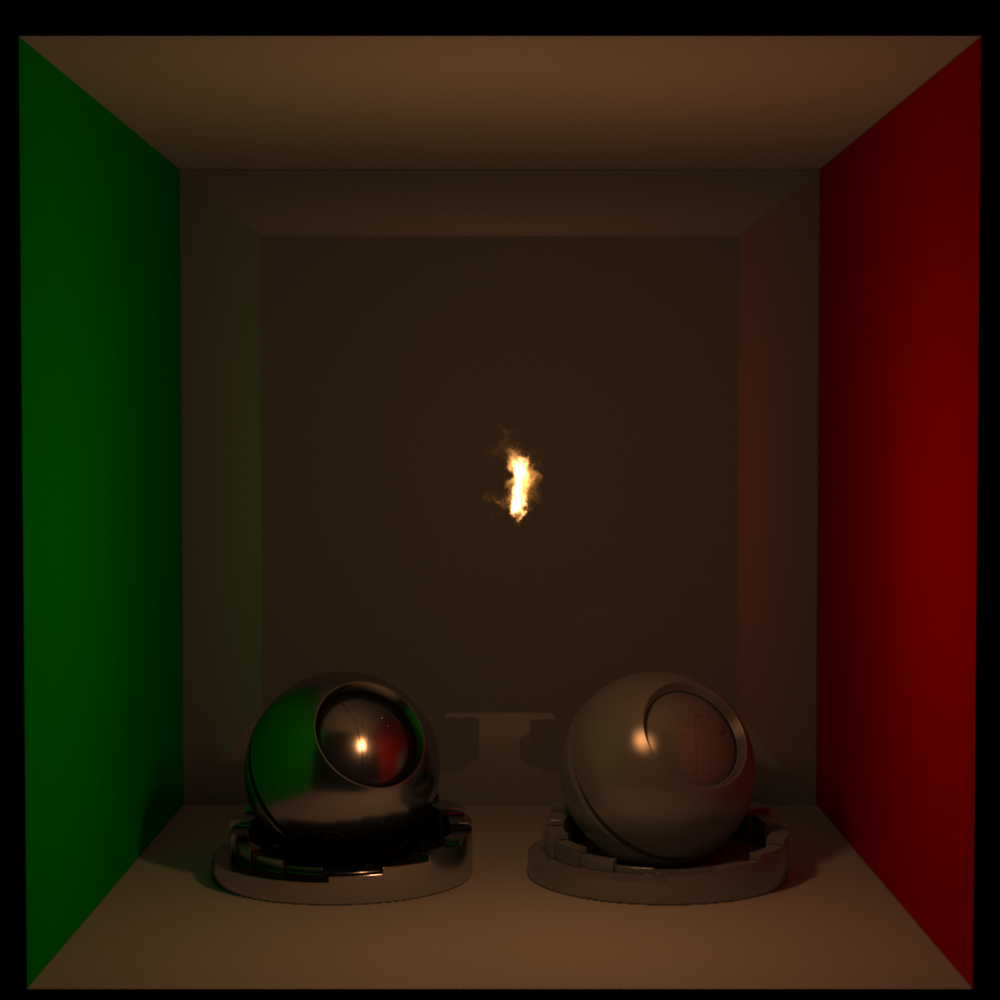 |
Multiple Importance Sampling for Emissive Effects Ryusuke Villemin, Christophe Hery January 2013 We present a method for creating and sampling volumetric light sources directly using the volumetric data, obtaining high quality results with any mirror, glossy or diffuse objects, and integrating with any global illumination framework. Paper (PDF) Additional materials: [volumeCornell.mov], [volumeMIS.mov] Published version available as http://jcgt.org/published/0002/02/10/ Available as Pixar Technical Memo #13-02 |
 |
Texture mapping for the Better Dipole model Christophe Hery December 2012 We derive an exact diffuse integral for Eugene D"Eon"s new Better Dipole model and we provide the code for numerically inverting it, leading to easy texture mapping for translucency effects. Paper (PDF) Available as Pixar Technical Memo #12-11 |
 |
Porting RSL to C++ Ryusuke Villemin, Christophe Hery November 2012 In a modern renderer, relying on recursive ray-tracing, the number of shader calls increases by one or two order of magnitude compared to a straighforward rasterizer dealing only with camera visible objects. Recognizing the potential overhead of RSL parsing in all these shader calls, this report evaluates different C++ pre-compiled ... more Paper (PDF) Available as Pixar Technical Memo #12-08 |
 |
Multiresolution Radiosity Caching for Efficient Preview and Final Quality Global Illumination in Movies Per H. Christensen, George Harker, Jonathan Shade, Brenden Schubert, Dana Batali July 2012 We present a multiresolution radiosity caching method that allows global illumination to be computed efficiently in a single pass in complex CG movie production scenes.
For distribution ray tracing in production scenes, the bottleneck is
the time spent evaluating complex shaders at the ray hit points. We
speed up this shader ... more |
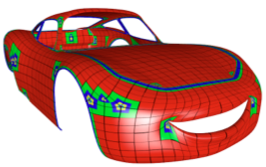 |
Feature Adaptive GPU Rendering of Catmull-Clark Subdivision Surfaces Matthias Niessner, Charles Loop, Mark Meyer, Tony DeRose January 2012 We present a novel method for high-performance GPU-based rendering of Catmull-Clark subdivision surfaces. Unlike previous methods, our algorithm computes the true limit surface up to machine precision, and is capable of rendering surfaces that conform to the full RenderMan specification for Catmull-Clark surfaces. Specifically, our algorithm can accommodate base meshes ... more Paper (PDF) Available in ACM Transactions on Graphics, January 2012. |
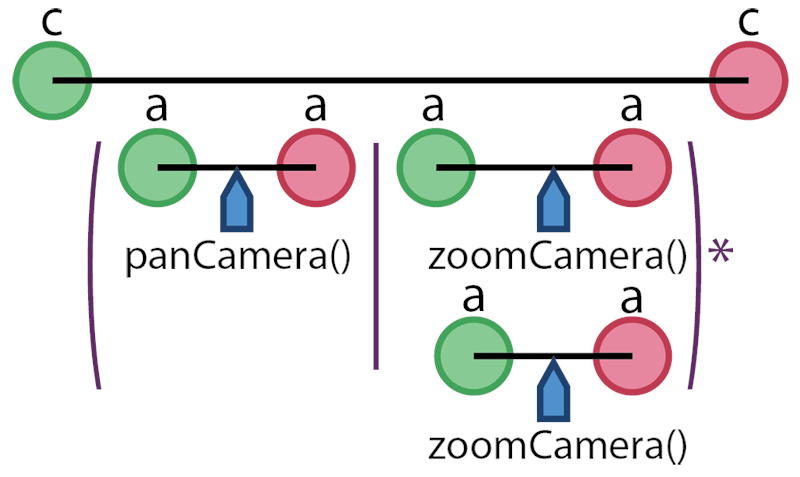 |
Proton: Multitouch Gestures as Regular Expressions Kenrick Kin, Bjoern Hartmann, Tony DeRose, Maneesh Agrawala January 2012 Current multitouch frameworks require application developers to write recognition code for custom gestures; this code is split across multiple event-handling callbacks. As the number of custom gestures grows it becomes increasingly difficult to 1) know if new gestures will conflict with existing gestures, and 2) know how to extend existing ... more Paper (PDF) To appear in CHI 2012 Available as Pixar Technical Memo #12-02 |
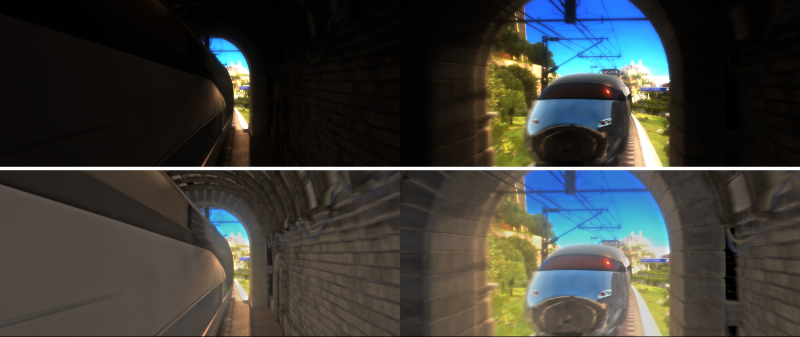 |
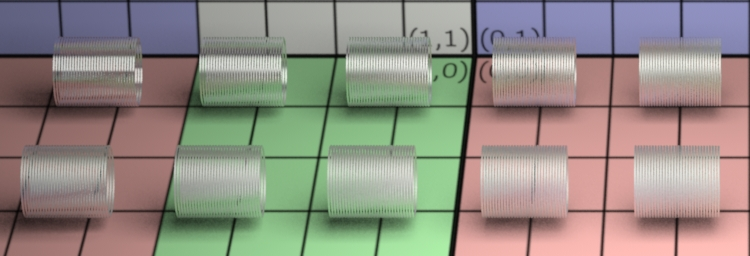
Tone Mapping High Dynamic Range Videos using Wavelets Qi Shan, Mark Meyer, Tony DeRose, John Anderson January 2012 We propose a novel 3D wavelet based tone mapping framework for high dynamic range videos. Still image tone mapping methods can be applied to videos in a frame by frame fashion, but they often exhibit haloing artifacts and do not guarantee temporal coherence, resulting in flickering. Directly extending wavelet analysis/synthesis ... more Paper (PDF) Available as Pixar Technical Memo #12-01 |
 |
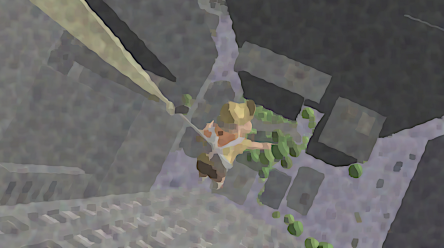
Importance Sampling of Reflections from Hair Fibers Christophe Hery, Ravi Ramamoorthi December 2011 Hair and fur are increasingly important visual features in production rendering, and physically-based light scattering models are now commonly used. In this paper, we enable efficient Monte Carlo rendering of reflections from hair fibers by describing a simple and practical importance sampling strategy for the reflection term in the Marschner hair model. Our ... more Paper (PDF) Available as Pixar Technical Memo #11-07 |
 |
Coherent Noise for Non-Photorealistic Rendering Michael Kass, Davide Pesare July 2011 A wide variety of non-photorealistic rendering techniques make use of random variation in the placement or appearance of primitives. In order to avoid the "shower-door" effect, this random variation should move with the objects in the scene. Here we present coherent noise tailored to this purpose. We compute the coherent ... more Paper (PDF) Available in the Proceedings of SIGGRAPH 2011 |
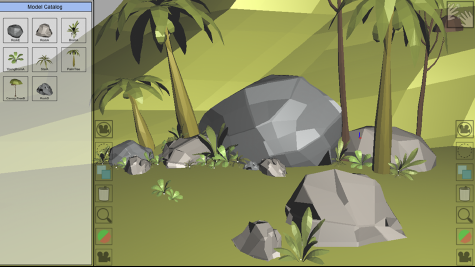 |
Eden: A Professional Multitouch Tool for Constructing Virtual Organic Environments Kenrick Kin, Tom Miller, Bjoern Bollensdorff, Tony DeRose, Bjoern Hartmann, Maneesh Agrawala January 2011 Set construction is the process of selecting and positioning virtual geometric objects to create a virtual environment used in a computer-animated film. Set construction artists often have a clear mental image of the set composition, but find it tedious to build their intended sets with current mouse and keyboard interfaces. We investigate whether multitouch input can ... more Paper (PDF) To appear in the proceedings of SIGCHI 2011 Available as Pixar Technical Memo #11-04 |
 |
Point-Based Global Illumination for Movie Production Per H. Christensen July 2010 This course note describes a fast point-based method for computing diffuse and glossy global illumination, area light illumination and soft shadows, HDRI environment map illumination, multiple diffuse reflection bounces, final gathering for photon mapping, ambient occlusion, reflection occlusion, and volume scattering. The results are free of noise and the ... more Paper (PDF) Additional materials: [Slides.pdf] |
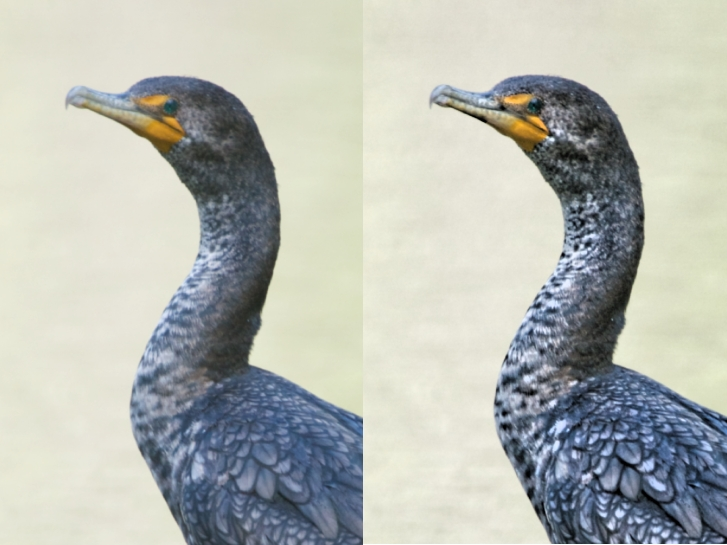 |
Smoothed Local Histogram Filters Michael Kass, Justin Solomon May 2010 Local image histograms contain a great deal of information useful for applications in computer graphics, computer vision and computational photography. Making use of that information has been challenging because of the expense of computing histogram properties over large neighborhoods. Efficient algorithms exist for some specific computations like the bilateral filter, but not others. ... more Paper (PDF) To appear in the Proceedings of SIGGRAPH 2010 Available as Pixar Technical Memo #10-02 |
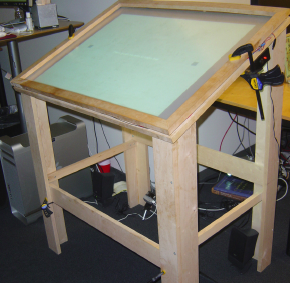 |
Determining the Benefits of Direct-Touch, Bimanual, and Multifinger Input on a Multitouch Workstation Kenrick Kin, Maneesh Agrawala, Tony DeRose May 2009 Multitouch workstations support direct-touch, bimanual, and multifinger interaction. Previous studies have separately examined the benefits of these three interaction attributes over mouse-based interactions. In contrast, we present an empirical user study that considers these three interaction attributes together for a single task, such that we can quantify and compare the performances of each attribute. In our ... more Paper (PDF) To appear in Graphics Interface 2009 |
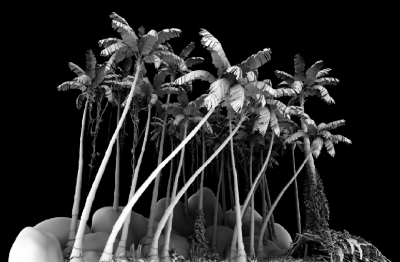 |
Point-Based Approximate Color Bleeding Per H. Christensen July 2008 This technical memo describes a fast point-based method for computing diffuse global illumination (color bleeding). The computation is 4-10 times faster than ray tracing, uses less memory, has no noise, and its run-time does not increase due to displacement-mapped surfaces, complex shaders, or many complex light sources. These properties make the method suitable ... more Paper (PDF) Additional materials: [SlidesFromAnnecy09.pdf] Available as Pixar Technical Memo #08-01 |
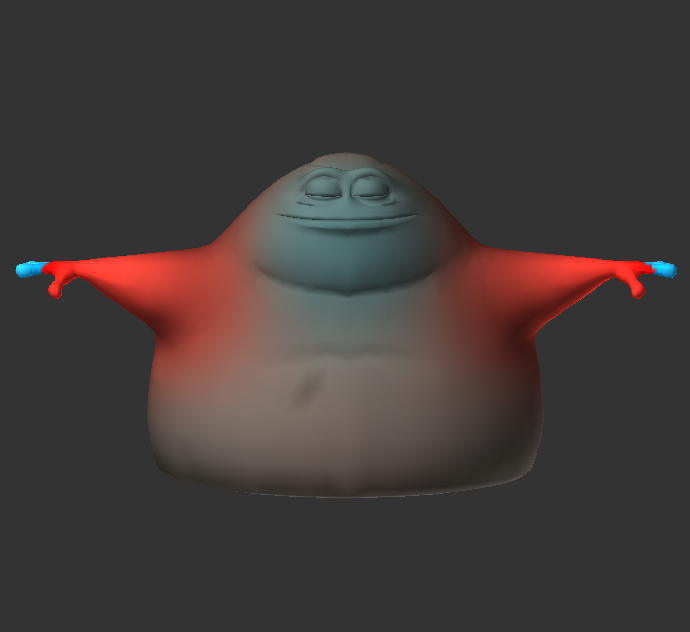 |
Animating Oscillatory Motion With Overlap: Wiggly Splines Michael Kass, John Anderson June 2008 Oscillatory motion is ubiquitous in computer graphics, yet existing animation techniques are ill-suited to its authoring. We introduce a new type of spline for this purpose, known as a ``Wiggly Spline.'' The spline generalizes traditional piecewise cubics when its resonance and damping are set to zero, but creates oscillatory animation when its resonance and damping ... more Paper (PDF) Available in SIGGRAPH 2008 Available as Pixar Technical Memo #06-06a Other versions: |
 |
High-Quality Rendering Using Ray Tracing and Photon Mapping Henrik Wann Jensen, Per H. Christensen August 2007 Detailed descriptions of the ray-tracing and photon-mapping algorithms for rendering complex scenes with indirect illumination, caustics, participating media, and subsurface scattering. The emphasis is on the practical insight necessary to use and implement these algorithms in production of high-quality image in movies, games, architecture, etc. Paper (PDF) Available as Siggraph 2007 course notes, Course Number 8 |
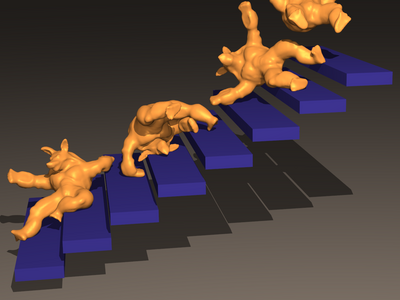 |
Volume Conserving Finite Element Simulations of Deformable Models Geoffrey Irving, Craig Schroeder, Ronald Fedkiw August 2007 We propose a numerical method for modeling highly deformable nonlinear incompressible solids that conserves the volume locally near each node in a finite element mesh. Our method works with arbitrary constitutive models, is applicable to both passive and active materials (e.g. muscles), and works with simple tetrahedra without the need for multiple quadrature points ... more Paper (PDF) Available in the proceedings of SIGGRAPH 2007. |
 |
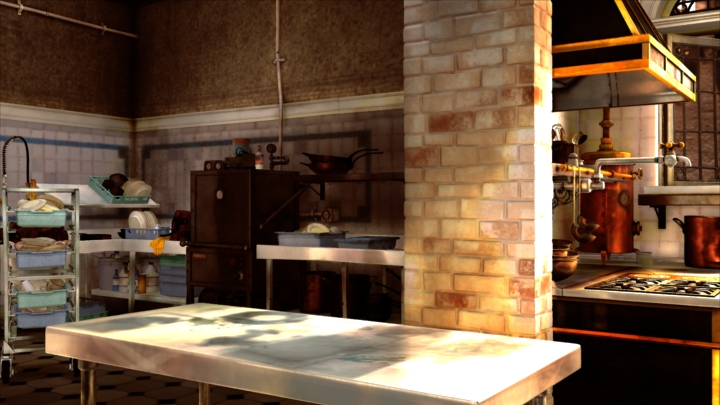
Anyone Can Cook -- Inside Ratatouille's Kitchen Jun Han Cho, Athena Xenakis, Stefan Gronsky, Apurva Shah July 2007 The passion for cooking and food are the central theme of Pixar's recent film - Ratatouille. This complex and multi-faceted problem posed many challenges that were solved using diverse computer graphics and production techniques. In this course we will comprehensively cover all aspects including modeling, dressing, shading, lighting and effects.
The ... more |
 |
3D Paint Baking Proposal Robert L. Cook May 2007 3d paint has long been one of the most expensive parts of rendering at Pixar. This proposal is for a new baking technique that would greatly reduce the run-time cost of 3d paint and require no changes to the existing workflow. The implementation makes heavy use of existing code, which ... more Paper (PDF) Available as Pixar Technical Memo #07-16 |
 |
500 Million and Counting: Hair Rendering on Ratatouille David Ryu May 2007 Featuring plush rats, well-groomed humans, and a colony of rodents numbering a thousand strong, Ratatouille had shots where the original scene descriptions contained many hundreds of millions of hairs. To make these shots renderable, we developed many new technologies to optimize our RenderMan-based hair rendering pipeline, including caching to speed up runtime sculpting, a technique ... more Paper (PDF) Available as Pixar Technical Memo #07-09 |
 |
Articulating the Appeal Sonoko Konishi, Michael Venturini May 2007 It's difficult. In our society, rodents are usual portrayed in a negative manner. To overcome this, every department on Ratatouille strove to create appeal. In this sketch we will focus on how this was achieved through articulation. Paper (PDF) Available as Pixar Technical Memo #07-12 |
 |
Acting with Contact in Ratatouille - Cartoon Collision and Response Gordon Cameron, Robert Russ, Adam Woodbury May 2007 Contact is natural in the real world but often avoided in 3D animated features. Animators tend to make acting decisions that minimise or avoid contact within and between their characters and the world, and when apparent contact does occur, it can tend to feel both "floaty" and unrealistic. "Ratatouille" called for dynamic, tactile characters that ... more Paper (PDF) Available as Pixar Technical Memo #07-10 |
 |
Chop It Up! Animation-Driven Modeling, Simulation, and Shading in the Kitchen Patrick Coleman, Eric Froemling May 2007 In Disney/Pixar's Ratatouille, the creation of believable cooking environments with all their complexity has been an important element in presenting a rich world that helps draw the audience into the story. Part of that complexity arises in the preparation of food before cooking. To create complex animations of food in preparation, we designed a system ... more Paper (PDF) Available as Pixar Technical Memo #07-13 |
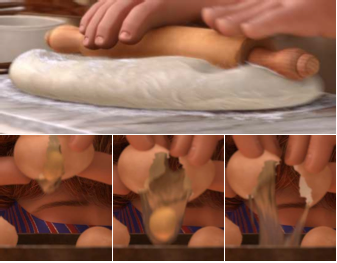 |
An Effects Recipe for Rolling Dough, Cracking Eggs and Pouring Sauce Tolga Goktekin, Jon Reisch, Darwyn Peachey, Apurva Shah May 2007 Creating the digital effects for cooking in Ratatouille posed a number of unique challanges. First we had to adopt efficient methods for simulating a wide variety of material behaviours. Second we needed to direct our simulations in order to match the expressiveness of the character's animation, e.g. forming specific shapes while the character pounds a ... more Paper (PDF) Available as Pixar Technical Memo #07-06 |
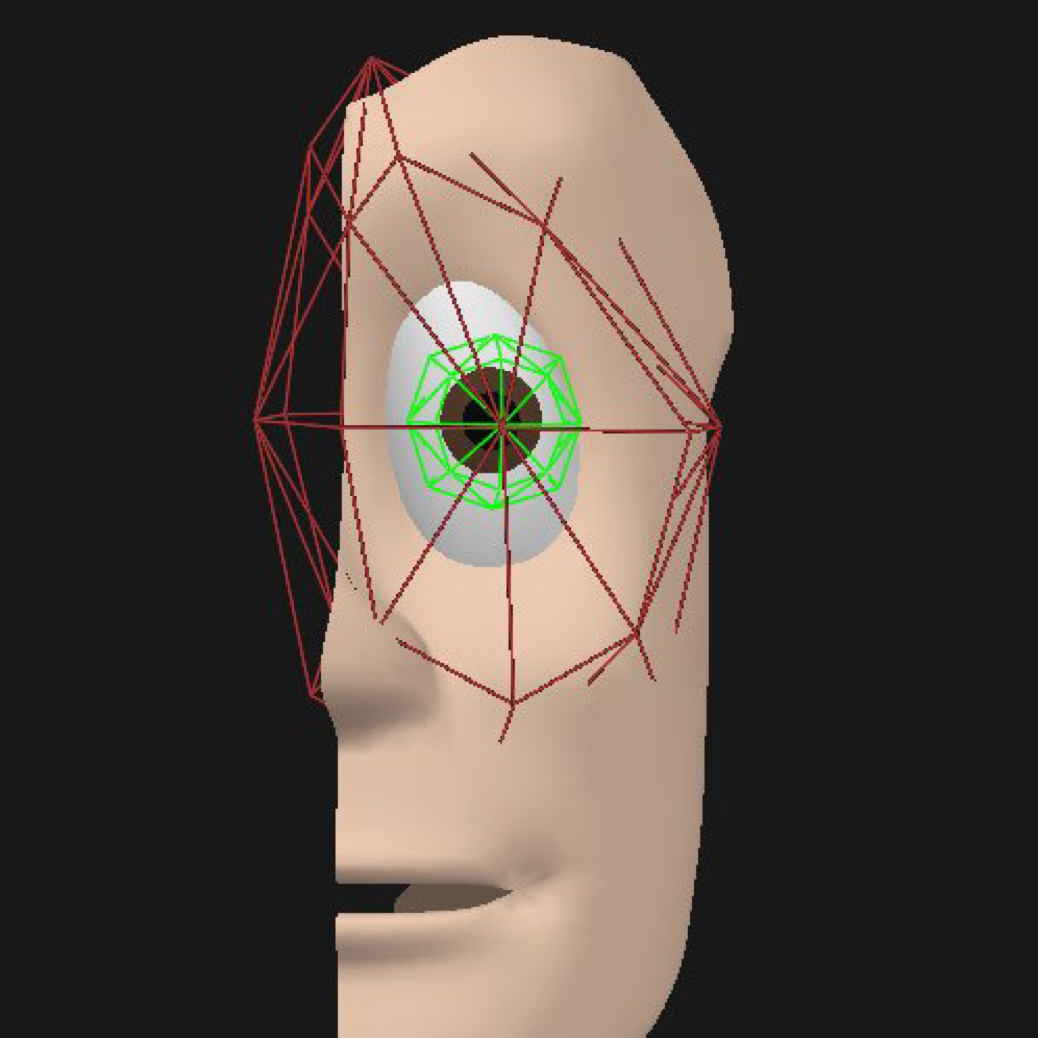 |
Harmonic Coordinates for Character Articulation Pushkar Joshi, Mark Meyer, Tony DeRose, Brian Green, Tom Sanocki May 2007 In this paper we consider the problem of creating and controlling volume deformations used to articulate characters for use in high-end applications such as computer generated feature films. We introduce a method we call harmonic coordinates that significantly improves upon existing volume deformation techniques. Our deformations are controlled using a topologically flexible structure, called a cage, ... more Paper (PDF) Additional materials: [HarmonicCoordinates.divx], [SiggraphSlides.pdf] Available in the proceedings of Siggraph 2007. Available as Pixar Technical Memo #06-02b Other versions: |
 |
Rat-Sized Water Effects in Ratatouille Gary Bruins, Jon Reisch May 2007 A particularly heavy effects sequence in the film Ratatouille depicts a colony of rats fleeing their home and crossing a long narrow river in several makeshift boats during a rainy afternoon. Nearly the entire sequence was photographed inches above the ground from a s perspective. Although this perspective provided a very interesting point of view ... more Paper (PDF) Available as Pixar Technical Memo #07-14 |
 |
Rivers of Rodents: An Animation-Centric Crowds Pipeline for
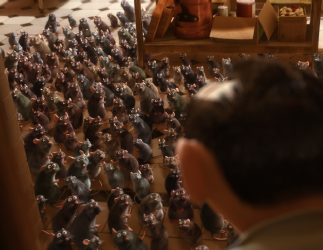
Ratatouille David Ryu, Paul Kanyuk May 2007 One of the major technical challenges in the animated film Ratatouille was creating a believable rat colony. In numbers as high as a thousand, these rats participated in highly complex and coordinated behaviors ranging from chaotic swarming to gourmet cooking. Often, the colony was ... more Paper (PDF) Available as Pixar Technical Memo #07-02 |
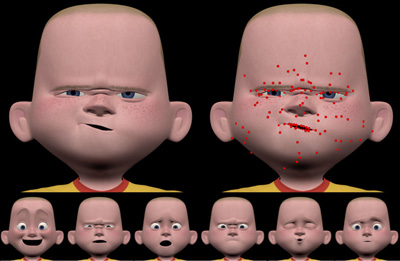 |
Key Point Subspace Acceleration and Soft Caching Mark Meyer, John Anderson May 2007 Many applications in Computer Graphics contain computationally expensive calculations. These calculations are often performed at many points to produce a full solution, even though the subspace of reasonable solutions may be of a relatively low dimension. The calculation of facial articulation and rendering of scenes with global illumination are two example applications that ... more Paper (PDF) Additional materials: [SiggraphSlides.pdf], [softCaching.mov] Available in the proceedings of Siggraph 2007 Available as Pixar Technical Memo #06-04b Other versions: |
 |
Fast, Soft Reflections Using Radiance Caches Apurva Shah, Justin Ritter, Chris King, Stefan Gronsky May 2007 In Pixar's Ratatouille a lot of scenes take place inside the kitchen where reflective surfaces like counter tops, stoves, pots and pans abound. Furthermore, these surfaces were often burnished or covered with dents, scratches or other displacements, which meant that the reflections were soft and fuzzy. Physically accurate reflections are most ... more Paper (PDF) Available as Pixar Technical Memo #07-04 |
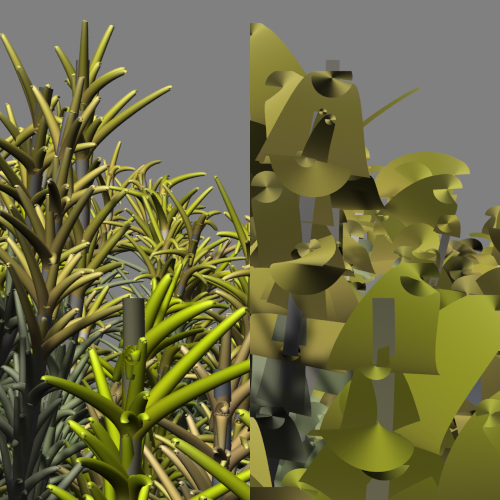 |
Stochastic Simplification of Aggregate Detail Robert L. Cook, John Halstead, Maxwell Planck, David Ryu May 2007 Many renderers perform poorly on scenes that contain a lot of detailed geometry. The load on the renderer can be alleviated by simplification techniques, which create less expensive representations of geometry that is small on the screen. Current simplification techniques for high-quality surface-based rendering tend to work best with element ... more Paper (PDF) Additional materials: [SiggraphSlides.pdf], [WithAndWithoutSimplification.mov] Available in the Proceedings of Siggraph 2007. Available as Pixar Technical Memo #06-05a Other versions: |
 |
Extracting and Parametrizing Temporally Coherent Surfaces from Particles Chen Shen, Apurva Shah May 2007 From pouring sauces to sudsy sink water to violent sewer rapids, realistic animation of fluids presented interesting challenges in Ratatouille. The various fluid effects were simulated either using a physically-based solver or directly with generic particle systems. Although the simulated particles move as a whole like a fluid, the number ... more Paper (PDF) Available as Pixar Technical Memo #07-05 |
 |
Virtual Tailoring for Ratatouille: Clothing the Fattest Man in the World Christine Waggoner, David Baraff May 2007 He's fat. Enormously so. Essentially a clothed sphere. (A very deformable and complexly animated sphere, with legs, arms, and no neck.) For Ratatouille, creating dynamic costumes for every human character in the film required extensive development and innovation in Pixar's cloth pipeline, particularly for the character Gusteau. Modeling and shepherding ... more Paper (PDF) Available as Pixar Technical Memo #07-07 |
 |
Effective Toon-Style Rendering Control Using Scalar Fields Alex Harvill May 2007 An illustration of Gusteau comes to life and introduces a new facet of the film Ratatouille. To do this, a technique was needed to convert an animated 3D character into a 2D illustration. Existing renderman shaders based on normal and depth maps were difficult to control. Post processing per gprim id ... more Paper (PDF) Available as Pixar Technical Memo #07-08 |
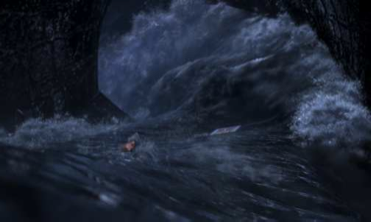 |
Simulating Whitewater Rapids in Ratatouille Eric Froemling, Tolga Goktekin, Darwyn Peachey May 2007 In Pixar's Ratatouille, a key story point involves a rat being swept through the sewers of Paris, plummeting down waterfalls and along steeply sloping tunnels, through a series of high-speed S- bends which cause the torrent of water to bank up sharply on each turn. Bringing ... more Paper (PDF) Available as Pixar Technical Memo #07-03 |
 |
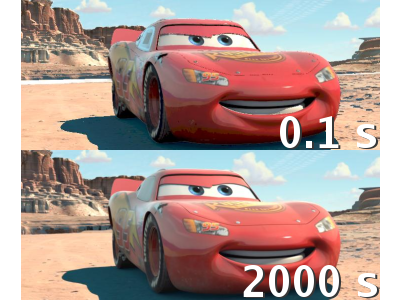
Ray Tracing for the Movie 'Cars' Per H. Christensen, Julian Fong, David M. Laur, Dana Batali September 2006 This paper describes how we extended Pixar's RenderMan renderer with ray tracing abilities. In order to ray trace highly complex scenes we use multiresolution geometry and texture caches, and use ray differentials to determine the appropriate resolution. With this method we are able to efficiently ray trace scenes with much more geometry and ... more Paper (PDF) Available in Proceedings of the IEEE Symposium on Interactive Ray Tracing 2006, pages 1-6. IEEE 2006 |
 |
Interactive Depth of Field Michael Kass, Aaron Lefohn, John Owens January 2006 Accurate computation of depth-of-field effects in computer graphics rendering is generally very time consuming, creating a problematic workflow for film authoring. The computation is particularly challenging because it depends on large-scale spatially-varying filtering that must accurately respect complex boundaries. Here we introduce an approximate depth-of-field computation that is good enough for film preview, yet ... more Paper (PDF) Additional materials: [movie.avi] Available as Pixar Technical Memo #06-01 |
 |
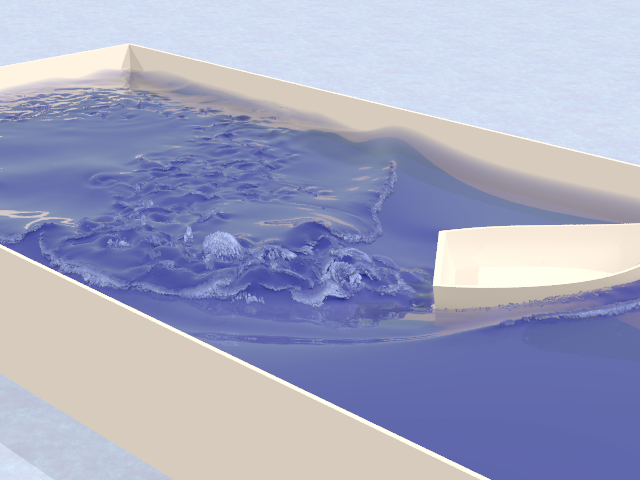
Statistical Acceleration for Animated Global Illumination Mark Meyer, John Anderson January 2006 Global illumination provides important visual cues to an animation, however its computational expense limits its use in practice. In this paper, we present an easy to implement technique for accelerating the computation of indirect illumination for an animated sequence using stochastic ray tracing. We begin by computing a quick but noisy solution using a ... more Paper (PDF) Additional materials: [ShotRender.mov] To appear in SIGGRAPH 2006 Available as Pixar Technical Memo #06-03 |
 |
Efficient Simulation of Large Bodies of Water by Coupling Two and Three Dimensional Techniques Geoffrey Irving, Eran Guendelman, Frank Losasso, Ronald Fedkiw January 2006 We present a new method for the efficient simulation of large bodies of water, especially effective when three-dimensional surface effects are important. Similar to a traditional two-dimensional height field approach, most of the water volume is represented by tall cells which are assumed to have linear pressure profiles. In order to avoid the limitations typically ... more Paper (PDF) Additional materials: [movie.avi] Available in the proceedings of SIGGRAPH 2006 |
 |
Lpics: a Hybrid Hardware-Accelerated Relighting Engine for
Computer Cinematography Fabio Pellacini, Kiril Vidimce, Aaron Lefohn, Alex Mohr, Mark Leone, John Warren August 2005 In computer cinematography, the process of lighting design involves placing and configuring lights to define the visual appearance of environments and to enhance story elements. This process is labor intensive and time consuming, primarily because ... more Paper (PDF) Additional materials: [lpics_siggraph.mp4] Available in the Proceedings of SIGGRAPH 2005 |
 |
Wavelet Noise Robert L. Cook, Tony DeRose August 2005 Noise functions are an essential building block for writing procedural shaders in 3D computer graphics. The original noise function introduced by Ken Perlin is still the most popular because it is simple and fast, and many spectacular images have been made ... more Paper (PDF) Additional materials: [RapLyrics.txt] Available in the Proceedings of SIGGRAPH 2005 |
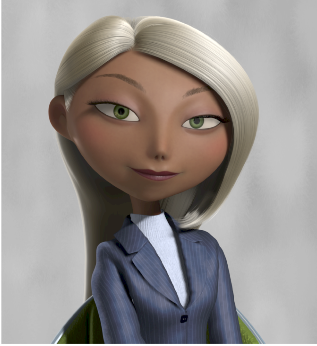 |
Volumetric Methods for Simulation and Rendering of Hair Lena Petrovic, Mark Henne, John Anderson January 2005 Hair is one of the crucial elements in representing believable digital humans. It is one of the most challenging elements, too, due to the large number of hairs on a human head, their length, and their complex interactions. Hair appearance, in rendering and simulation, is ... more Paper (PDF) Additional materials: [clip1.mp4], [clip2.mp4], [clip3.mp4], [clip4.mp4], [clip5.mp4], [clip6.mp4] Available as Pixar Technical Memo #06-08 |
 |
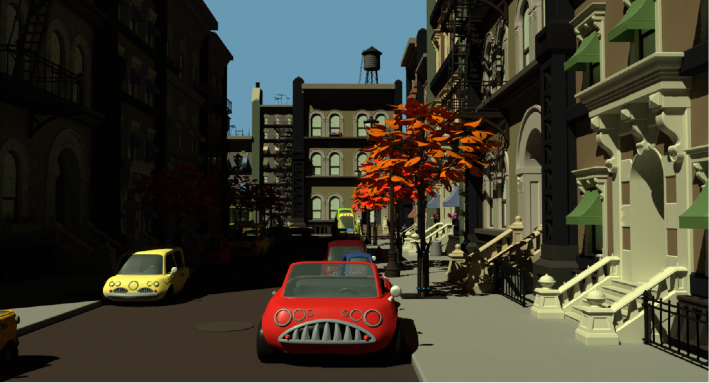
Mio: Fast Multipass Partitioning via Priority-Based Instruction Scheduling Andrew Riffel, Aaron Lefohn, Kiril Vidimce, Mark Leone, John Owens August 2004 Real-time graphics hardware continues to offer improved resources for programmable vertex and fragment shaders. However, shader programmers continue to write shaders that require more resources than are available in the hardware. One way to virtualize the resources necessary to run complex shaders is to partition the ... more Paper (PDF) Available in the Proceedings of Graphics Hardware 2004 |
 |
An Irradiance Atlas for Global Illumination in Complex Production Scenes Per H. Christensen, Dana Batali June 2004 We introduce a tiled 3D MIP map representation of global illumination data. The representation is an adaptive sparse octree with a "brick" at each octree node; each brick consists of 8 cubed voxels with sparse irradiance values. The representation is designed to enable efficient caching. Combined with ... more Paper (PDF) Published as pp. 133-141 in the Proceedings of the Eurographics Symposium on Rendering 2004, Eurographics/ACM, June 2004. |
 |
Ray Differentials and Multiresolution Geometry Caching for Distribution Ray
Tracing in Complex Scenes Per H. Christensen, David M. Laur, Julian Fong, Wayne L. Wooten, Dana Batali September 2003 When rendering only directly visible objects, ray tracing a few levels of specular reflection from large, low curvatures surfaces, and ray tracing shadows from point-like light sources, the accessed geometry is coherent and a geometry cache performs well. But in many other cases, ... more Paper (PDF) Published as pp. pp. 543-552 in Computer Graphics Forum (Eurographics 2003 Conference Proceedings), Blackwell Publishers, September 2003. |
 |
Untangling Cloth David Baraff, Andrew Witkin, Michael Kass August 2003 Deficient cloth-to-cloth collision response is the most serious shortcoming of most cloth simulation systems. Past approaches to cloth-cloth collision have used history to decide wheter nearby cloth regions have interpenetrated. The biggest pitfall of history-based methods is that an error anywhere along the way can give rise to persistent tangles...This ... more Paper (PDF) Available in the Proceedings of SIGGRAPH 2003 |
 |
Adjoints and Importance in Rendering: an Overview Per H. Christensen July 2003 This survey gives an overview of the use of importance, an adjoint of light, in speeding up rendering. The importance of a light distribution indicates its contribution to the region of most interest --- typically the directly visible parts of a scene. Importance can therefore be used to concentrate global illumination and ray ... more Paper (PDF) Available as IEEE Transactions on Visualization and Computer Graphics (TVCG), Volume 9, Number 3, pages 329-340. IEEE, July 2003. |
 |
RenderMan, Theory and Practice Dana Batali, Byron Bashforth, Chris Bernardi, Per H. Christensen, David Laur, Christophe Hery, Guido Quaroni, Erin Tomson, Thomas Jordan, Wayne Wooten July 2003 Siggraph 2003 course notes. Paper (PDF) |
 |
Advanced Issues in Level of Detail Martin Reddy August 2002 Siggraph 2002 course slides. See the abstracts in the additional materials below for more details. Paper (PDF) Additional materials: [1-perception-abstract.txt], [2-perception.pdf], [3-terrain-abstract.txt], [4-terrain.pdf] |
 |
Deep Shadow Maps Tom Lokovic, Eric Veach August 2000 We introduce deep shadow maps, a technique that produces fast, high-quality shadows for primitives such as hair, fur, and smoke. Unlike traditional shadow maps, which store a single depth at each pixel, deep shadow maps store a representation of the fractional visibility through a pixel at all possible depths. Deep ... more Paper (PDF) Available in the Proceedings of SIGGRAPH 2000. |
 |
Subdivision Surfaces in Character Animation Tony DeRose, Michael Kass, Tien Truong August 1998 The creation of believable and endearing characters in computer graphics presents a number of technical challenges, including the modeling, animation and rendering of complex shapes such as heads, hands, and clothing. Traditionally, these shapes have been modeled ... more Paper (PDF) Available in the Proceedings of SIGGRAPH 1998. |
 |
Dinosaur Input Device Brian Knep, Craig Hayes, Rick Sayre, Tom Williams June 1995 We present a system for animating an articulate figure using a physical skeleton, or armature, connected to a workstation. The skeleton is covered with sensors that monitor the orientations of the joints and send this information to the computer via custom-built hardware. ... more Paper (PDF) Appeared in the Proceedings of SIGCHI 1995 |
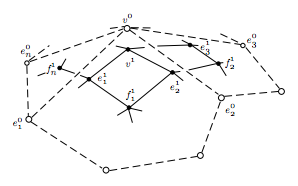 |
Efficient, Fair Interpolation using Catmull-Clark Surfaces Mark Halstead, Michael Kass, Tony DeRose July 1993 We describe an efficient method for constructing a smooth surface that interpolates the vertices of a mesh of arbitrary topological type. Normal vectors can also be interpolated at an arbitrary subset of the vertices. The method improves on existing interpolation techniques in that it is fast, robust and general. Paper (PDF) Appeared in SIGGRAPH 1993. |
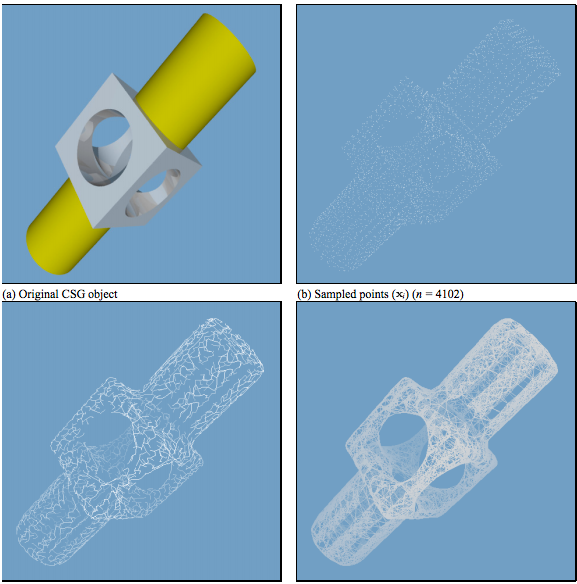 |
Surface Reconstruction from Unorganized Points Hugues Hoppe, Tony DeRose, Tom Duchamp, John McDonald, Werner Stuetzle July 1992 We describe and demonstrate an algorithm that takes as input an unorganized set of points x1,...,xn in R3 on or near an unknown manifold M, and produces as output a simplicial surface that approximates M. Neither the topology, the presence of boundaries, nor the geometry of M are assumed to be known in advance ... more Paper (PDF) Published in SIGGRAPH 1992. |
 |
Texture On Demand Darwyn Peachey January 1990 Texture On Demand (TOD) is a technique for organizing large amounts of stored texture data in disk files and accessing it efficiently. Simply reading entire texture images into memory is not a good solution for real memory systems or for virtual memory systems. Texture data should be read from disk files only on ... more Paper (PDF) Available as Pixar Technical Memo #217 |
 |
The Reyes Rendering Architecture Robert L. Cook, Loren Carpenter, Edwin Catmull July 1987 An architecture is presented for fast high-quality rendering of complex images. All objects are reduced to common world-space geometric entities called micropolygons, and all of the shading and visibility calculations operate on these micropolygons. Each type of calculation is performed in a coordinate system that is ... more Paper (PDF) |
 |
Rendering Antialiased Shadows with Depth Maps William T. Reeves, David H. Salesin, Robert L. Cook July 1987 We present a solution to the aliasing problem for shadow algorithms that use depth maps. The solution is based on a new filtering technique called percentage closer filtering. In addition to antialiasing, the improved algorithm provides soft shadow boundaries that resemble penumbrae. We describe ... more Paper (PDF) Available in the Proceedings of SIGGRAPH 1987. |
 |
Stochastic Sampling in Computer Graphics Robert L. Cook January 1986 Ray tracing, ray casting, and other forms of point sampling are important techniques in computer graphics, but their usefulness has been undermined by aliasing artifacts. In this paper it is shown that these artifacts are not an inherent part of point sampling, but a consequence of using regularly spaced ... more Paper (PDF) |
 |
Compositing Digital Images Thomas Porter, Tom Duff July 1984 Most computer graphics pictures have been computed all at once, so that the rendering program takes care of all computations relating to the overlap of objects. There are several applications, however, where elements must be rendered separately, relying on compositing techniques for the anti-aliased accumulation of the full image. This ... more Paper (PDF) Available in the Proceedings of SIGGRAPH 1984. |
 |
Distributed Ray Tracing Robert L. Cook, Thomas Porter, Loren Carpenter July 1984 Ray tracing is one of the most elegant techniques in computer graphics. Many phenomena that are difficult or impossible with other techniques are simple with ray tracing, including shadows, reflections, and refracted light. Ray directions, however, have been determined precisely, and this had limited the capabilities of ray tracing. By ... more Paper (PDF) Available in the Proceedings of SIGGRAPH 1984 |
 |
Shade Trees Robert L. Cook July 1984 Shading is an important part of computer imagery, but shaders have been based on fixed models to which all surfaces must conform. As computer imagery becomes more sophisticated, surfaces have more complex shading characteristics and thus require a less rigid shading model. This paper presents a flexible tree-structured shading model ... more Paper (PDF) Available in the Proceedings of SIGGRAPH 1984. |
 |
A Reflectance Model for Computer Graphics Robert L. Cook, Kenneth E. Torrance January 1982 A new reflectance model for rendering computer sythesized images is presented. The model accounts for the relative brightness of different materials and light sources in the same scene. It describes the directional distribution of the reflected light and a color shift that occurs as ... more Paper (PDF) Published in Transactions on Graphics, Vol. 1, No. 1, January 1982. |